
 Worksheets
review test 4th quarter
Total questions: 60
Worksheet time: 30mins
Name
Class
Date
1.
What description is the most accurate of fine, thin hair?
a)
It needs weight and is limp
b)
It requires texturizing
2.
Which type of shear is used mainly to remove bulk from the hair, and is often referred to as thinning shear, figuring shear, or notching shear?
a)
Texturizing
b)
Thinning
3.
Which type of texture shear adds increased blending?
a)
Texturizing
b)
Thinning
4.
What is the best way to maintain control of the subsection when cutting with a vertical or diagonal cutting line?
a)
Palm to palm
b)
Cutting over finger
5.
Which method involves cutting on layering the hair in such a way that the fingers and shears glide along the edge of the hair to remove length?
a)
Slide cutting
b)
Stacking technique
6.
What technique allows you to cut hair very close to the scalp and create a flat top or square shape?
a)
Comb over scissor
b)
Clipper over comb
7.
Which haircut in a 0 degree angle cut?
a)
One length
b)
Uniformed layer
8.
Which tool is used to create a clean blunt edge when cutting?
a)
Shear
b)
Razor
9.
What is the hand position used in cutting horizontally straight when lifting hair at the top of the head?
a)
Under finger
b)
Palm down
10.
What is the practice of dividing the hair into workable areas?
a)
Sectioning
b)
Parting
11.
How will you describe natural distribution?
a)
The hair is in the direction it falls due to gravity
b)
The hair is combed at 90 degrees from its parting
12.
What is cross checking?
a)
Using the same parting that was used to cut the hair to check for balance
b)
Using a cross shaped section at the top of the haircut to check for balance
13.
What is a cutting line?
a)
The end shape of the hair
b)
Direction in which the hair grows from scalp
14.
How will you describe an oblong face shape?
a)
The same face and forehead
b)
Face longer than the forehead
15.
How will you make a diamond face as oval as possible?
a)
Short hair and blunt haircut
b)
Long hair cut with wispy layering.
16.
If the client as a round face shape, which hairstyle should be avoided?
a)
Medium voluminous curls
b)
Long layered hairstyle
17.
Which haircut style will give flattering to client that has a square face shape?
a)
Long layered hairstyle with side bangs
b)
Long straight hair
18.
Which angle of elevation build weight?
a)
45 degree
b)
180 degree
19.
Which angle of elevation remove weight or creates layers?
a)
35 degree
b)
180 degree
20.
Which line creates movement toward the face?
a)
Diagonal forward
b)
Diagonal backward
21.
What is the section of the hair that determines the length of the hair to be cut?
a)
Cutting line
b)
Guide line
22.
Which motion in haircutting moves as the hair progresses upward and downward?
a)
Stationary
b)
Travelling
23.
What styling product would you use for a curly blow dry?
a)
Mouse
b)
Serum
24.
What styling product would you use for a straight blow dry?
a)
Hair spray
b)
Straightening balm
25.
What product would you use to hold the style if the hair was blow dried curly?
a)
Shine spray
b)
Hair spray
26.
Where do we start blow drying?
a)
At the front of the head
b)
At the back of the head
27.
Why must the hairdryer be pointed down when blow drying?
a)
To dry hair quicker
b)
To avoid the hair from becoming knotted or tangled
28.
How did the hair blow dried?
a)
The hair was curled at the bottom
b)
The hair was lifted from the root and pulled through the ends
29.
How many times must the hair wrap around a brush to create a curl?
a)
3-4
b)
4-5
30.
What happens to the style of the hair f the hair is left damp after a blow drying service?
a)
The hair will hold the created style
b)
The hair will not hold the created style
31.
Layers create movement and volume in hair by doing ________________________.
a)
Add texture
b)
Increasing weight
32.
In long layered haircut, hair is cut at _______________________ and over direction to maintain weight at the perimeter.
a)
90 degree
b)
180 degree
33.
Guidelines located at the perimeter of the cut is _____________________________.
a)
Outline haircut
b)
Cutting line
34.
Cowlicks and whorls are examples of ______________ that will affect where the hair ends up once it is dry especially in the nape.
a)
Growth pattern
b)
Natural distribution
35.
You should use the _______________ degree of tension where cutting hair with strong growth patterns or around the ears, to compensate for the hair being pushed up when it dries.
a)
Maximum
b)
Minimum
36.
The comb used to close tapers on the nape and sides, and when using a scissor-over-comb technique, is a ___________________________.
a)
Barber comb
b)
Tail comb
37.
A tension in your shears that is too ______________ will allow your shears to fold the hair.
a)
Loose
b)
Tight
38.
A general rule of thumb when cutting hair is to stand or sit directly in front of the area you are cutting, and to keep your body weight ________________
a)
Centered
b)
Angled
39.
The hand position that is used most often when cutting uniform of increasing layers is called __________________.
a)
Palm to palm
b)
Cutting over finger
40.
In a ________________ haircut, all the hair comes to a single hanging level forming a weight line.
a)
Blunt
b)
Layered
41.
The ___________ is the visual lines in the haircut where the ends of the hair hang together.
a)
Weight line
b)
Cutting line
42.
Haircuts that generally have less weight than graduated haircut is called __________________.
a)
Blunt cuts
b)
Layered cuts
43.
A(n)_________________ is a basic haircut, cut at a 90 degree elevation and then overdirected to maintain length and weight at the perimeter.
a)
Graduated cut
b)
Long layered cut
44.
The technique used to check a haircut upon precision of line and shape s called ____________________.
a)
Stationary checking
b)
Cross checking
45.
Blunt haircuts are not recommended for clients with fine or thin hair.
a)
True
b)
False
46.
Any hair cut you can with the shears can also be done with the razor.
a)
True
b)
False
47.
You should use a stationary guideline when performing a uniform related haircut.
a)
True
b)
False
48.
A straight razor or feather blade is mainly used when a more dramatic effect on the ends of the hair is desired.
a)
True
b)
False
49.
You should remove your thumb grip when palming your shears.
a)
True
b)
False
50.
To tighten the tension on your shears, you should turn the adjustment knob to the right.
a)
True
b)
False
51.
When cutting hair, you should stand or sit directly in front of the area you are cutting.
a)
True
b)
False
52.
When analyzing a client's face shape to determine an appropriate hairstyle, it is important to remember that weight and volume draw attention to a specific area.
a)
True
b)
False
53.
You can change right handed shears to left handed shears by turning them over.
a)
True
b)
False
54.
Over direction is the degree to which you lift a section away from the head.
a)
True
b)
False
55.
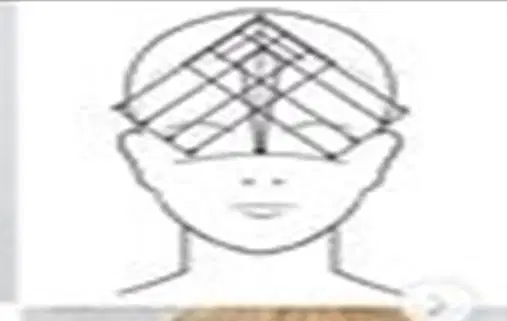
Cutting line
a)
Vertical
b)
Diagonal
56.
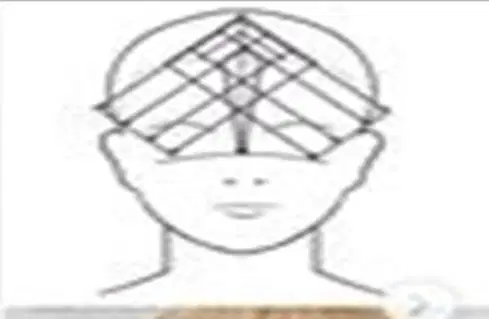
Hand position technique
a)
Palm to palm
b)
Over finger
57.
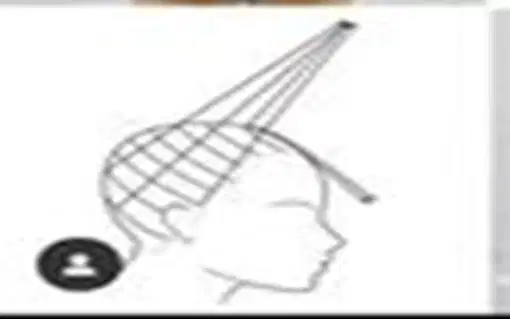
Motion of haircutting
a)
Over direction
b)
Elevation
58.
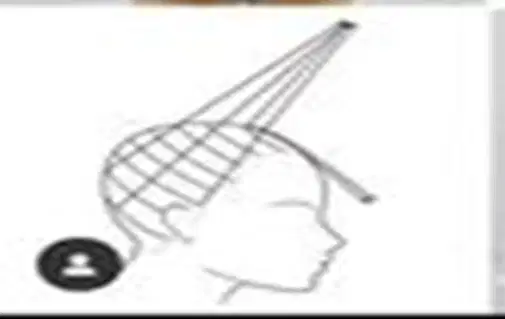
Angle of elevation
a)
180 degree
b)
135 degree
59.

Guidelines
a)
Stationary
b)
Travelling
60.
Method of cutting
a)
Club
b)
Slide
100 %

