
 Worksheets
CCWH#05 The Persians & Greeks
Total questions: 14
Worksheet time: 14mins
Name
Class
Date
1.

What does the word "bias" mean?
a)
A predisposition or prejudice in favor of or against something
b)
A term used to describe historical events
c)
The study of ancient civilizations
d)
A type of warfare in ancient Greece
2.

Who was the founder of the Persian Achaemenid dynasty?
a)
King Cyrus the Great
b)
Darius the First
c)
Herodotus
d)
Xerxes
3.
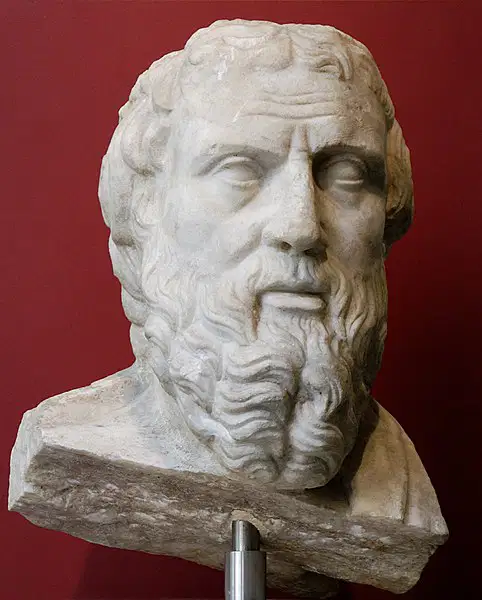
Who was the Greek historian known for writing extensively about the Persians and introducing the concept of historical bias?
a)
Herodotus
b)
Cyrus the Great
c)
King Darius the First
d)
Xerxes
4.

What was the Babylonian exile?
a)
A period of captivity and forced relocation of the Jewish people to Babylon by the Babylonian Empire
b)
A military conflict between the Babylonians and the Persians
c)
A religious pilgrimage undertaken by the Jewish people
d)
A time of cultural exchange and trade between Babylon and other civilizations
5.

What event ended the sad period in Jewish history called The Babylonian Exile?
a)
The conquest by the Persians
b)
The rise of Zoroastrianism
c)
The emergence of Athens as the capital of Greece
d)
The Peloponnesian War
6.

Which of the following were advantages of living in the Persian Empire?
a)
Freedom of religion, light rule, and improved infrastructure.
b)
Better roads and infrastructure
c)
High taxes and slavery
d)
Conquering other empires
7.
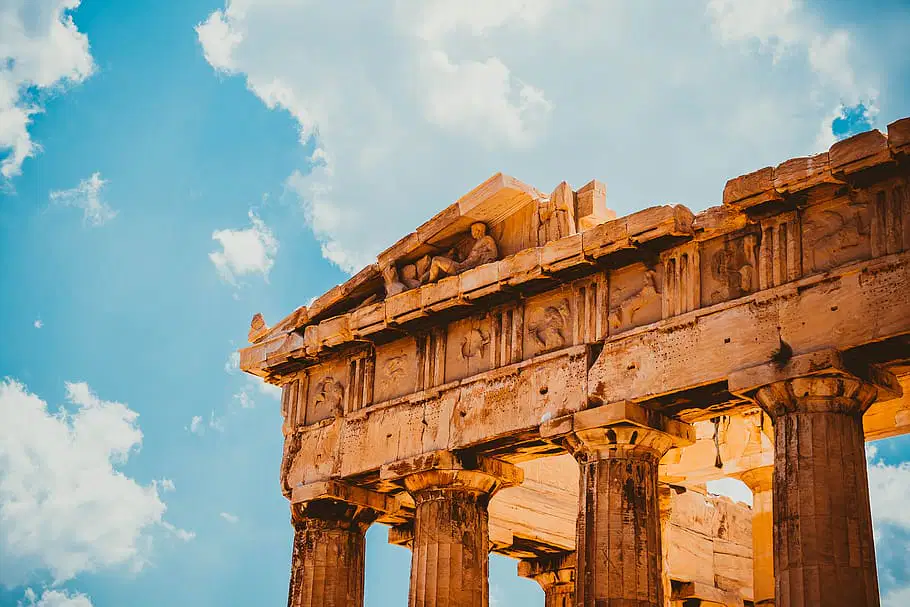
What are some notable contributions Greek culture has given us?
a)
Architecture, philosophy, literature, and the introduction of democracy
b)
Scientific discoveries and inventions
c)
Military strategies and tactics
d)
Economic systems and trade routes
8.

How was ancient Greece politically divided at this time, and what were the characteristics of these divisions?
a)
Ancient Greece was politically divided into city-states with various forms of government, ranging from democratic to dictatorial.
b)
It was a monarchy with a single ruler.
c)
It had a centralized imperial government.
d)
It was an anarchist society with no formal government.
9.

What are some notable battles of the Persian Wars?
a)
Battle of Marathon, Battle of Thermopylae, and Battle of Salamis
b)
Battle of Troy, Battle of Hastings, and Battle of Waterloo
c)
Battle of Gettysburg, Battle of Stalingrad, and Battle of Normandy
d)
Battle of Verdun, Battle of Midway, and Battle of the Bulge
10.

Why did the Greco-Persian Wars begin?
a)
Athens supported Ionian Greeks in their rebellion against Persian rule
b)
Persia invaded Greece to expand its empire
c)
Greece sought revenge for previous conflicts
d)
Both sides sought control over valuable resources
11.
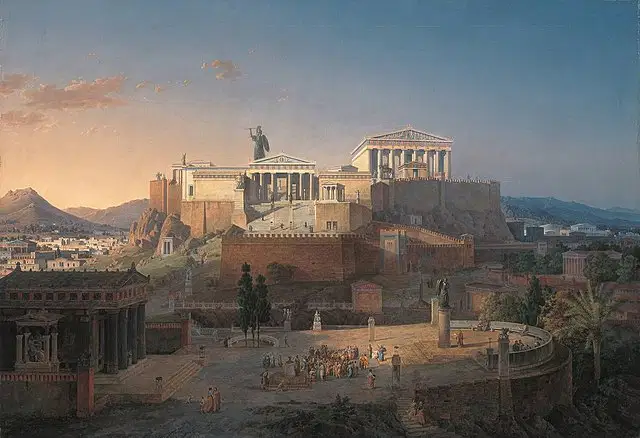
Which Greek city-state emerged as the de facto capital of Greece after the Persian Wars?
a)
Athens
b)
Sparta
c)
Thebes
d)
Corinth
12.
“The strong do what they can, and the weak suffer what they must.” How did the Athenians view power and their interactions with other nations such as on the island of Melos?
a)
They believed "Might Makes Right" and sought to impose their will on other nations
b)
They believed in peaceful coexistence and diplomacy
c)
They practiced isolationism and avoided foreign conflicts
d)
They advocated for equal partnerships and cooperation
13.
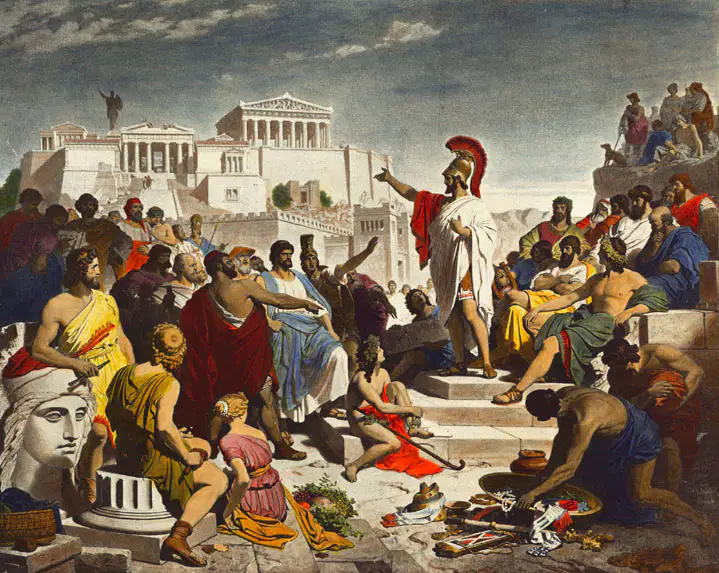
What was the name of the war that took place between the Athenians and the Spartans?
a)
Peloponnesian War
b)
Persian Wars
c)
Greco-Persian War
d)
Battle of Marathon
14.
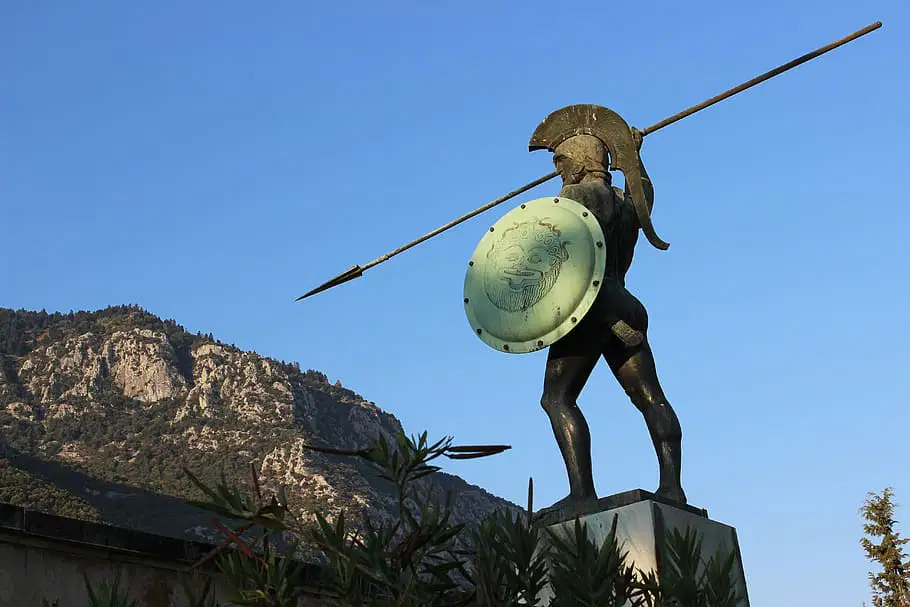
Which answer choice would most align with the points made in this episode Did the right side win the Greco-Persian Wars?
a)
Complex question, with both positive and negative consequences for each side
b)
Yes, because the Greeks were superior
c)
No, because the Persians were stronger
d)
It is impossible to determine
100 %

