
 Worksheets
CCWH#07 2,000 Years of Chinese History!
Total questions: 14
Worksheet time: 7mins
Name
Class
Date
1.

How is Chinese history divided and characterized?
a)
Dynasties ruled by a continuous family with emperors or kings.
b)
Kingdoms based on geographical regions and trade routes.
c)
Periods defined by significant religious and philosophical developments.
d)
Periods based on military conquests and expansion.
2.

What is the concept of the Mandate of Heaven in Chinese history?
a)
A belief that the rise and fall of dynasties are determined by divine intervention based on a ruler's behavior.
b)
A form of government where the people directly elect their rulers.
c)
A philosophy emphasizing individual freedom and autonomy.
d)
A system of governance led by a council of elders.
3.
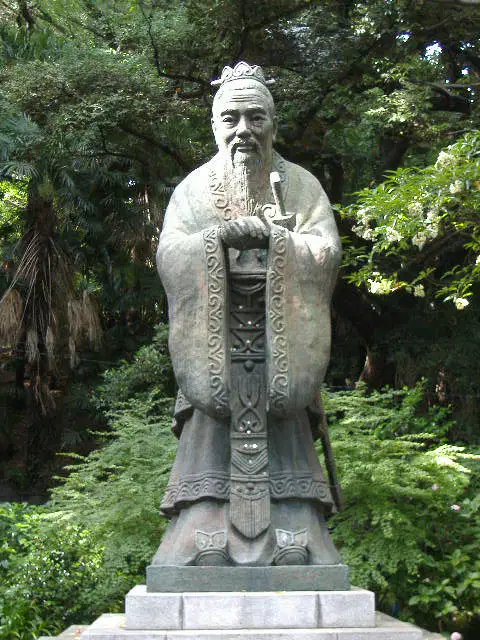
Who was Confucius, and what did he believe was crucial for a strong state?
a)
A philosopher who believed moral behavior and hierarchical relationships were key to a strong state.
b)
A military general who emphasized the importance of military power in governing a state.
c)
A religious leader who advocated for the separation of church and state.
d)
An economist who emphasized economic prosperity as the foundation of a strong state.
4.

What are the five key relationships in Confucianism?
a)
Father and son, ruler and subject, husband and wife, elder brother and younger brother, friend and friend.
b)
Master and servant, merchant and customer, teacher and student, landlord and tenant, sibling and sibling.
c)
Priest and worshiper, judge and defendant, employer and employee, neighbor and neighbor, citizen and government.
d)
Coach and athlete, artist and audience, author and reader, doctor and patient, host and guest.
5.
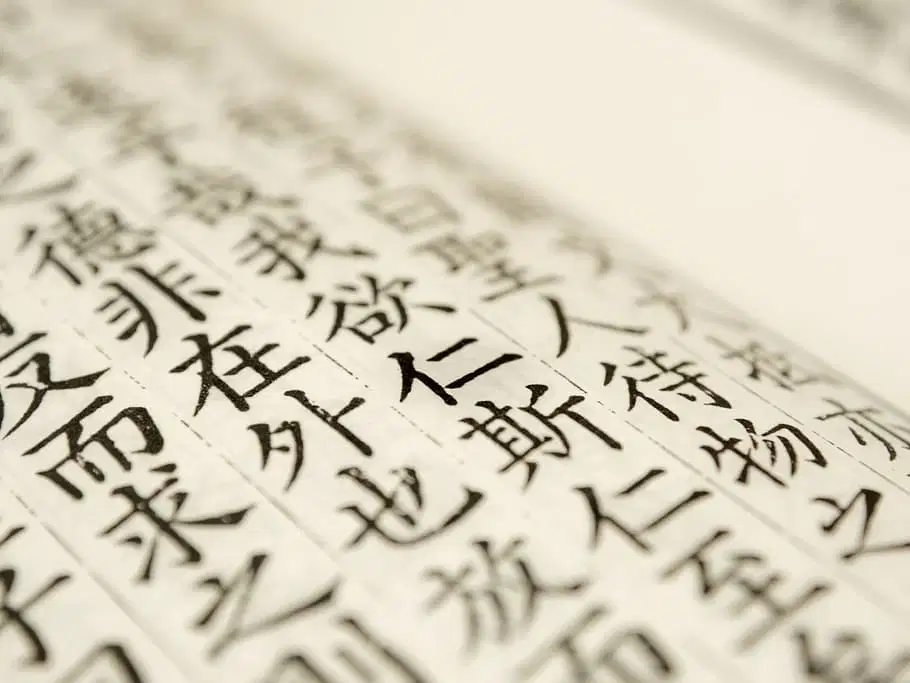
What was the role of Confucianism in Chinese government and education?
a)
It became the basis for governance and education, emphasizing moral behavior and the study of classics.
b)
It was strictly limited to religious and ceremonial practices.
c)
It was marginalized and had no influence on Chinese society.
d)
It was reserved for the elite ruling class and excluded the common people.
6.

What is the significance of ren and li in Confucian philosophy?
a)
Ren refers to proper behavior in relationships, while li refers to rituals and veneration of ancestors.
b)
Ren refers to philosophical reflection, while li refers to artistic expression.
c)
Ren refers to agricultural practices, while li refers to military strategies.
d)
Ren refers to legal principles, while li refers to economic systems.
7.
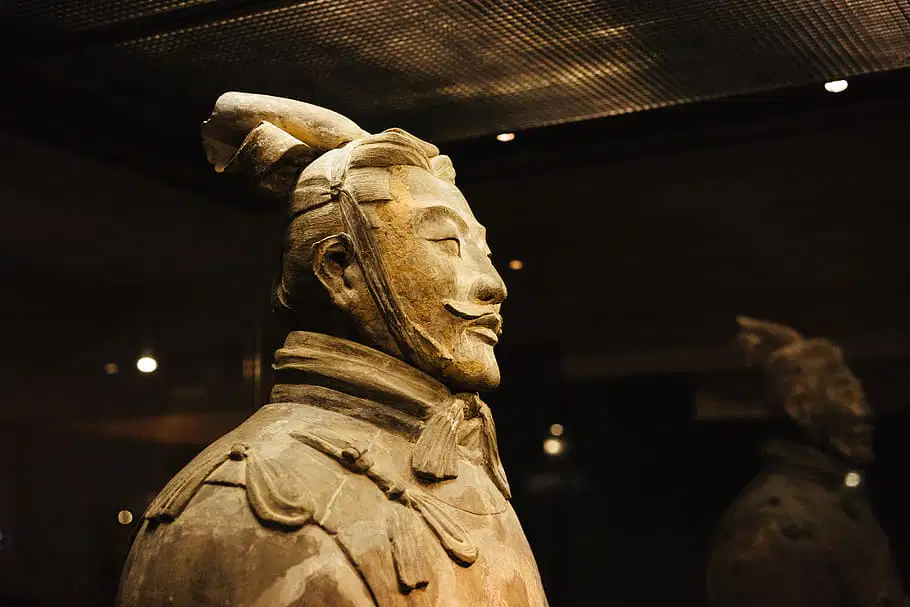
How did early Chinese historians explain the relationship between a ruler's behavior and the fate of a dynasty?
a)
They believed that a ruler's proper behavior maintained the Mandate of Heaven and ensured the dynasty's prosperity.
b)
They believed that a ruler's behavior had no impact on the fate of a dynasty.
c)
They believed that a ruler's behavior determined the length of a dynasty but not its overall success.
d)
They believed that a ruler's behavior only affected the common people, not the fate of the dynasty as a whole.
8.
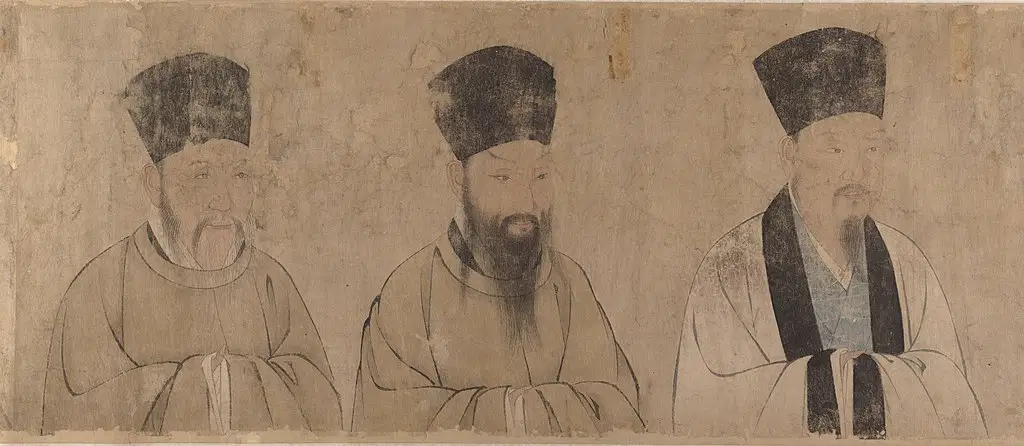
What was the role of early Chinese historians in shaping the narrative of dynastic rise and fall?
a)
They emphasized moralistic perspectives, attributing it to divine intervention and a ruler's behavior.
b)
They focused solely on military conquests and territorial expansion.
c)
They highlighted economic factors as the primary cause of dynastic rise and fall.
d)
They disregarded the role of historians in shaping the narrative of history.
9.
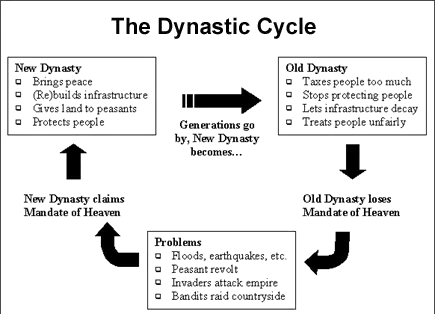
How does the circularity of Chinese history reflect the relationship between historians and events?
a)
It highlights the reciprocal influence between historians and the events they document.
b)
It demonstrates the repetitive nature of historical events in Chinese history.
c)
It signifies the cyclical nature of dynastic rise and fall.
d)
It symbolizes the constant pursuit of historical accuracy by Chinese historians.
10.

What was the significance of the Xia Dynasty in Chinese history?
a)
The Xia Dynasty is considered fictional and has no historical basis.
b)
The Xia Dynasty introduced significant technological advancements.
c)
The Xia Dynasty marked a period of great artistic and cultural flourishing.
d)
The Xia Dynasty established a democratic system of government.
11.

Which dynasty in Chinese history is known for building the Great Wall and producing exquisite vases?
a)
The Ming Dynasty.
b)
The Qing Dynasty.
c)
The Han Dynasty.
d)
The Tang Dynasty.
12.
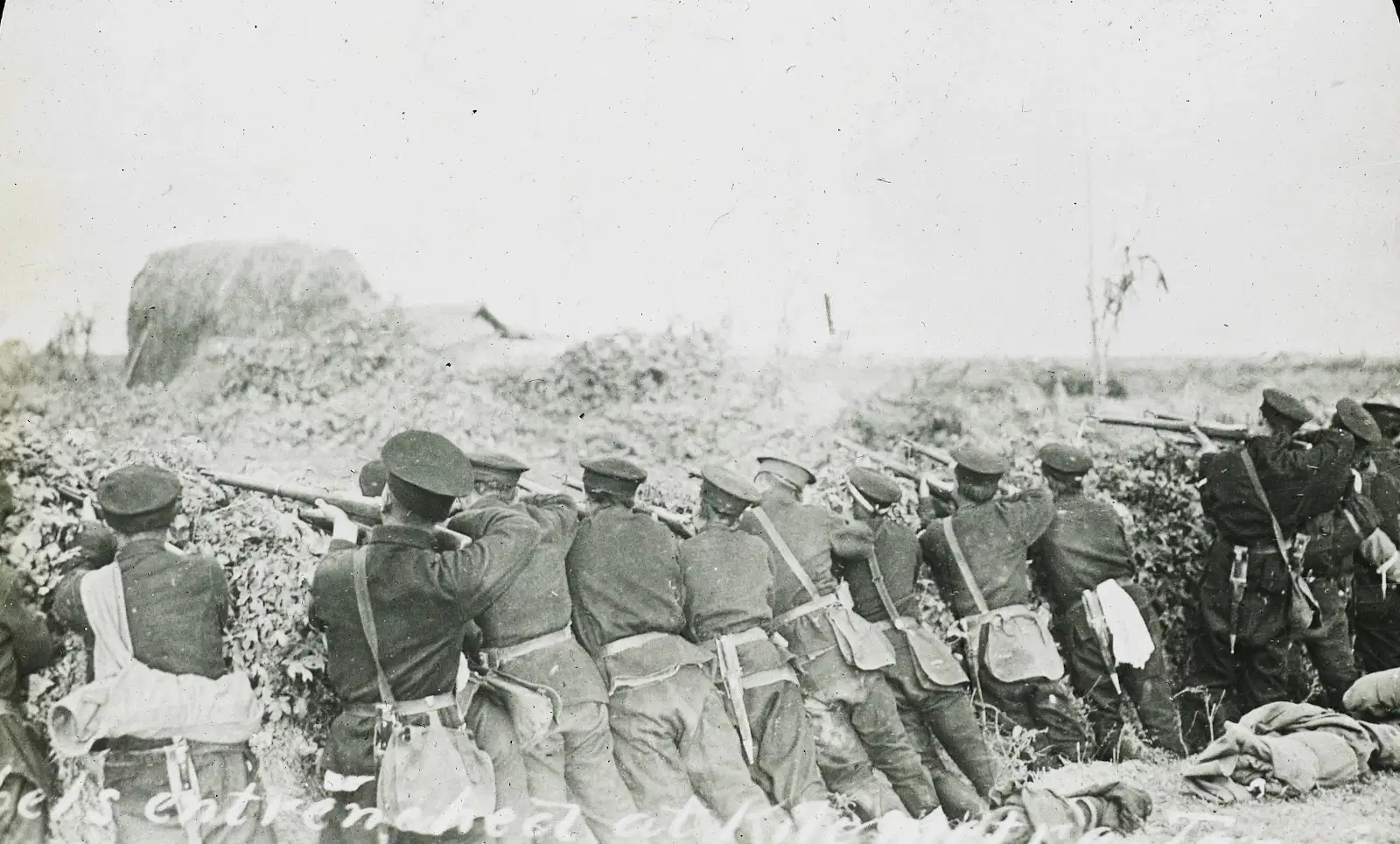
What marked the end of the dynastic system in China?
a)
A rebellion in 1911.
b)
The invasion of foreign powers.
c)
Economic collapse and social unrest.
d)
The introduction of a constitutional monarchy.
13.

What was the significance of the Han Dynasty in Chinese history?
a)
It set the pattern for much of China's history and lasted for almost 400 years.
b)
It introduced Buddhism as the dominant religion in China.
c)
It established a powerful naval empire across Southeast Asia.
d)
It achieved significant territorial expansion through military conquests.
14.
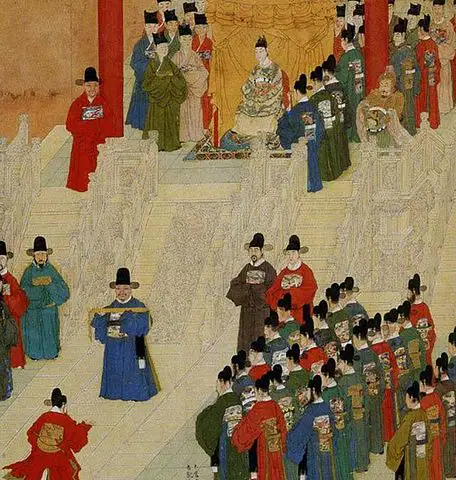
How did the concept of the Mandate of Heaven influence the legitimacy of rulers in Chinese society?
a)
It provided a moral framework to determine if rulers had the divine right to rule.
b)
It promoted an egalitarian society with equal rights for all individuals.
c)
It established a merit-based system for selecting rulers.
d)
It encouraged rebellion and overthrow of rulers who failed to uphold moral principles.
100 %

