
 Worksheets
Solar System Review- J2
Total questions: 21
Worksheet time: 39mins
How many planets are in our solar system?
7
8
9
10
What is the largest planet in our solar system?
Saturn
Mars
Venus
Jupiter
Which planet is the only planet to spin on its side?
Uranus
Venus
Earth
Mars
What are the rings of Saturn made of?
Rocks
Rocks, ice crystals, frozen gas, and water
ice crystals and water
frozen gas and rocks
The Sun is mostly made of this element.
oxygen
carbon
nitrogen
hydrogen
What planet is the same size as Earth?
Pluto
Jupiter
Venus
Saturn
The asteroid belt is located between the orbits of _______.
Venus and Earth
Earth and Mars
Mars and Jupiter
Uranus and Neptune
The Earth takes ____ to revolve around the Sun.
one year
one day
one month
one hour
Day and night on Earth occurs due to ____.
the rotation of the Earth
the tilt of the Earth's axis as it revolves around the Sun
the revolution of the Moon around the Earth
the rotation of the Moon
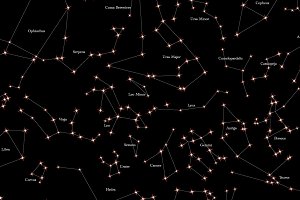
A group of stars forms a pattern in the nightsky is called _______.
a solar system
a constellation
a ball of hot gases
a planet
A chunk of rock that burns up upon entering a planet's atmosphere is called ________.
Comet
Meteor
Meteoroid
Asteroid
A small, solid, rocky body that orbits the Sun is called_______.
Asteroid
Comet
Meteoroid
Meteor
Some of the dwarf planets in the Solar System are __________.
Makemake, Ceres and Charon
Pluto, Pallas and Eris
Eris, Pluto and Nix
Haumea, Pluto and Eris
The outer planets are also called ________.
gas giants
terrestrial planets
inner p[lanets
smallest


Polaris always points____________.
East
West
North
South

