
 Worksheets
Assessment Methods in the British National Curriculum
Total questions: 12
Worksheet time: 6mins

1. What is the British National Curriculum?
a set of educational standards
a set of guidelines
a set of tests

2. Which of the following is the age range for Key Stage 1 in the British National Curriculum?
5-7 years old
9-11 years old
14-16 years old
3. Which of the following is the age range for Key Stage 4 in the British National Curriculum?
9-11 years old
11-14 years old
14-16 years old

4. Which of the following is correct?
KS 3 is 4,5,6 grades in Uzbekistan
KS 3 is 5,6,7 grades in Uzbekistan
KS 3 is 8,9 grades in Uzbekistan

5. Which of the following subjects is NOT taught in Key Stage 2 of the British National Curriculum?

6. Which of the following is NOT a national test that is taken in the British National Curriculum?
IGCSE
GCSE

7. Which of the following is the main difference between formative and summative assessment?
Formative assessment is used to provide feedback to pupils, while summative assessment is used to measure pupil attainment.
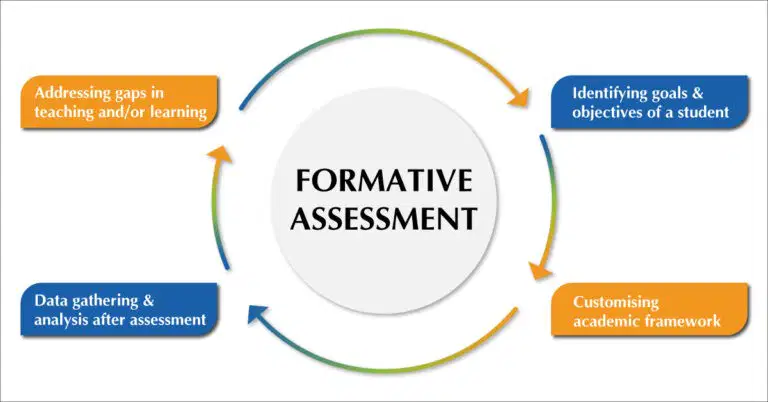
8. Which of the following is an example of formative assessment?

9. Which of the following is an example of summative assessment?
10. Why is formative assessment important?
It helps to identify areas of strengths and weakness for students
11. Why is summative assessment important?
It encourages peer interaction
It helps to measure the effectiveness of teaching methods
12. How can formative and summative assessment be used together to improve learning?
Formative assessment can be used to inform summative assessment. For example, the results of formative assessment can be used to decide which topics to include in a summative assessment.
Summative assessment can be used to motivate pupils. For example, pupils may be more motivated to learn if they know that they will be assessed on their learning.
Formative assessment and summative assessment can be used to provide a more complete picture of pupil attainment. For example, formative assessment can be used to identify pupils' strengths and weaknesses, while summative assessment can be used to measure pupil attainment.
All of them

