
Font size
 Worksheets
Units 1 and 2 BMK Review
Total questions: 61
Worksheet time: 44mins
A religious group that wanted to purify the Church of England. They came to America for religious freedom and settled in the Massachusetts Bay Colony.
Puritans
Pilgrims
Powhatans
Quakers

Thomas Hooker created the first written constitution, limiting the power of the government.
Mayflower Compact
Fundamental Orders of Connecticut
New England Primer
Declaration of Independence
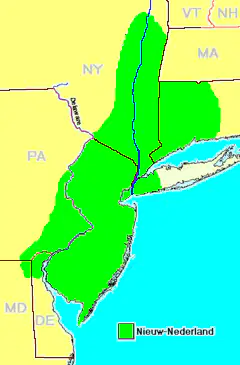
Which colony was originally called New Netherland (which was Dutch) and was renamed when taken by the English?
Rhode Island
Delaware
New York
North Carolina

What was the first permanent English settlement established by the Virginia Company in 1607?
Roanoke
St. Augustine
Jamestown
Plymouth

The leader of Jamestown who was known for being a strict leader. Y'all better work!
John Smith
John Rolfe
William Berkeley
Walter Raleigh

This colony acted as a buffer between Spanish Florida and the other English colonies. It was originally settled by debtors, people who were in jail for excessive debts.
North Carolina
South Carolina
Virginia
Georgia

Which local Indian helped the Pilgrims grow food to survive the second winter?
Samoset
Massasoit
Pocahontas
Squanto
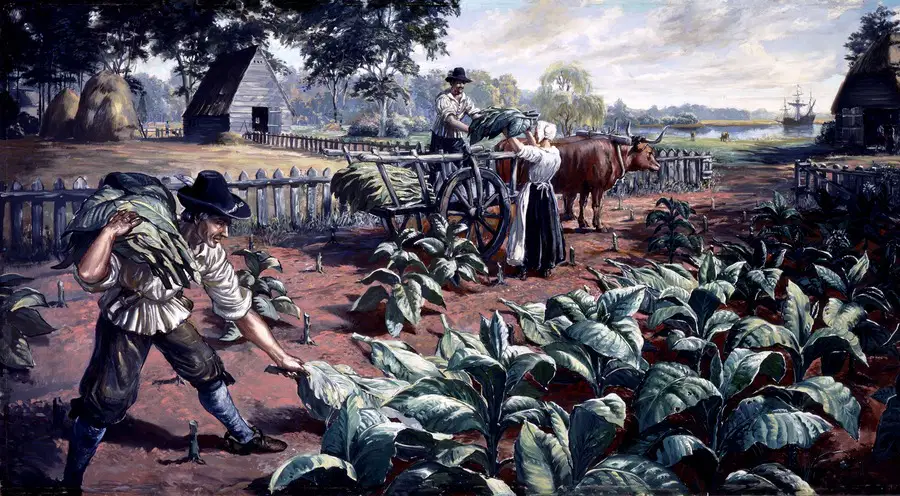
Tobacco, a cash crop, was developed in Virginia by __________.
John Smith
John Winthrop
John Rolfe
John Kent
What is the name of the first representative assembly and legislative body in the colonies?
The Fundamental Orders of Connecticut
The Town Meetings
The House of Burgesses
The Mayflower Compact
Which country originally settled Florida?
Spain
France
New Netherlands
England

How did Anne Hutchinson challenge the authority of the Puritan Church?
She believed she spoke directly to God through prayer.
She believed that the colony should convert.
She was killed during the witch trials.
She tried to take over the church.
________________ was the period when the Powhatan Tribe surrounded Jamestown and would not let the colonists in or out.
The Black Death
The Spanish Flu
The Starving Time
The Bubonic Plague
True or false: Mass hysteria caused many people to be falsely accused during the Salem witch trials.
T
F

How does this map support the idea that more enslaved people were used in the South?
The South had a warmer climate and fewer natural resources than the North.
The South relied on large-scale plantations that needed more labor.
The North had more enslaved people because it needed the labor force for farming.
The South had fewer enslaved people because it had smaller farms.

What is a geographical similarity between the 13 colonies and their development along the East Coast?
The 13 colonies were all located along the coastline, which created port and harbor cities.
The 13 colonies were near lakes primarily used for irrigation.
The 13 colonies were all developed in moderate climates best for cash crops.
The 13 colonies were developed near the mountains to easily gather timber.

Which situation was a cause of the French and Indian War?
Territorial conflict between the French and British over the Ohio River Valley.
Territorial conflict between the Native Americans and British over the Ohio River Valley.
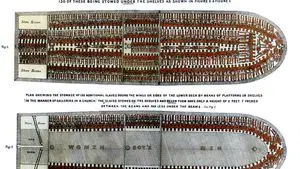
What was travel like for enslaved people during the Middle Passage?
The travel was comfortable with ample space and food.
Enslaved people enjoyed entertainment during the journey.
Brutal and inhumane, involving severe overcrowding, lack of basic necessities, and widespread suffering.
The journey was a short and pleasant experience.
What impact did the Mayflower Compact have on the development of Plymouth Colony?
The Mayflower Compact established a monarchy in Plymouth Colony.
The Mayflower Compact facilitated self-governance and democratic principles in Plymouth Colony.
The Mayflower Compact had no influence on the governance of the colony.
The Mayflower Compact was a religious document that mandated church attendance.

What was Benjamin Franklin's primary purpose for the Join, or Die political cartoon?
To promote economic competition between the colonies.
To show the benefits of British rule.
To promote colonial unity against the French with the Albany Plan.
To encourage changing sides to France instead of Britain.
How did mercantilism affect the colonies? [choose two]
The colonies had to rely on Great Britain for imports and exports.
Colonies could trade with all mother countries (England, France, and Spain).
Colonies could only produce raw materials, NOT manufactured goods.
Colonies could produce as much manufactured goods as they wanted without restriction.
What grievance did the Stamp Act possibly add to the Declaration of Independence?
How did the Sons of Liberty react to the monopoly created by the East India Company and the passing of the Tea Act?
They formed an alliance with the East India Company.
They ignored the Tea Act and continued their regular trade.
The Sons of Liberty protested by organizing the Boston Tea Party.
They supported the Tea Act and encouraged its implementation.
What can be concluded about the Battle of Bunker Hill?
The Battle of Bunker Hill was a difficult battle for the British with a high loss of life.
How did guerrilla warfare help the Continental Army?
Enabled them to conduct effective, surprise tactics against the British.
Encouraged the Continental Army to fight in traditional battle formations.
Provided the Continental Army with heavy artillery support.
Allowed the British to easily defeat the Continental Army.

People who could not afford to come to America agreed to work without pay for a certain number of years. This is called...
Indentured Servants
Slaves
Settlers
Debtors

Which 5 colonies make up the Southern colonies?
Virginia, Maryland, North Carolina, South Carolina, Georgia
Virginia, Delaware, North Carolina, South Carolina, Georgia
Virginia, Pennsylvania, North Carolina, South Carolina, Georgia
Virginia, North Carolina, South Carolina, Georgia, Florida
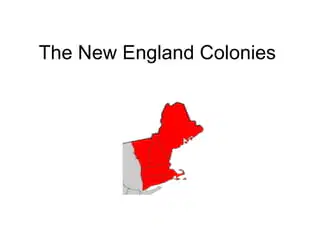
Which four colonies make up the New England colonies?
Massachusetts, New York, New Hampshire, Connecticut
Massachusetts, Connecticut, New Hampshire, Rhode Island
Massachusetts, New York, Connecticut, Rhode Island
Massachusetts, Connecticut, Delaware, New Hampshire

Which four colonies make up the Mid-Atlantic (Middle) colonies?
New York, Maryland, New Jersey, Pennsylvania
New Jersey, Pennsylvania, Maryland, Rhode Island
New York, New Jersey, New Hampshire, Pennsylvania
New York, Pennsylvania, New Jersey, Delaware

What was the religious movement that helped unite the American colonies?
Great Awakening
Protestant Reformation
Red Scare
French & Indian War
Why were the American colonists taxed after the French and Indian War?
Britain was in debt and needed money
That was the agreement with the Native Americans
They made too much money
Townshend Acts

What law decreed that the colonists could not settle west of the Appalachian Mountains?
Quartering Act
Declaration of Independence
Proclamation of 1763
Intolerable Act
Written by Thomas Paine, this pamphlet sold 500,000 copies and helped sway colonists toward independence.
Declaration of Independence
Constitution
2 Treatise of Government
Common Sense
This secret society, formed by Boston patriot Samuel Adams, stirred a protest movement to oppose British policies.
Sons of Anarchy
The Secret Loyalists
Sons of Liberty
The Continentals
The man responsible for writing most of the Declaration of Independence was
John Adams
Thomas Jefferson
Benjamin Franklin
George Washington

This event occurred when a crowd of protesters threw snowballs and rocks at British soldiers, who then fired into the crowd.
Stamp Act
Boston Tea Party
Boston Massacre
Intolerable Acts

Which battle started the American Revolution with the "shot heard around the world?"
Which of the following was a result of the Christmas day Battle of Trenton?
The British Army surrendered to Benedict Arnold
George Washington surprised and defeated a group of Hessian soldiers
The war ended
The French decided to send aid to the Americans

Which battle is considered the turning point of the American Revolution?
The Battle of Saratoga
The Battle of Yorktown
The Battle of Bunker Hill
The Battle of Lexington and Concord
Which group was most directly protected by the Proclamation of 1763?
The French settlers in Canada
The British soldiers stationed in the colonies
The Native American tribes living west of the Appalachian Mountains
The American colonists living along the eastern seaboard

Gave a speech in 1775 to the Virginia legislature in which he famously declared, “Give me liberty, or give me death!” – which fired up America’s fight for independence.
Thomas Jefferson
Patrick Henry
Thomas Paine
George Washington

A Boston silversmith, engraver & a Sons of Liberty member. Warned the colonists that the British were on their way to Lexington and Concord, MA.
Paul Revere
John Adams
Benjamin Franklin
James Armistead
Type of resistance: Using coded languages and songs to communicate and spread messages to other enslaved people and abolitionists
Overt Resistance
Covert Resistance
Talking Back, Running Away, Revolts, Rebellion, Fighting are all examples of what kind of resistance?
Overt
Covert

The area in blue was colonized by which country?
France
Spain
England
Dutch

The area in green was colonized by which country?
France
Spain
England
Dutch

The area in yellow was colonized by which country?
France
Spain
England
Dutch

Which of these completes the graphic organizer?
Parliament repeals the Stamp and Sugar Acts
King George III allows colonists to petition tax relief
Parliament passes the Intolerable Acts
King George III appoints colonial representatives to Parliament
Which act required colonists to provide housing and supplies to British soldiers?
Tea Act
Quartering Act
Sugar Act
Stamp Act
The Virginia Joint stock company founded which settlement?
Virginia
Jamestown
Massachusetts Bay Colony
Plymouth

What does this chart show about the Quakers?
Focused on business and trade.
Believed in promoting violence and conflict to solve problems.
Advocated for social justice, equality, and peace.
Supported the continuation of slavery and inequality.
How did the Sons of Liberty react to the monopoly created by the East India Trading Company and the passing of the Tea Act?
Why was New England a poor geographical environment for cash crops?
New England had rocky soil, short growing season, and harsh climate.
What did Roger Williams do after being banished from the Massachussetts Bay Colony?

The colonies in this list were primarily founded to give colonists a greater degree of
freedom from debts
religious freedom
economic freedom
freedom of speech
Which of the following was a primary reason France sought to colonize North America?
To reduce overpopulation in Europe
To create communities founded on religious tolerance
To profit from trading in furs and other goods
To create joint ventures with other European nations

Which motive best completes the diagram?
To promote free enterprise
To extend democracy
To expand empires
To found utopian communities

What motivated many of the colonists to migrate to Jamestown?
they were seeking opportunities to farm
they were seeking opportunities to achieve wealth through finding gold
they were seeking a place to practice the Catholic religion
they were seeking a war with the Natives over land

These colonies were settled by the Pilgrims in 1620 and Puritans in 1630 to escape religious persecution in England
Middle Colonies
New England
Southern Colonies
Canada

