wayground logo

Free Printable Worksheets

NEW

Font size

S
M
L
XL
Worksheets

matter and Atom

Total questions: 29

Worksheet time: 38mins
Name
Class
Date
1.
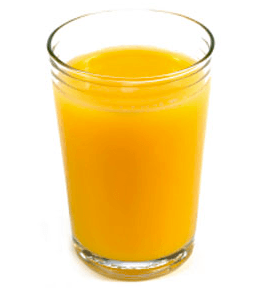
Which form of matter take the shape of a container like this juice?
a)
liquid
b)
solid
c)
glass
d)
gas
2.
What happens when my glass of water is sitting in the sun and disappears into a gas?
a)
evaporation
b)
burning
c)
melting
d)
freezing
3.
In a solid, the particles
a)
vibrate in place
b)
slide past one another
c)
overcome the strong attraction
d)
move freely in any direction
4.
Condensation is . . . .
a)
gas to liquid
b)
liquid to gas
c)
gas to solid
d)
solid to liquid
5.
Freezing (or solidification) is . . . .
a)
liquid to solid
b)
solid to liquid
c)
solid to gas
d)
solid to plasma
6.
5. What is it called when a solid turns directly into a gas?
a)
Sublimation
b)
Condensation
c)
Liquid
7.
The phase change from water vapor to liquid water is known as...
a)
evaporation
b)
precipitation
c)
condensation
d)
sublimation
8.
Vaporization includes _____________ and  _____________.
a)
melting and boiling
b)
condensation and boiling
c)
sublimation and freezing
d)
evaporation and boiling
9.
Endothermic phase changes include
a)
conduction, convection and radiation
b)
freezing and condensation
c)
vaporization and condensation
d)
melting, boiling, evaporation and sublimation
10.
Exothermic phase changes include
a)
conduction, convection and radiation
b)
freezing and condensation
c)
vaporization and condensation
d)
melting, boiling, evaporation and sublimation
11.
________________________ is the temperature at which a solid begins to liquefy.
a)
boiling point
b)
condensation point
c)
melting point
d)
evaporation point
12.
Deposition is the opposite of sublimation.
a)
True
b)
False
13.
What is the change from a Solid to a Gas due to the gaining of energy?
a)
Condensation
b)
Vaporization
c)
Sublimation
d)
Deposition
14.
4. What type of state of matter is a gas that has electrons flowing through it?
a)
Gas
b)
Liquid
c)
Plasma
d)
Solid
15.
At higher temperatures
a)
particles in an object have less energy
b)
particles in an object move faster
c)
a gas contracts
16.

Matter can be classified in:

a)

Mixtures and Compounds

b)

Substances and Elements

c)

Mixtures and Substances

d)

Elements and compounds

17.

NH3 is a:

a)

Mixture

b)

Element

c)

Compound

d)

Particle

18.

Water and sugar dissolved is an example of:

a)

Compound

b)

Homogeneous mixture

c)

Substance

d)

Heterogeneous mixture

19.

A chocolate chip cookie is an example of:

a)

Substance

b)

Compound

c)

Homogeneous mixture

d)

Heterogeneous mixture

20.

The atmosphere is:

a)

Mixture

b)

Substance

c)

Element

d)

Compound

21.

The atomic _____ tells you how many protons are there in an atom.

a)

size

b)

mass

c)

weight

d)

number

22.

What subatomic particle has a positive charge?

a)

Proton

b)

Electron

c)

Neutron

d)

Isotope

23.

A small, dense region composed of protons and neutrons at the center of an atom.

a)

Electron

b)

Isotope

c)

Nucleus

d)

Orbital

24.

Which of the following is responsible for the mass of an atom?

a)

Neutrons and electrons

b)

Protons and neutrons

c)

Protons only

d)

Neutrons only

25.

If an atom has 45 protons, 46 electrons and 57 neutrons, the atomic mass is

a)

102

b)

103

c)

45

d)

57

26.

If an atom has 34 protons, 36 electrons and 44


neutrons, the atomic mass is

a)

78

b)

79

c)

80

d)

70

27.

If O gains two electrons, it becomes:

a)

O2

b)

O-

c)

O2+

d)

O2-

28.

If an atom has 13 protons, 12 electrons and its atomic mass is 27, how many neutrons are there?

a)

14

b)

15

c)

13

d)

12

29.

If an atom has 15 electrons, 14 protons and 14 neutrons, the it is:

a)

a cation

b)

an anion

c)

a neutral atom

d)

more information is needed