
NEW
Font size
 Worksheets
Qtr 1 Fast & Curious
Total questions: 25
Worksheet time: 22mins

Maya designed an experiment to answer the following question:
How does the amount of water given to a lima
bean seed affect how tall it grows?
In this experiment, what is the independent variable?
the amount of water
the kind of plant
how tall the plants grow
the amount of sunlight it gets
The type of variable that responds to the experiment and is what you measure or count to determine if your hypothesis is true.
Independent variable
Dependent variable
Controlled variable (constant)
Dory set up an experiment to see how the mass of a ball affects the distance it rolls off a ramp. What is the dependent variable?

Using the picture, identify the control group.
(Click on the picture to enlarge it.)
Trial 1
Trial 2
Trial 3
Which statement most accurately compares the difference between scientific theories and scientific laws?
Scientific laws are based on evidence while scientific theories are not
Scientific theories involve only biology, while scientific laws involve all types of science.
Scientific theories involve mathematical equations, while scientific laws are based on observations.
Scientific laws predict or state what will happen in a natural event, while scientific theories explain why those events happen.
Reproduction that only involves one parent and produces identical offspring
Asexual
Sexual
Division
Addition
What is an autotroph?
an organism that can make their own food.
an organism that cannot make their own food
an organism whose cells do not contain nuclei.
an organism whose cells contain nuclei.
Maintaining a stable internal environment is called
homeostasis
equilibrium
balance
evenness

The genetic material of an offspring of sexually reproducing organisms is best described as
identical to that of the other offspring
a copy of the genetic material of the mother
a copy of the genetic material of the father
genes from both parents, in unique combinations
Reproduction that involves cells from two different parents fusing to produce the first cell of a new organism.
Asexual
Sexual
Budding
Division
Which kind of organism is smaller?
prokaryotic
eukaryotic
Which reproductive strategy usually requires more time and energy?
Sexual reproduction
Asexual reproduction
Organisms that cannot make their own food and must obtain energy from other organisms are called
autotrophs
heterotrophs
prokaryotes
eukaryotes
What word describes any trait that helps an organism survive and/or reproduce in its environment?
natural selection
mutation
camouflage
adaptation
Why are advantageous (beneficial) traits more likely to be passed onto offspring?
Because individuals with those traits are more likely to survive and reproduce.
Because those traits come from dominant alleles.
Because those traits come from recessive alleles.
Because the organism knew it needed that trait, survives, and passes it on.
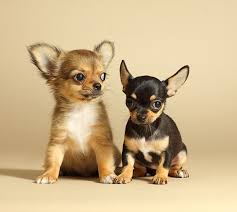
Dogs breeds are the result of what process?
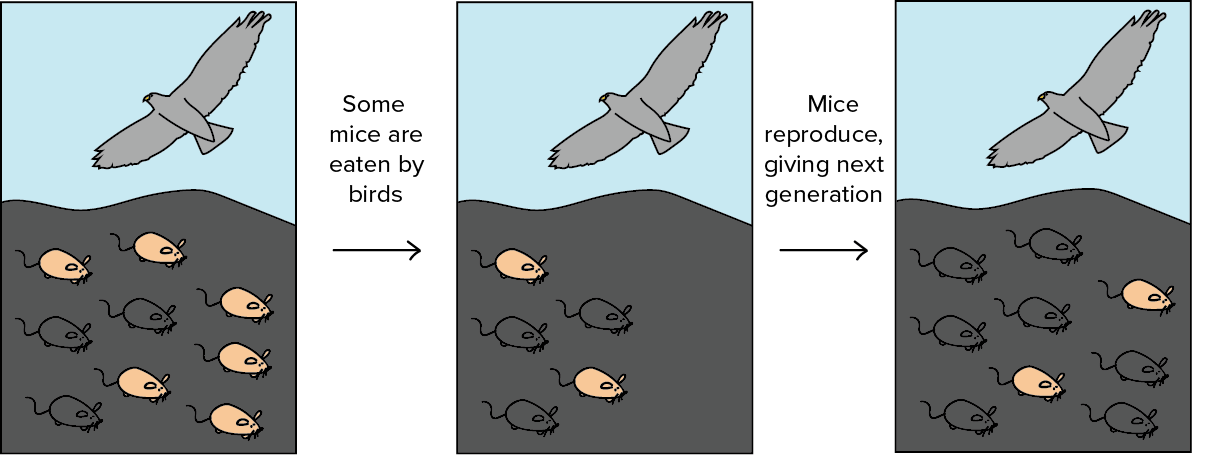
Why is the mouse population changing over time?
(Click on the picture to enlarge it.)
The mice are changing their fur color on purpose so that they can blend in better.
More dark mice are surviving to reproduce.
More light mice are surviving to reproduce.
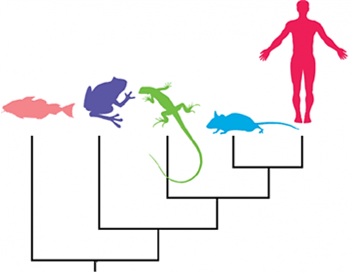
According to this diagram, who is the lizard (green) more closely related to?
frog
mouse
fish
Which type of biomolecule would a long-distance runner most likely choose to eat two hours before a race?
A protein, because it builds muscle mass.
A lipid because it provides long term energy storage.
A carbohydrate because it releases energy quickly.
A protein, because it transports oxygen into the blood stream.
Which biomolecules contains your genetic information?
Proteins
Lipids
Carbohydrates
Nucleic Acids
Amino acids are the smaller building blocks of...
nucleic acids
proteins
carbohydrates
lipids
Which biomolecules act as energy storage for the cell and also cushions organs and insulates (keeps warm) the body?
Carbohyrdates
Lipids
Proteins
Nucleic Acids
Which of the following food items contains the most lipids?



