
 Worksheets
Enzyme and Macromolecules Quizizz
Total questions: 49
Worksheet time: 49mins
Enzymes are an example of
Lipids
Carbohydrate
Protein
Nucleic Acid
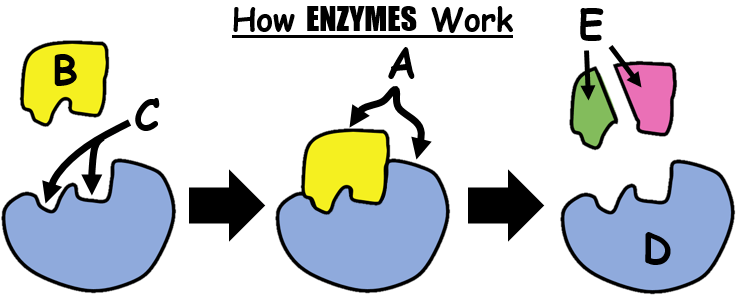
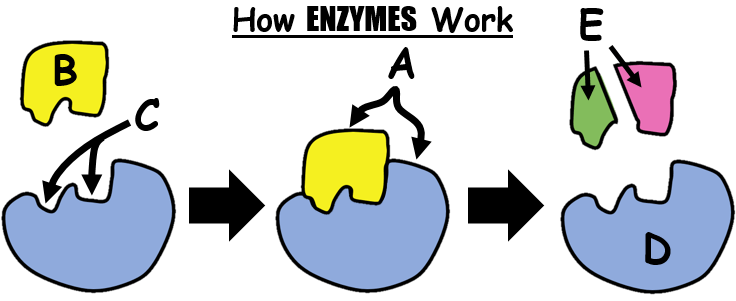
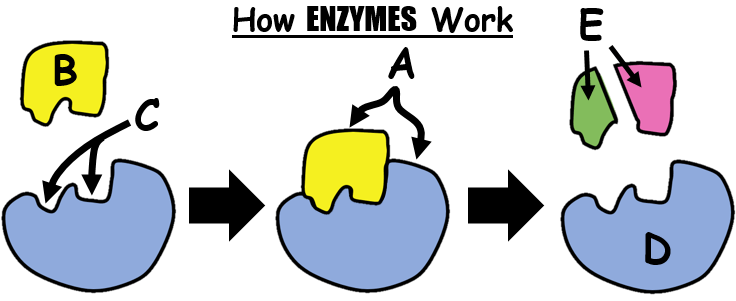
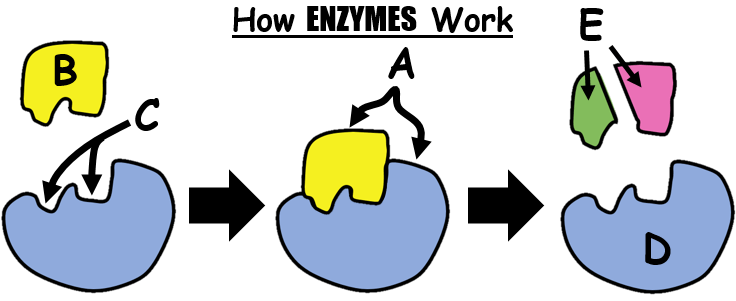
amino acid
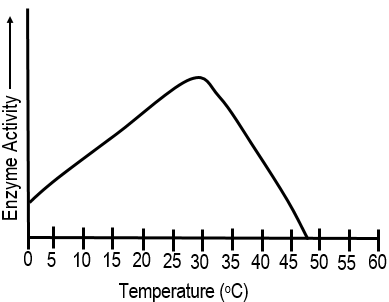
What has happened to the enzyme at 47 degrees
It got used up
It finished the reaction
It denatured from heat
It maximized its activity

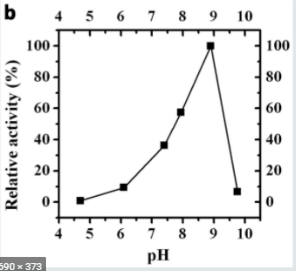
What is the optimal pH for this enzyme?
6
10
9
7
Enzymes are _______________ that _____________________ chemical reactions by ____________ the amount of activation energy required to start the reaction.
carbohydrates, slow down, lowering
proteins, speed up, increasing
lipids, speed up, lowering
proteins, speed up, lowering

Which enzyme is most efficient in a high pH environment?

Which enzyme will work best in the stomach?
Which enzyme(s) could be found in the mouth?
chymotrypsin, papain, and cholinesterase
papain

The diagram shows an enzyme molecule.
Which of the following molecules is the substrate for the enzyme?


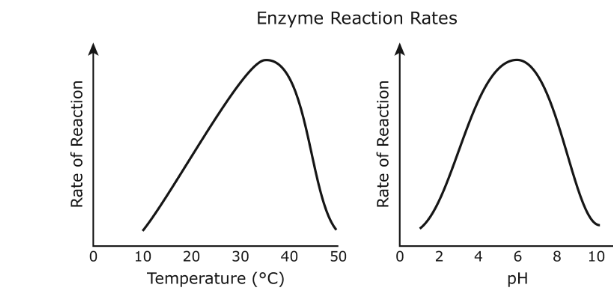
The graphs show the reaction rate for an enzyme across a range of temperatures and pH.
Based on these data, this enzyme functions best as what temperature and pH?
Temperature of 27oC and a pH of 4
Temperature of 37oC and a pH of 6
Temperature of 40oC and a pH of 8
Temperature of 50oC and a pH of 10
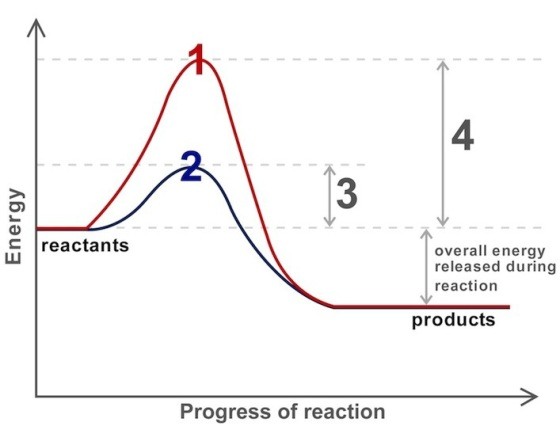
Which color line represent a reaction with an enzyme present?
Blue
Red
Both
Neither
If the enzyme has a pH range of 7 to 9 what effect would a pH of 3 have on the enzyme?
Enzymes work best at an optimal temperature and pH
make it denature
no effect
make it work better

At what pH level do amylase and arginase have the same enzyme activity?
10
7
9
5
8

What is another word for an enzyme?
Catalyst
Carbohydrate
Phospholipid
Active Site
Which macromolecule has amino acids as monomers?
Carbohydrates
Lipids
Proteins
Nucleic acids
Which one of the macromolecules are instrumental in the cell membrane?
Carbohydrates
Lipids
Proteins
Nucleic acids
This macromolecules is responsible for providing our genetic material (DNA and RNA). Choose the macromolecule that best fits.
Carbohydrates
Lipids
Proteins
Nucleic acids
My monomers are glycerol and fatty acids. Which macromolecule am I?
Carbohydrates
Lipids
Proteins
Nucleic acids

Which macromolecule is structured this way?
Carbohydrates
Lipids
Proteins
Nucleic acids
What is this an image of?
Monosaccharide
Disaccharide
Polysaccharide
Nucleic acid

Which macromolecule is structured in this way?
Carbohydrates
Lipids
Proteins
Nucleic acids

Which of the macromolecules are structured in this way?
Carbohydrates
Lipids
Proteins
Nucleic acids
What suffix is used in the names of most enzymes?
-nic
-ase
-gen
-yme
The _______________________ model helps illustrate how each enzyme only works on one specific substrate.
enzyme-substrate
bits and pieces
lock-and-key
matter and energy
Which macromolecule is used as our quick source of energy?
Lipids/Fats
Nucleic Acids
Proteins
Carbohydrates
Which macromolecule stores energy?
Carbohydrates
Proteins
Lipids/Fats
Nucleic Acids
Which of the following is not one of the four major classes of macromolecules?
Lipids
Carbon
Protein
Carbohydrates
Nucleic Acid

Which macromolecule is pictured?
Enzymes can be reused over and over again.
True
False
Sugar belongs to which class of macromolecules?
proteins
lipids
nucleic acids
carbohydrates
What is an example of a lipid?


Which macromolecule typically ends with -ose? (glucose, sucrose, fructose)
carbohydrates
lipids
proteins
nucleic acids
Which macromolecule usually ends with -in (melanin, keratin, melatonin)
carbohydrates
lipids
proteins
nucleic acids

