

Wayground logo

Free Printable Worksheets

Font size

S
M
L
XL
Worksheets

Unit 1 Review 2023

Total questions: 41

Worksheet time: 26mins

Name
Class
Date
1.
What causes the seasons to change?
a)
The Earth's distance from the Sun
b)
The waming and cooling of Earth's core
c)
The Earth's tilt in relation to the sun
d)
The Earth rotation on its axis.
2.
What happens when it's spring in the Southern Hemisphere?
a)
It's fall in the Northern Hemisphere
b)
It's summer in the Northern Hemisphere
c)
It's winter in the Northern Hemisphere
d)
It's spring in the Northern Hemisphere
3.
The day with the most hours of daylight is called the
a)
summer solstice
b)
winter solstice
c)
vernal equinox
d)
autumnal equinox
4.
The day with the fewest hours of daylight
a)
winter solstice
b)
summer solstice
c)
vernal equinox
d)
autumnal equinox
5.
The time required for the Earth to orbit the sun once is called a 
a)
day
b)
week
c)
month
d)
year
6.

Climate refers to average weather conditions that have been measured over many years.

a)

true

b)

false

7.

What is it called when the Earth's nights and days are equal in time?

a)

aquifer

b)

equinox

c)

equal nights

d)

equinix

8.

Why is the temperature at the Equator always warm?

a)

Global warming affects it the most

b)

Ocean currents make it warm

c)

It receives direct sunlight year round

d)

It has lots of volcanoes

9.
How do ocean currents affect the climate?
a)
Moves ocean pollution to different parts of the world causing global-warming 
b)
Moves warm and cool water around the world
c)
Helps build a stronger and bigger ecosystem
10.
What is the most important factor of climate?
a)
Air Pressure
b)
Ocean Currents
c)
Elevations
d)
Latitude
11.
What factor of climate does this picture depict?
a)
Air Pressure
b)
Orographic Effect
c)
Storms
d)
Elevation
12.
Compared to the climate on the eastern side of the mountain range, the western side is likely to get
a)
frequent hurricanes
b)
heavy rains/ larger snow accumulation
c)
Monsoons
d)
less precipitation
13.
What is the climate like on the leeward side of the mountain?
a)
arid
b)
cool
c)
moist
d)
humid
14.
The middle latitude zoness are also known as the _____________ zones
a)
Temperate
b)
Polar
c)
Tropical
d)
Arctic
15.
 The rain shadow is shown at ____
a)
A
b)
B
c)
C
d)
D
16.
The tropical climate zone ranges from... and receives how much sunlight?
a)
ranges from 0- 30 degrees and receives the most direct sun
b)
30-60 degrees and receives some sunlight
c)
60-90 degrees and receives the most indirect sunlight
d)
90-120 degrees and no sunlight
17.

What type of biome is this?

a)

Desert

b)

Grassland

c)

Deciduous Forest

d)

Tropical Rainforest

18.

What external forces shape Earth's surface?

a)

Weathering & Erosion

b)

Weather & Erosion

c)

Wet & Erase

d)

Tectonic Plate Movement

19.

What is it called when two plates come together?

a)

Fault

b)

Divergence

c)

Convergence

d)

Fold

20.

How do plate tectonics affect Earth's surface?

a)

Plate tectonics create puzzles for geographers to put together

b)

Plate tectonics create wind currents

c)

Plate tectonics move creating landforms

21.

What is it called when two plates move away from each other?

a)

Convergence

b)

Fold

c)

Fault

d)

Divergence

22.

What is the condition of the Earth's atmosphere at a certain time and place?

a)

Climate

b)

Temperature

c)

Weather

d)

Air Pressure

23.

What are the 3 major climate zones in order from the equator to the poles?

a)

Polar, Temperate, Tropical

b)

Tropical, Temperate, Polar

c)

Temperate, Polar, Tropical

d)

Temperate, Tropical, Polar

24.

What fault is the image below an example of?

a)

Subduction

b)

Divergence

c)

Convergence

d)

Transformative

25.

What fault is the image below an example of?

a)

subduction

b)

divergence

c)

convergence

d)

transformative

26.

What fault is the image below an example of?

a)

subduction

b)

divergence

c)

convergence

d)

transformative

27.

Polar Bears hunt seals on ice:

a)

Biosphere-Hydrosphere

b)

Biosphere-Atmosphere

c)

Hydrosphere-Atmosphere

d)

Hydrosphere-Lithosphere

28.

A farmer plowing a field to plant crops:

a)

Biosphere-Atmosphere

b)

Biosphere-Lithosphere

c)

Biosphere-Hydrosphere

d)

Lithosphere-Hydrosphere

29.

A thunderstorm is a connection between:

a)

Biosphere-Atmosphere

b)

Atmosphere-Hydrosphere

c)

Hydrosphere-Lithosphere

d)

Hydrosphere-Biosphere

30.

Oceans, rivers, lakes, and the moisture in the air are all part of which of Earth's spheres?

a)

Hydrosphere

b)

Biosphere

c)

Atmosphere

d)

Lithosphere

31.
Water evaporating from the surface of a lake moves from the...
a)
Atmosphere to the geosphere 
b)
Geosphere to the hydrosphere 
c)
Hydrosphere to the atmosphere 
d)
Atmosphere to the hydrosphere 
32.
When trees die, they often fall on the ground and decompose. Which part of the Earth system includes dead and decomposed trees?
a)
biosphere
b)
geosphere
c)
atmosphere
d)
hydrosphere
33.
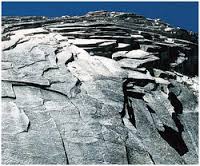
What is weathering?
a)
The process by which
water, ice, wind or gravity
moves fragments of rock
and soil.
b)
The process by which
water, ice, wind or gravity
deposit rock sediments
and soil in a new place.
c)
The breaking down of
Earth’s crust into smaller
and smaller pieces.
34.
What is erosion?
a)
The process by which
water, ice, wind or gravity
moves fragments of rock
and soil.
b)
The process by which
water, ice, wind or gravity
deposit rock sediments
and soil in a new place.
c)
The breaking down of
Earth’s crust into smaller
and smaller pieces.
35.
Which of the following is NOT a type of physical weathering?
a)
burrowing plants
b)
ice wedging
c)
plant roots
d)
acid rain
36.
What is mechanical weathering?
a)
Process through which rocks are physically broken into smaller pieces.
b)
Rocks are broken down through chemical changes.
c)
Rocks are worn away from acid in plant roots.
d)
Rocks broken down by machinery.
37.

Pieces of rock or dirt that have broken off of landforms are called ____.

a)

Rock Dust

b)

Sediment

c)

Geodudes

38.

____ describes when sediment is dropped in a new location.

a)

Weathering

b)

Erosion

c)

Deposition

39.

A fast moving river CARRIES rocks downstream.

a)

weathering

b)

erosion

c)

deposition

40.

Layers of sediment DROPPED at the bottom of the ocean.

a)

weathering

b)

erosion

c)

deposition

41.

Rocks being picked up and CARRIED downstream.

a)

weathering

b)

erosion

c)

deposition
