wayground logo

Free Printable Worksheets

Font size

S
M
L
XL
Worksheets

Unit 2 Review - NHS 2023

Total questions: 104

Worksheet time: 2hrs 37mins
Name
Class
Date
1.

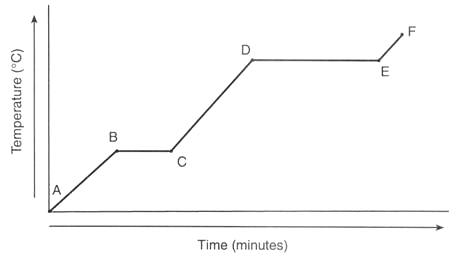
Are the particles moving faster or slower as time goes on?

a)

Faster

b)

Slower

2.

What is happening to the particles in the substance between points A and B?

a)

Melting

b)

Freezing

c)

Speeding Up

d)

Slowing Down

3.

What is happening to the particles in the substance between points D and E?

a)

Melting

b)

Freezing

c)

Vaporizing

d)

Sublimating

4.

The melting point of the sample is

a)

-60 ºC

b)

-100 ºC

c)

60 ºC

d)

100 ºC

5.

Given the heating curve of a solid being heated at a constant rate, what is the boiling point of this substance?

a)

20°C

b)

50°C

c)

110°C

d)

170°C

6.

What term goes on the y-axis? (A)

a)

Heat(Energy)

b)

Temperature

c)

Phase

d)

Type of Matter

7.

What term goes on the x-axis? (B)

a)

Heat(Energy)

b)

Temperature

c)

Phase

d)

Type of Matter

8.

What phase(s) of matter exists in part C of the graph?

a)

Gas

b)

Liquid

c)

Solid

d)

Plasma

9.

What phase(s) of matter exists in part D of the graph?

a)

Gas

b)

Liquid

c)

Solid

d)

Plasma

10.

What phase(s) of matter exists in part E of the graph?

a)

Gas

b)

Liquid

c)

Solid

d)

Plasma

11.

What phase(s) change occurs when you start at D and end at E?

a)

Freezing

b)

Melting

c)

Condensing

d)

Vaporization

12.

What phase(s) change occurs when you start at D and end at C?

a)

Freezing

b)

Melting

c)

Condensing

d)

Vaporization

13.

What phase(s) change occurs when you start at E and end at D?

a)

Freezing

b)

Melting

c)

Condensing

d)

Vaporization

14.

What phase change occurs when you start at C and end at D?

a)

Freezing

b)

Melting

c)

Condensing

d)

Vaporization

15.

On which parts of the graph does the temperature remain the same?

a)

Between C and D

b)

Between D and E

c)

At C, D, or E

d)

On both flat sections

16.
As substance goes from D to E what happens to the distance between the particles?
a)
particles get closer together
b)
particles disappear
c)
particles get far apart
17.
At what temperature is this substance melting?
a)
50C
b)
100C
c)
0C
18.

Which parts of the graph show water going through a phase change?

a)

Between A & B, Between C & D, and Between D & E

b)

Between B & C and Between D & E

c)

Just between B & C

d)

Just between C & D

19.

Between what two letters is the substance completely solid?

a)

Between D & E

b)

Between E & F

c)

Between A & B

d)

Between B & C

e)

Between C & D

20.

Between what two letters is the substance completely liquid?

a)

Between D & E

b)

Between E & F

c)

Between A & B

d)

Between B & C

e)

Between C & D

21.

Where on the graph is the substance increasing in temperature?

a)

Between A & B, Between C & D, and Between E & F

b)

Between B & C and Between D & E

c)

Just between B & C

d)

Just between C & D

22.

Where is the energy increasing?

a)

A

b)

E

c)

I

d)

B

23.

Where is the material evaporating?

a)

D

b)

I

c)

J

d)

G

24.

Where is the thermal energy decreasing?

a)

J

b)

F

c)

B

d)

I

25.

Where is the average kinetic energy of the molecules decreasing?

a)

J

b)

F

c)

B

d)

I

26.

Between points D and E,

a)

the substance is a gas

b)

the temperature is increasing

c)

the temperature is decreasing

d)

a phase change is occurring

27.
An example of a chemical property is...
a)
density 
b)
ability to conduct electric current
c)
toxicity
d)
magnetism
28.
Malleability and ductility are...
a)
Chemical changes
b)
Chemical properties
c)
Physical changes
d)
Physical properties
29.
Which of the following is a chemical property of water?
a)
Reacts with pure Sodium
b)
Boils at 100 degrees Celsius
c)
Dissolves Sugar
d)
Has a density of 1 g/mL
30.
Shanna and Ryan were comparing two brands of motor oil. They put a drop of each brand on one end of a glass slide and then tipped the slide. They measured how long it took each drop to reach the bottom of the slide. What were they testing?
a)
physical property
b)
chemical property
c)
physical change 
d)
chemical change
31.
One cup of water is left outside for two days when it was checked there was only half a cup left. What happened?
a)
evaporation; chemical change
b)
condensation; physical change 
c)
evaporation; physical change
d)
condensation; chemical change
32.
Which of the following is not a clue that a chemical change has taken place?
a)
Changing size
b)
Changing color
c)
A gas being formed
d)
Formation of a precipitate
33.
In each investigation scientists combined 2 liquids under a vent hood & recorded their observations. In which investigation is a chemical change least likely?
a)
1
b)
2
c)
3
d)
4
34.
Density
a)
Physical Property
b)
Chemical Property
35.
Flammability (burns)
a)
Physical Property
b)
Chemical Property
36.
Solubility (dissolves)
a)
Physical Proeprty
b)
Chemical Property
37.
Reacts with acid
a)
Physical Property
b)
Chemical Property
38.
Are made from a combination of 2 or more elements...
a)
Molecules
b)
Pure Substances
c)
Compounds
d)
Elements
39.
A combination that can be separated by physical processes is a .....
a)
Pure Substance
b)
Glucose
c)
Element
d)
Mixture
40.
A mixture that is NOT evenly distributed is called ....
a)
Compounded
b)
Homogenous
c)
Heterogenous
d)
Salty
41.
Mixture, such as mixed nuts or dry soup mix, in which different materials are unevenly distributed and are easily identified.
a)
suspension
b)
homogeneous mixture
c)
heterogeneous mixture
d)
colloid
42.
Substance with atoms that are all alike.
a)
element
b)
compound
c)
homogeneous mixture
d)
heterogeneous mixture
43.
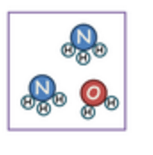
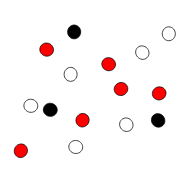
This picture represents: 
a)
Element
b)
Compound
c)
Mixture of Elements
d)
Mixture of Compounds
44.
This picture represents: 
a)
Element
b)
Compound
c)
Mixture of Elements
d)
Mixture of Compounds
45.
This picture represents: 
a)
Element
b)
Compound
c)
Mixture of Elements
d)
Mixture of Compounds
46.
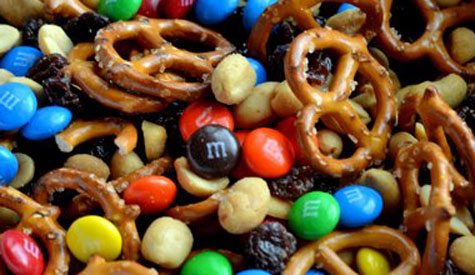
What type of mixture is this?
a)
homogenous mixture
b)
chemical
c)
heterogeneous mixture 
d)
solid mix
47.
All matter is made up of .....
a)
Compounds
b)
Atoms
c)
Molecules
d)
Sunshine
48.
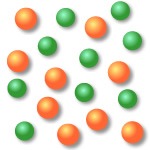
This picture represents which of the following?
a)
element
b)
compound
c)
mixture
49.
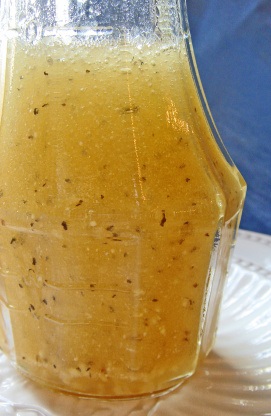
Italian Salad Dressing is a . . .
a)
heterogeneous mixture
b)
homogeneous mixture
c)
Pure Substance
d)
Compound
50.
Which of the following is an element?
a)
Sugar
b)
Salt
c)
Water
d)
Oxygen
51.
A mixture that is so evenly mixed you can't see the parts.  Such as Kool-Aid
a)
Homogeneous Mixture
b)
Heterogeneous Mixture
c)
Pure Substance
52.

What type of mixture is black ink?

a)

heterogeneous mixture

b)

homogeneous mixture

53.
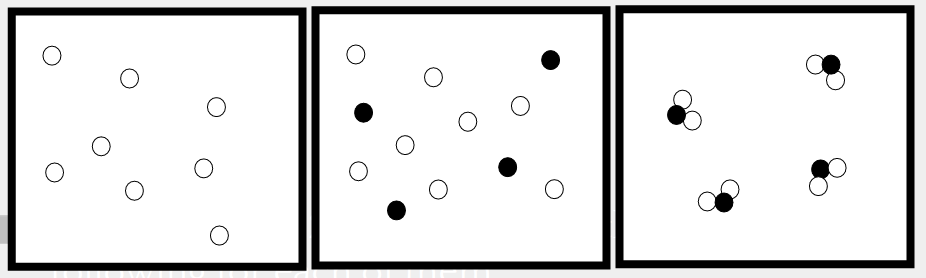
Which one of these pictures represents a pure substance? 
a)
1 and 2
b)
1 and 3
c)
2 and 3
d)
1, 2 and 3
54.
Which one of these pictures represents a mixture? 
a)
1
b)
2
c)
3
d)
1, 2 and 3
55.
True or False: Matter is divided into two main groups: substances and mixtures.
a)
True
b)
False
56.
True or False: The two types of substances are elements and compounds.
a)
True
b)
False
57.
Element or compound that can't be broken down into simpler components and maintains the properties of the original substance.
a)
compound
b)
substance
c)
element
d)
law of conservation of mass
58.

Water and sugar dissolved is an example of:

a)

Compound

b)

Homogeneous mixture

c)

Substance

d)

Heterogeneous mixture

59.

NH3 is a:

a)

Mixture

b)

Element

c)

Compound

d)

Particle

60.

Water and sugar dissolved is an example of:

a)

Compound

b)

Homogeneous mixture

c)

Substance

d)

Heterogeneous mixture

61.
This picture represents: 
a)
Element
b)
Compound
c)
Mixture of Elements
d)
Mixture of Compounds
62.
A substance with two or more elements that are combined in a fixed proportion
a)
colloid
b)
compound
c)
element
d)
solution
63.
A substance in which all the atoms are the same
a)
colloid
b)
homogeneous mixture
c)
solution
d)
element
64.
A mixture that contains two or more substances blended evenly throughout
a)
heterogeneous mixture
b)
homogeneous mixture
c)
suspension
d)
colloid
65.
A mixture in which different materials can be identified easily
a)
element
b)
heterogeneous mixture
c)
homogeneous mixture
d)
solution
66.
Italian Salad Dressing is a . . .
a)
heterogeneous mixture
b)
homogeneous mixture
c)
Pure Substance
d)
Compound
67.
A combination that can be separated by physical processes is a .....
a)
Pure Substance
b)
Glucose
c)
Element
d)
Mixture
68.
This picture represents: 
a)
Element
b)
Compound
c)
Mixture of Elements
d)
Mixture of Compounds
69.
Which one of these pictures represents a mixture? 
a)
1
b)
2
c)
3
d)
1, 2 and 3
70.
Which of the following are pure substances?
a)
solutions
b)
compounds
c)
homogeneous mixtures
d)
colloids
71.
Which of the following is NOT a pure substance?
a)
milk
b)
oxygen
c)
water
d)
carbon dioxide
72.
A substance that is made up of only one kind of atom is a(an)
a)
compound
b)
homogeneous mixture
c)
element
d)
solution
73.
If an unknown substance CANNOT be broken down into simpler substances, it is 
a)
a compound
b)
an element
c)
a homogeneous mixture
d)
a heterogeneous mixture
74.
If a material contains three elements joined in a fixed proportion, it is a(an)
a)
mixture
b)
solution
c)
atom
d)
compound
75.
Water is a compound because it
a)
can not be broken down into simpler substances
b)
always has two hydrogen atoms for each oxygen atom
c)
is made of water atoms joined together
d)
is heterogeneous
76.
Which of the following is a mixture?
a)
carbon dioxide
b)
silicon
c)
silicon dioxide
d)
sand
77.
Which of the following is a characteristic of a mixture?
a)
has varying properties
b)
has a fixed composition
c)
contains only pure substances
d)
does not reflect light
78.
A mixture that appears to contain only one substance is a(an)
a)
homogeneous mixture
b)
heterogeneous mixture
c)
compound
d)
element
79.
Which of the following is a heterogeneous mixture?
a)
water in a swimming pool
b)
sugar water
c)
a jar of mixed nuts
d)
stainless steel
80.
A mixture can be classified as a solution, suspension or colloid based on the 
a)
number of particles it contains
b)
size of its largest particles
c)
color of its particles
d)
size of its smallest particles
81.
you are about to open a container of soy milk but notice that there are instructions to "shake well before serving".  The soy milk is most likely a
a)
solution
b)
pure substance
c)
colloid
d)
suspension
82.
If you shine a light into a liquid and the light is scattered, the liquid is a
a)
solution
b)
suspension
c)
colloid
d)
suspension or colloid
83.
A homogeneous mixture with very small particles is a 
a)
solution
b)
suspension
c)
colloid
d)
pure substance
84.
Fog is considered a
a)
solution
b)
suspensionice
c)
colloid
d)
pure substance
85.
This image represents a(n)
a)
element
b)
compound
c)
mixture
d)
colloid
86.
The air that fills this room would be classified as
a)
an element
b)
a compound
c)
a homogeneous mixture
d)
a pure substance
87.
Why is the composition of every element fixed?
a)
Because it contains only one type of atom.
b)
Because the ratio of atoms is always the same.
c)
Because the atoms are so small.
d)
Because God said so.
88.
Two classifications of a pure substance are
a)
homogeneous and heterogeneous
b)
atoms and elements
c)
elements and compounds
d)
solutions and colloids
89.
Two classifications of homogeneous mixtures would be
a)
solutions and colloids
b)
solutions and suspensions
c)
colloids and suspensions
d)
compounds and solutions
90.

What is an allotrope?

a)

Same element, different structural arrangement

b)

When an element combines with another substance

c)

When a compound breaks apart

d)

A mixture of elements

91.

_______ is used to separate a solid from a liquid in which it is suspended.

a)

filtration

b)

distillation

c)

suspension

d)

colloid

92.
Milk is a 
a)
solution
b)
suspension
c)
colloid
93.

How would you classify the matter pictured?

a)

Compound

b)

Diatomic Element

c)

Mixture of Elements

d)

Mixture of Compounds

94.

How would you classify the matter pictured?

a)

Diatomic Element

b)

Compound

c)

Mixture of Elements

d)

Mixture Compounds

95.

One of two or more forms of an element with different structures and properties when they are in the same state-solid, liquid, or gas.

a)

allotrope

b)

unit cell

c)

surfactant

d)

pascal

96.

Which set of properties, intensive or extensive, are based on the size of a sample?

a)

intensive

b)

extensive

97.

What kind of physical property is this? Number of Atoms

a)

intensive

b)

extensive

98.

What kind of physical property is this? Boiling Point

a)

intensive

b)

extensive

99.

What kind of physical property is this? Mass

a)

intensive

b)

extensive

100.

In an endothermic reaction, heat is ...

a)

taken in

b)

given out

101.
In an exothermic reaction, heat is ...
a)
taken in
b)
given out
102.

6. Which of these processes is always exothermic?

a)

A. evaporation

b)

B. burning

c)

C. insulation

d)

D. melting

103.
During an endothermic reaction in a beaker if we are part of the surroundings and touched the beaker, it would feel _______. 
a)
Warm
b)
Cold
104.
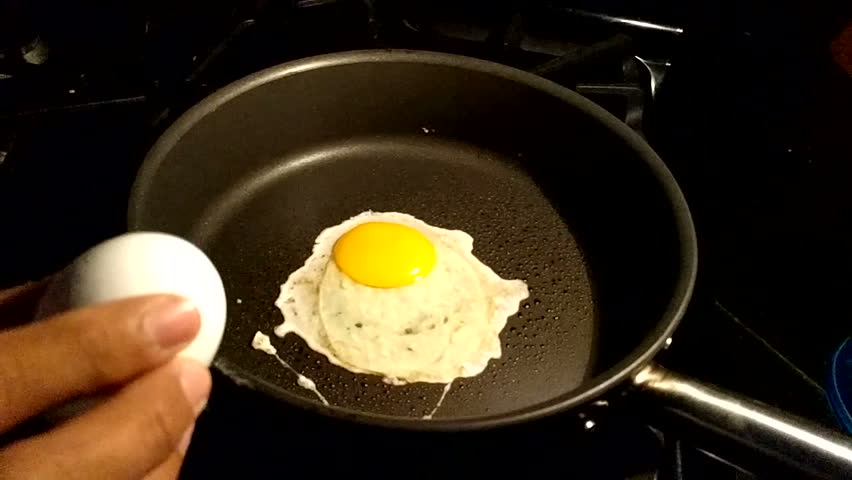
Baking bread and cooking an egg are examples of....?
a)
Endothermic processes
b)
Exothermic processess
c)
None of these