
 Worksheets
Tissue Reinforcement Check
Total questions: 25
Worksheet time: 13mins
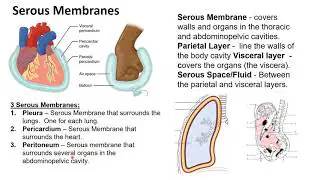
Forms membranes that covers organs.
A. Connective Tissue
B. Epithelial Tissue (Epithelium)
C. Muscle Tissue
D. Nervous

Allows movement of limbs and for organ movements within the body.
A. Connective Tissue
B. Epithelial Tissue (Epithelium)
C. Muscle Tissue
D. Nervous

Cells of this tissue may absorb and/or secrete substances.
A. Connective Tissue
B. Epithelial Tissue (Epithelium)
C. Muscle Tissue
D. Nervous
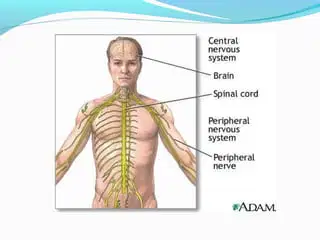
Function is to coordinate the body’s activities.
A. Connective Tissue
B. Epithelial Tissue (Epithelium)
C. Muscle Tissue
D. Nervous

Surrounds and cushions body organs.
A. Connective Tissue
B. Epithelial Tissue (Epithelium)
C. Muscle Tissue
D. Nervous

Uses electrochemical signals to carry out its functions.
A. Connective Tissue
B. Epithelial Tissue (Epithelium)
C. Muscle Tissue
D. Nervous

Widely distributed; found in bones, cartilages, and fat deposits.
A. Connective Tissue
B. Epithelial Tissue (Epithelium)
C. Muscle Tissue
D. Nervous
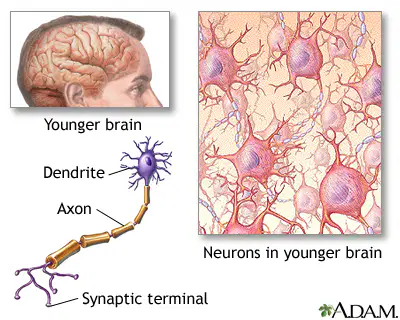
Forms the brain and spinal cord.
A. Connective Tissue
B. Epithelial Tissue (Epithelium)
C. Muscle Tissue
D. Nervous
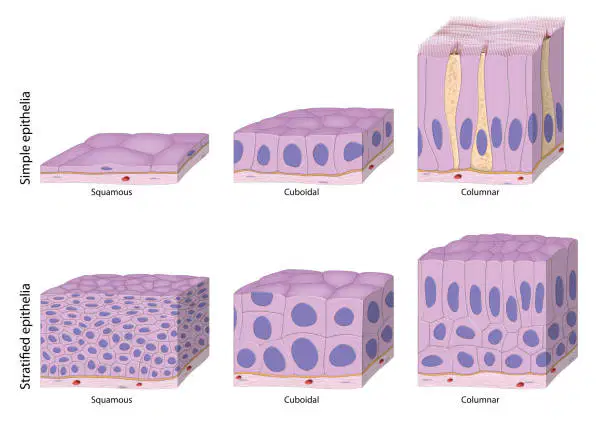
Can be simple or stratified.
A. Connective Tissue
B. Epithelial Tissue (Epithelium)
C. Muscle Tissue
D. Nervous
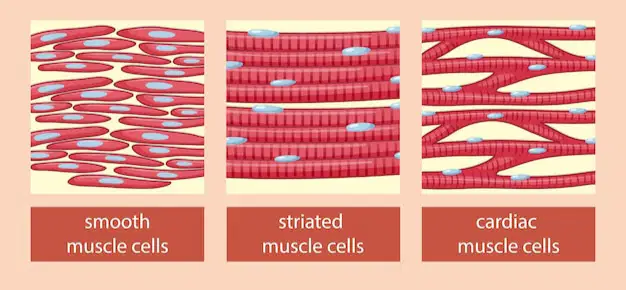
Can be smooth or striated.
A. Connective Tissue
B. Epithelial Tissue (Epithelium)
C. Muscle Tissue
D. Nervous

A tissue is:
A. a collection of organelles
B. a collection of cells
C. a collection of organs
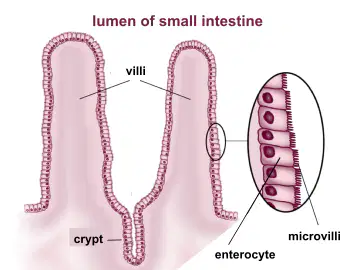
The inside of the intestines are lined with:
A. Cuboidal epithelium
B. Simple columnar epithelium
C. Pseudostratified epithelium
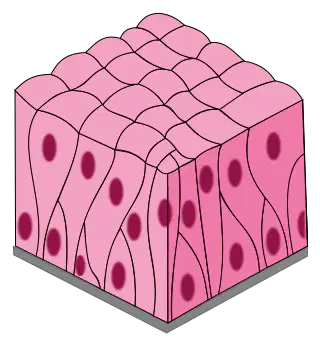
The tissue illustrated is:
A. Cuboidal epithelium
B. Simple columnar epithelium
C. Pseudostratified epithelium

The urinary system is lined with:
Transitional epithelium
Columnar cells
Squamous cells
Simple squamous epithelium performs what function?
A. Absorption
B. Diffusion
C. Detoxification

These structures increase surface area to improve absorption:
A. Cilia
B. Goblet cells
C. Microvilli
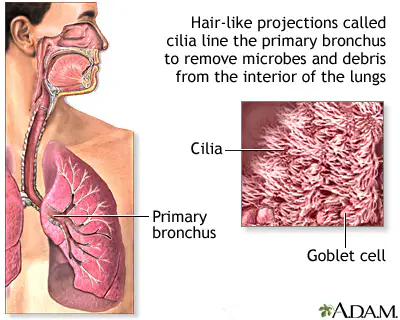
Structures on the surface of some epithelial to sweep debris:
A. Cilia
B. Goblet cells
C. Microvilli
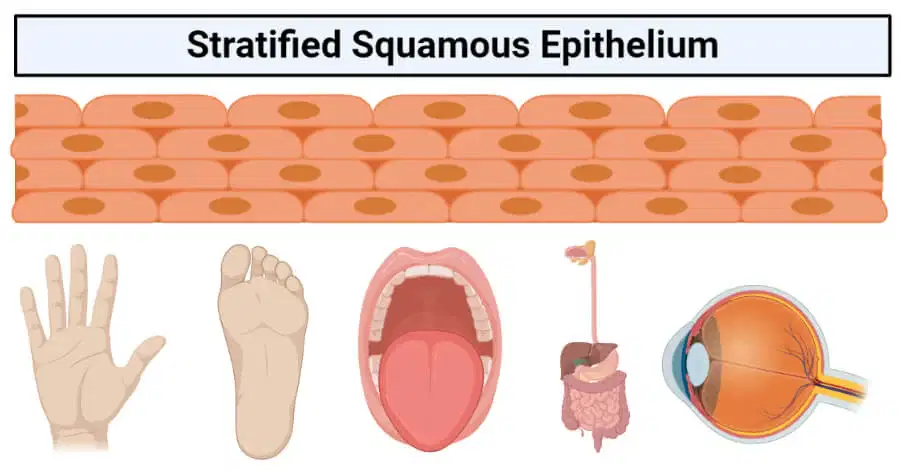
The cells of stratified squamous epithelium are continually:
A. changing shape
B. being replaced
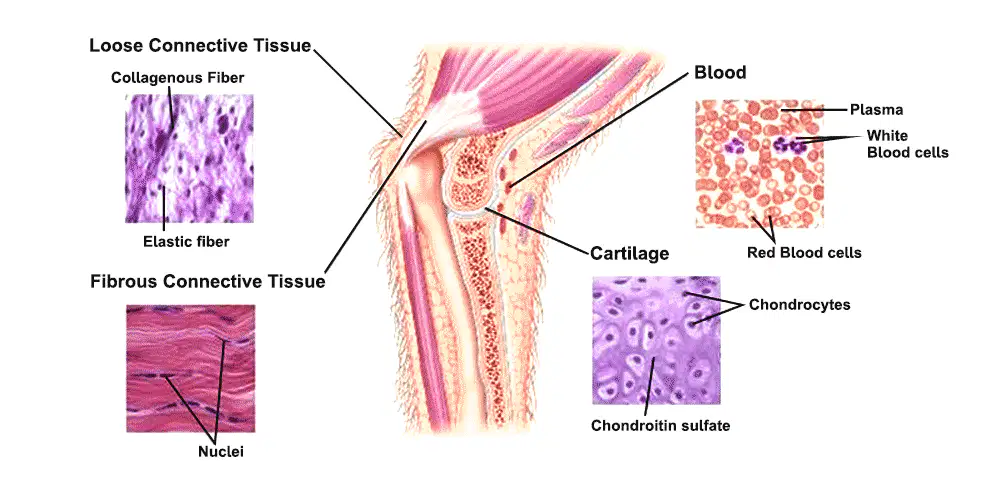
Which of the following is NOT connective tissues:
A. Blood
B. Tendon
C. Saliva
D. Adipose
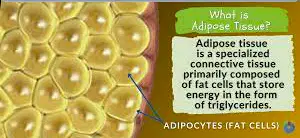
Tissue that is used to store energy and to insulate the body:
A. Adipose
B. Fibrous
C. Cartilage
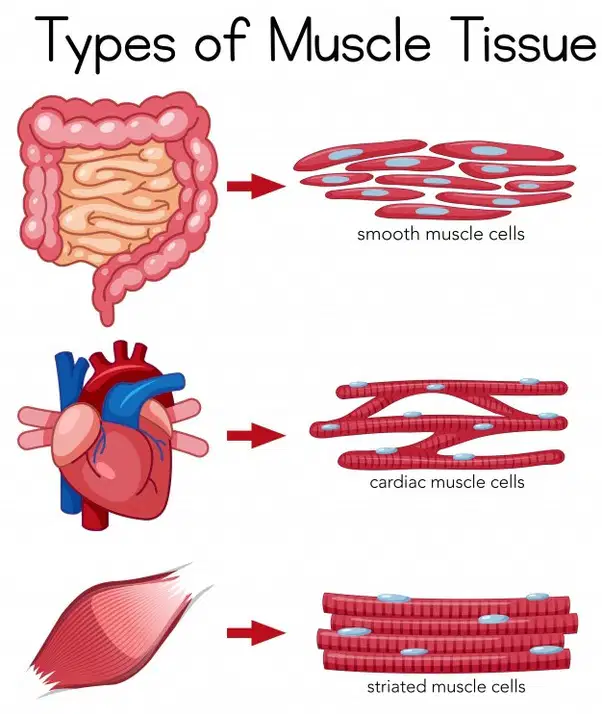
Which muscle tissue moves bones?
A. Striated
B. Smooth
C. Cardiac
Which muscle tissue is found in the gut wall?
A. Striated
B. Smooth
C. Cardiac
Which muscle tissue is found in the heart?
A. Striated
B. Smooth
C. Cardiac
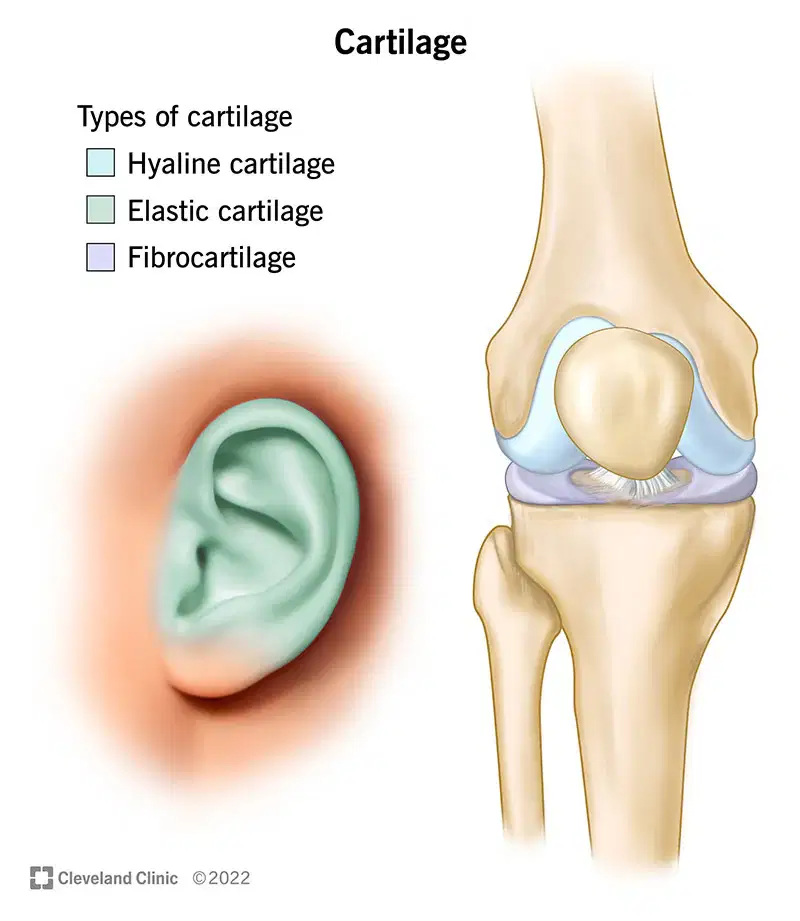
Type of cartilage that pads the ends of bones:
A. Fibrocartilage
B. Elastic
C. Hyaline
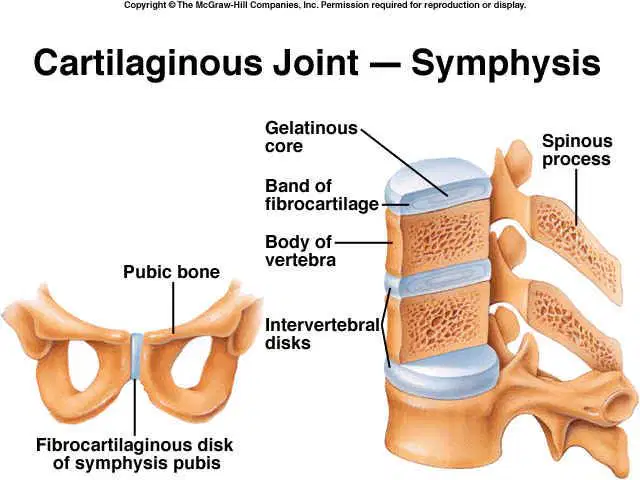
Type of cartilage found between vertebrae:
A. Fibrocartilage
B. Elastic
C. Hyaline

