wayground logo

Free Printable Worksheets

NEW

Font size

S
M
L
XL
Worksheets

Limiting Factors and Ecosystem Stability

Total questions: 21

Worksheet time: 19mins

Name
Class
Date
1.
When a specific population grows past the ecosystem's carrying capacity, what happens to the population?
a)
Density Independent limiting factors start to occur resulting in the population going farther above carrying capacity.
b)
Density Dependent limiting factors start to occur resulting in the population going back below carrying capacity.
c)
The population will go extinct due to lack of resources
d)
The population grows then finds a new carrying capacity
2.
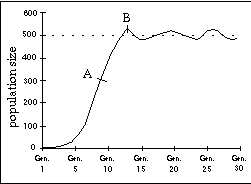
What is the carrying capacity of the graph?
a)
around 500
b)
more than 500
c)
less than 500
d)
around 600
3.
What is the carrying capacity of the following graph?
a)
1000
b)
8000
c)
800
d)
600
4.
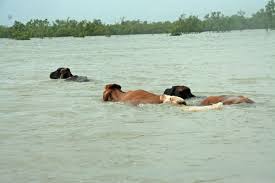
Excessive amounts of rain caused a flood in the southwest United States that resulted in substantial amounts of deaths in the rabbit population? This situation is an example of a density _____________ limiting factor.
a)
density-independent
b)
density-dependent
c)
density- too high
d)
density- too low
5.
Limiting factors which impact the size of a population no matter how large that population is.
a)
Density Independent Limiting Factors
b)
Density Dependent Limiting Factors
c)
Carrying Capacity
d)
Exponential Growth
6.
An environmental factor such as storms and extreme heat or cold that decrease a population are considered to be. 
a)
density- dependent factor
b)
population density
c)
dispersion
d)
density- independent factor
7.

A lion and a cheetah attempt to occupy the same niche. The more aggressive lion survives; the cheetah does not.

a)

Density-Dependent: Competition

b)

Density-Independent: Competition

c)

Density-Dependent: Predator-Prey

d)

Density-Independent: Predator-Prey

8.

Coyotes cross the winter pack ice and enter Newfoundland. The moose population starts to decline.

a)

Density-Dependent: Competition

b)

Density-Independent: Competition

c)

Density-Dependent: Predator-Prey

d)

Density-Independent: Predator-Prey

9.

Due to severe overcrowding in an Asian village, many children do not survive to reach adulthood.

a)

Density-Dependent: Disease

b)

Density-Independent: Disease

10.

Since lynx prey on hares, an increase in the hare population causes an increase in the lynx population.

a)

Density-Dependent: Competition

b)

Density-Independent: Competition

c)

Density-Dependent: Predator-Prey

d)

Density-Independent: Predator-Prey

11.

Due to stress, large numbers of female lemmings miscarry their young and fail to reproduce.

a)

Density-Dependent

b)

Density-Independent

12.

Travelers who visit a crowded African village become infected with a disease caused by parasites.

a)

Density-Dependent

b)

Density-Independent

13.

An extensive drought in the Serengeti Plain threatens wildebeest, giraffe, zebra, and springbok populations.

a)

Density-Dependent

b)

Density-Independent

14.

Fish on a coral reef stake out their territory and chase away any younger fish that try to live there.

a)

Density-Dependent

b)

Density-Independent

15.
Which of the following would be the most likely effect, if there were a sudden increase in the cricket population?
a)
There would be a decrease in the small bird population.
b)
There would be a decrease in the grass/flowers population.
c)
There would be a decrease in the mice population.
d)
There would be an increase in the grass/flowers population.
16.
What would most likely happen if an ecosystem no longer received sunlight?
a)
The number of herbivores would increase
b)
The number of plants would increase
c)
all organisms would adapt
d)
All living organisms would eventually die
17.
What does biodiversity mean?
a)
Only one species in an area.
b)
The different amount of species in an area
c)
All abiotic life
d)
Nitrogen fixation
18.
In this tundra food web, if grasses were removed what would happen to the sustainability of the ecosystem?
a)
There would be an overpopulation of arctic hares and lemmings.
b)
Polar bears would move to a new ecosystem
c)
The ecosystem would collapse because it lost its main producer
d)
Wildflowers would die out from the ecosystem
19.
Globally, the leading cause of biodiversity loss is 
a)
invasive species
b)
poaching and overharvesting
c)
pollution
d)
habitat change and loss 
20.
Humans are causing extiction in which ways?
a)
By over hunting animals for food or products.
b)
By destroying the natural habitat of species.
c)
By polluting the environments of the world.
d)
All of the above.
21.

Biodiversity leads to

a)

Increased Stability

b)

Decreased Stability

c)

Increased Exctintions

d)

Increased Endangered Species