
 Worksheets
Review of Circular Flow Diagram
Total questions: 27
Worksheet time: 12mins

In terms of resources, what do households provide for businesses?
loans
savings
labor
private goods
What are the four main parts of the circular flow diagram?
Product Market, Stock Market, Factor Market, Fish Market
Product Market, House Market, Factor Market, Good Market
Factor Market, Product Market, Households, Businesses
Factor Market, households, Stock Market, super market
Where are factors of production (land, labor, etc) exchanged in the circular flow model?
Factor Market
Product Market
Firms
Individuals
In the circular flow model, where do consumers (individuals) go to purchase goods and services?
Product Market
Factor Market
Firms
Individuals
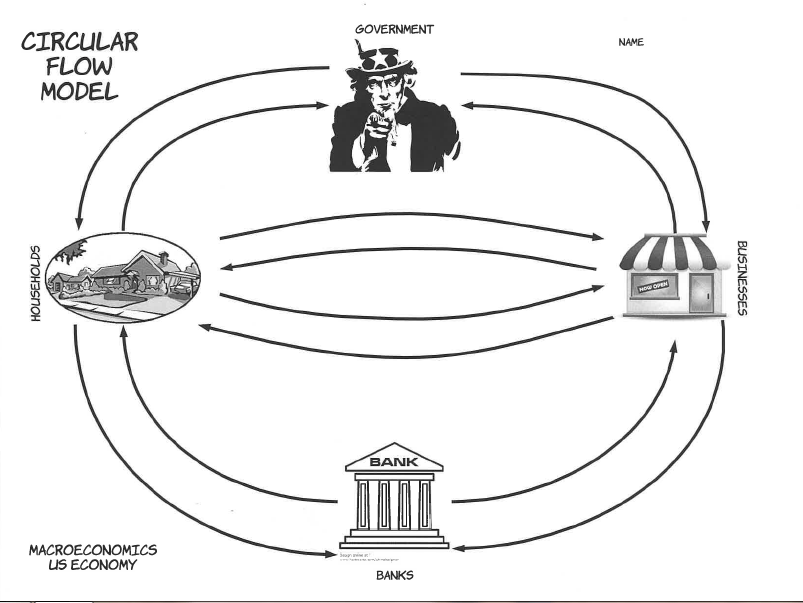
businesses that sell goods and services to households
In the product market, what do businesses provide for consumers according to the circular flow model?
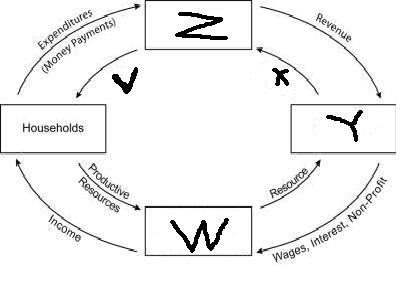
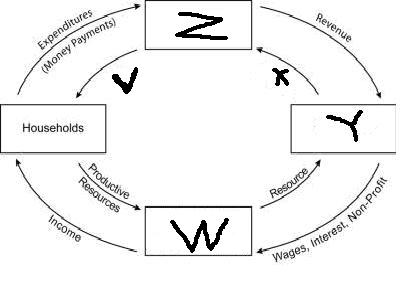
Which portion of the Circular Flow Model provides labor and purchases goods/services?
Government
Households
Businesses
Who provides resources in the circular flow model?
Factor Market
Product Market
Firms
Individuals
Individuals and businesses
What does the Circular Flow Model in economics show?
The flow of goods, services, resources, and money in a market economy.
The relationship between supply and demand in a market.
The impact of government policies on economic growth.
The distribution of wealth among different social classes.
Money exchanged between an individual and a store for a good or service.
Revenue
Wages
Rent
Donation
Do business supply or demand from the product market?
Supply
Demand
Neither
Both
Do individuals supply or demand from the product market?
Supply
Demand
Both
Neither
The outside arrows of the circular flow diagram show the flow of _____________.
goods and services
Factors of production
Money
opportunity cost
The arrows on the inside of the circular flow model show the flow of ___________.
money
resources and goods and services
opportunity cost
marginal benefit
In the factor market, __________ sell factors of production.
girl scouts
the government
businesses
individuals
In the product market, __________ sell goods and services.
girl scouts
the government
businesses
households
Someone buys a car in exchange for a large amount of money. They have completed an exchange in which part of the circuclar flow model?
Product Market
Factor Market
Firms
Individuals
In this market, businesses buy resources needeed to produce goods and services.
(a) is the study of the behavior or individual people, households, and businesses on the economy
Select the best answer for a location that goods and services are bought and sold.
command market
microeconomics
market
office building

In this model, what should replace the question mark?
Public Goods and Services
Individuals
Natural Resources
Capital Goods

