Worksheets
kayenne science
Total questions: 60
Worksheet time: 34mins
Why is the Scientific Method an important process in doing experiments?
It ensures that the people doing the experiments are scientific.
It ensures that the results can be trusted and repeated.
It takes more work but it's worth it.
It helps the experiment to take longer and be better.
Doing experiments is important because it ...
creates more questions to be answered.
helps create jobs for scientists.
allows for new discoveries and knowledge in the area of science.
ensures that many tools are used safely and accurately.
To gather information, we can...
read books
ask questions
use our senses to study things
do all of these
The first step in the scientific method is...
Making observations
Conducting experiments
Analyzing data
Defining the problem/asking the question

STATEMENT: In the picture, the people are whitewater rafting.
What is this statement considered in the Scientific Method?
Making Observation
Making Inferences
Making Judgement
Communicating with others
When we make an educated guess, we are forming...
data
a hypothesis
variables
a factor
In science, it is very important that your Hypothesis is correct or proven correct in the experiment.
True
False
Our recorded observations are called...
data
control factors
hypotheses
experiments
What should be listed in your Next Steps in your experiment?
What should be done to clean up and return materials to the correct spot in the lab.
A list of who you are going to share your results with.
How you are going to display your results in a graph.
Possible improvements or changes to be made to the experiment.
At the end of the scientific method, we must state a...
purpose
question
hypothesis
conclusion
The first step of the scientific process is testing the hypothesis.
True
False
Sometimes, steps of the scientific process must be repeated.
True
False
Every experiment should have at least three experimental factors or variables.
True
False
Measurements must be made carefully to make sure all factors, except the variable, are the same.
True
False
If your experiment does not work out as you thought, it is important to do the experiment over until you have
the results you expected.
True
False
What are two the two types of pure substances?
elements
compounds
heterogenous mixtures
homogenous mixtures

What is this?
Element
Compound
Homogeneous Mixture
Heterogeneous Mixture
Which of these is a mixture?
Laundry Detergent
Salt (NaCl)
Oxygen (O)
Fluorine (Fl)
Air is:
An element
A compound
A mixture
None of these
Fruit Loops, pizza, and Skittles are examples of ____________________ mixtures.
heterogeneous
homogeneous
pure
What are two the two types of mixtures?
elements
compounds
heterogenous
homogenous
Which mixture can easily be separated by Hand/Tweezers


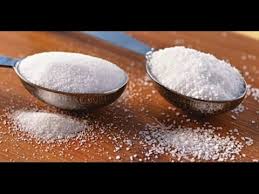
Which substances, when mixed together, maintain their original physical properties?
gravel and water
wood chips, water and sand
sand and water
all of the above
Which of the following illustrations best describes a compound?


Which of the following elements is said to be the backbone of life?
Carbon
Oxygen
Hydrogen
Nitrogen

what does this illustration tells us?
a compound
an atom
a mixture
an element
Which of the following elements supplies helps transport oxygen the all over the body?
Iodine
Iron
Potassium
Calcium
Which element can be found in all most all of the food labels?
Magnesium
Potassium
Sodium
Iron
Which group of elements where the name and symbol were derived from ancient name?
Copper, Iron, Fermium
Gold, Silver, Mercury
Calcium, Plutomium, Oxygen
Carbon,Oxygen, iron
Which element is named after Enrico Fermi?
Curium
Americium
Fermium
Sodium
Which compound can be found mostly in food labels?
Lipids
Carbohydrates
Protein
Nucleotieds
Which illustration best illustrate an atom?


Which illustration illustrates mixture?


Which of the following is correct as you move the microscope from one place to another?
Hold the handle and the base.
Hold the eyepiece and the body tube.
Hold the objective lenses and the base.
Hold the nosepiece and the condenser.
For the proper position of the microscope, the handle must be pointing in what direction?
away from the user
towards the user
pointing to the right
pointing to the left
What knob must be turned first for the initial focusing of the sample?
fine adjustment knob
light intensity knob
coarse adjustment knob
base knob
How could you know that the objective lens that you will be using is in the proper position for focusing?
You must see the lens aligned with the stage.
You must position the lens 90 degrees away
You must hear a “click” while turning the lens.
You must see the lens glowing.
Why do you need to adjust the iris diaphragm and condenser to control light intensity in the microscope?
Too much light creates too much bright field under the microscope.
Too much light makes the clearer image of the sample.
Too much light gives color to the image of the sample.
Too much light magnifies the image of the sample.
Why is it important to open both eyes in viewing the image under the microscope?
to give a proper 2-dimensional view of the image
to avoid eye stress and fatigue
to avoid eye damage
to give a more beautiful image of the sample
In viewing the image under the microscope, which of the following must be considered for proper observation of the specimen?
The microscope creates a mirror image of the sample.
The microscope provides the same replica of the sample.
The microscope cannot magnify the sample.
The microscope can make the sample more colorful.
In focusing samples under the high power objective, the samples need to be in a very short distance with the objective lens. What knob must be used to avoid breakage of glass slide while focusing the sample?
fine adjustment knob
coarse adjustment knob
light intensity knob
base knob.
Which location must be avoided for storage of microscope?
hanged cabinet near the air-condition
cabinet near the sink
a table near the refrigerator
locker cabinet near the table
In focusing the sample, why is it better start by turning the stage away from the objective lens than doing the other way around?
The lens might be damaged.
The stage must be damaged.
The base might be damaged.
The glass slide might be damaged.
True of False: You should always store microscopes covered.
True
False

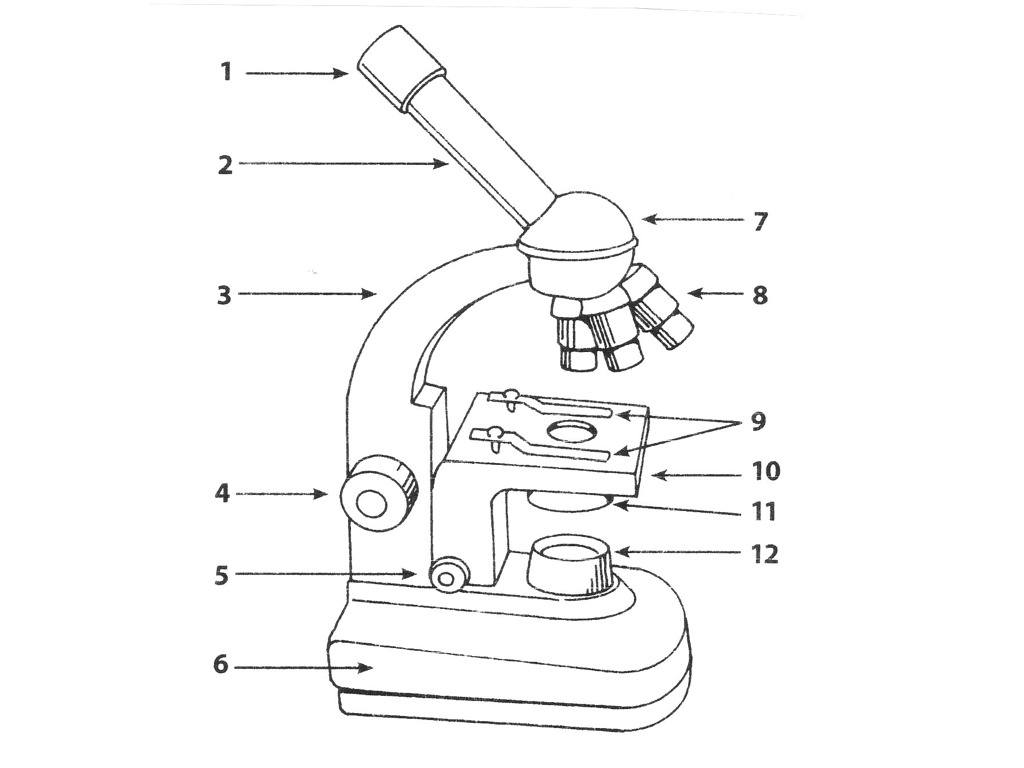
What piece contains a high-power magnifying lens (40x)?
HIgh-power Objective
Eyepiece
Low-power Objective
Stage
Moves stage up and down for focusing; locates the specimen
Fine Focus Knob
Large Focus Knob
Course Focus Knob
Small Focus Knob