wayground logo

Free Printable Worksheets

Font size

S
M
L
XL
Worksheets

Chemistry Basic and Acids Bases

Total questions: 262

Worksheet time: 7hrs 3mins

Name
Class
Date
1.

Do acids and bases conduct electricity?

a)

Only acids conduct electricity

b)

Only bases conduct electricity

c)

Bases and acids conduct electricity

d)

Neither conduct electricity

2.

Which of the following values would represent the pH of a strong base?

a)

1

b)

8

c)

7

d)

13

3.

What range of values on the pH scale represent solutions with a higher ratio of hydronium (H3O+) ions?

a)

0-14

b)

below 7

c)

7

d)

above 7

4.
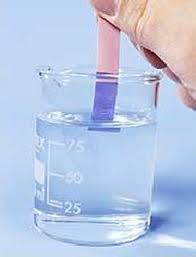
an aqueous soln turns red lithmus blue . excess addition of which of the following would reverse the change
a)
baking powder
b)
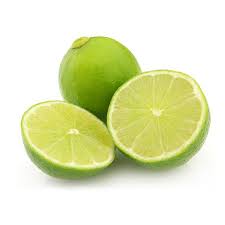
lime
c)
ammonium hydroxide solution
d)
HCL
5.
a sample of soil is mixed with water and allow to settle . The soln turns yellowish orange which of the foll soln will turn the colour to greenish blue 
a)
lemon juice
b)
vinegar
c)
common salt
d)
antacid
6.
If a few drops of concentrated acid accidentally spills over the hand of a student,what should be done
a)
wash the hand with saline solution
b)
wash the hand immediately with plenty of water and apply a soln of sodium hydrogen carbonate
c)
after washing apply soln of sodium hydroxide
d)
neutralise the acid wih a strong alkali
7.
sodium hydrogen carbonate when added to acetic acid evolves  a gas .which of the statement is true about the gas evolved
a)
it turns lime water milky
b)
it burns with a pop sound
c)
it changes the soln colorless
d)
it has a pungent smell
8.
common salt besides being used in kitchen can also be used as the raw material for making
a)
washing soda
b)
calcium salts
c)
plaster of paris
d)
slaked lime
9.
which of the foll phenomena occur when a small amunt of acid is added to water
a)
ionisation
b)
neutralisation
c)
dilution
d)
formation
10.
which one of the foll can be used as acid-base indicator by  visually impared student 
a)
litmus
b)
turmeric
c)
vanilla essence
d)
petunia leaves
11.
which of the foll substances will not give carbon dioxide on treatment with dilute acid
a)
marble
b)
limestone
c)
baking soda
d)
lime
12.
which of the  foll is acidic in nature
a)
limewater
b)
humanblood
c)
lime juice
d)
antacid
13.
which of the foll is not a base
a)
NAOH
b)
KOH
c)
NH4OH
d)
C2H5OH
14.
which of the foll are present in dil aqueous soln of HCL 
a)
H3O+ +CL-
b)
H30+ +OH-
c)
CL+ +OH-
d)
UNIONISED HCL
15.

How would you best describe your Chemistry class this year?

a)

awesome

b)

very strange

c)

dull

16.
Which of the following is a chemical property of a base
a)
a slippery feel
b)
conducts an electric current
c)
turns red litmus paper blue
d)
forms hydronium ions in water
17.
Most foods are 
a)
Acid
b)
Basic
c)
Neutral
d)
salts
18.

Which of these taste sour?

a)

acids

b)

bases

c)

salts

19.

Which of these feel slippery?

a)

bases

b)

acids

c)

salts

20.

Which of these turn red litmus paper blue?

a)

acids

b)

bases

c)

salts

21.

When you neutralize acid with a base you create

a)

a Salt and water

b)

You can not neutralize acid with a base

c)

You create carbon dioxide

d)

A moderate sized explosion

22.

sulfuric acid

a)

HSO3

b)

H2SO3

c)

H2SO4

d)

H3SO4

23.
Mg(OH)2
a)
magnesium hydroxide acid
b)
hydromagnesium acid
c)
magnesium oxygen hydride
d)
magnesium hydroxide
24.
Which of the following is a base?
a)
orange juice
b)
water
c)
vinegar
d)
dishwashing detergent
25.

What is the meaning of the above hazard warning symbol?

a)

Corrosive

b)

Explosive

c)

Toxic

d)

Radioactive

26.
An acid 
a)
Formed from joining positive and negative ions
b)
increases OH ions
c)
forms a salt and water
d)
increases H2O ions
27.
Most foods are 
a)
Acid
b)
Basic
c)
Neutral
d)
salts
28.
Indicators change color in the presence of a(n) _______________.
a)
acid or base
b)
buffer
c)
water molecule
d)
ester
29.
A base has a ___________ taste.
a)
bland
b)
salty
c)
bitter
d)
sour
30.
 Which of the following is an acid?
a)
shampoo
b)
baking soda
c)
orange juice
d)
water
31.

Water is?

a)

Always an acd

b)

Always a base

c)

Is the most common base, and acid in the world

d)

Always is neutral that is why it is safe to drink

32.

An indicator is?

a)

A lab manual or guide

b)

Something like litmus paper that can tell you if a substance is acidic or basic

c)

A PS4 game where you pretend to direct traffic

d)

Something only scientists in a lab can use

33.

When you neutralize acid with a base you create

a)

a Salt and water

b)

You can not neutralize acid with a base

c)

You create carbon dioxide

d)

A moderate sized explosion

34.

Acid + Base= ? + Water

a)

Indicator

b)

Sugar

c)

Salt

d)

Food

35.

Natural Indicator ?

a)

Turmeric powder

b)

Methyl orange

c)

Acid and Base

36.

What type of acid is in inside of our stomach?

a)

Citric acid

b)

Lactic acid

c)

Sulpheric acid

d)

Hydrochloric acid

37.

metal oxides are generally

a)

acidic in nature

b)

basic in nature

c)

neutral

d)

some may be acidic some may be basic

38.

in aqueous solution, H+ ions exist as

a)

H30+

b)

H9O4+

c)

Neither of these

d)

either H30+ or H9O4+

39.

which of the acids are called king of chemicals

a)

H Cl

b)

H2so4

c)

HNo3

d)

vinegar(acetic acid)

40.

Litmus solution is purple colured dye extracted from (a)   plant

41.

phenophthalein has __________ colur in basic solution.

a)

red

b)

pink

c)

yellow

d)

green

42.

What are the products obtained when iron is reacted with sulfuric acid

a)

iron (II) sulfite

b)

Iron (II) sulfate

c)

Hydrogen

d)

water

43.

What are the products obtained when magnesium oxide reacted with nitric acid

a)

magnesium nitrate

b)

magnesium nitrite

c)

Hydrogen

d)

water

44.

What are the products obtained when sodium carbonate reacted with hydrochloric acid

a)

sodium carbonate

b)

sodium chloride

c)

Hydrogen

d)

water

e)

carbon dioxide

45.

the reaction between ammonium hydroxide and sulfuric acid is called

a)

combustion

b)

synthesis

c)

precipitation

d)

neutralization

46.

Polls of Graphite or Platinum through which an electric current enters the electrolyte are collectively called what ?

a)

Electrodes

b)

Anode

c)

Cathode

d)

Cation

47.

Which statement correctly define redox reaction ?

a)

A reaction that involve lose of electrons

b)

A reaction that involve loosing and gaining of electrons

c)

A reaction that involve gain of electrons

d)

Non of the above.

48.

In electrolysis, Oxidation occurs in which of the following electrodes?

a)

Cathode

b)

Anode

c)

Both cathode and Anode

d)

Non of the above

49.

In electrolysis, reduction takes place in which of the following electrodes?

a)

Cathode

b)

Anode

c)

Both cathode and anode

d)

Non of the above

50.
What is the name of a positively charged ion?
a)
positron
b)
proton
c)
cation
d)
anion
51.
In an aqueous solution of copper chloride, which ions are attracted to the negative electrode?
a)
Cu2+ and Cland Hand OH-
b)
Cu2+ and H
c)
 Cland OH-
d)
Cu2+ 
52.
a)

A

b)

B

c)

C

d)

D

53.
a)

A

b)

B

c)

C

d)

D

54.
a)

A

b)

B

c)

C

d)

D

55.

B

a)

A

b)

B

c)

C

d)

D

56.
a)

A

b)

B

c)

C

d)

D

57.
a)

A

b)

B

c)

C

d)

D

58.
a)

A

b)

B

c)

C

d)

D

59.
a)

A

b)

B

c)

C

d)

D

60.
a)

A

b)

B

c)

C

d)

D

61.
a)

A

b)

B

c)

C

d)

D

62.

The diagram shows the electrolysis of dilute sulfuric acid.


Which substance is produced at the negative electrode?

a)

hydrogen

b)

oxygen

c)

sulfur dioxide

d)

water

63.

When iron is heated with steam, a black solid is formed.

The equation for the reaction is shown.


iron + water → iron oxide + hydrogen


Which statement about this reaction is correct?

a)

Iron has been oxidised because it has gained oxygen.

b)

Iron has been reduced because it removed oxygen from water.

c)

Iron oxide has been reduced because it contains oxygen.

d)

Water has been oxidised because it contains oxygen.

64.

What is the equation to show what happens to chloride ions at the anode.

a)

Cl- --> Cl + e-

b)

2Cl- --> Cl2 + 2e-

c)

Cl2 + 2e- 2Cl-

d)

Cl2 + 2e- --> 2Cl-

65.

What are the ions present in molten Al2O3?

a)

Al2+ and O3-

b)

Al2- and O3+

c)

Al3+ and O2-

d)

Al3- and O2+

66.
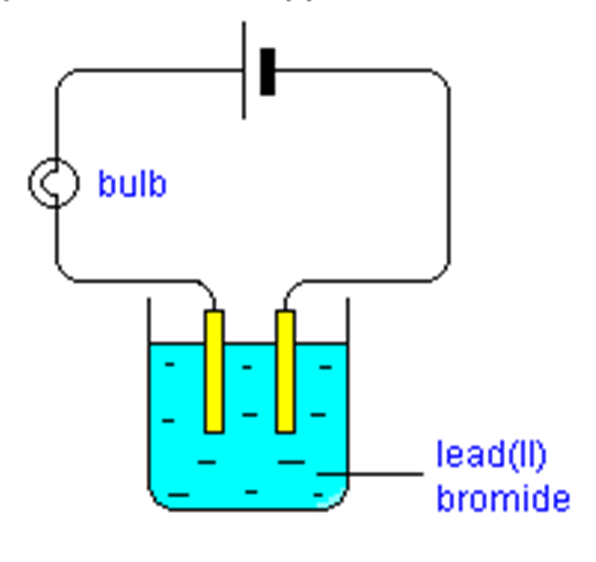
The diagram shows the electrolysis of lead(II) bromide using inert electrodes. Why does the bulb only light up  when the lead(II) bromide is melted?
a)
Bromine atoms in lead(II) bromide are converted to ions when it is melted
b)
Electrons flow through the lead(II) bromide when it is melted
c)
The ions in lead(II) bromide are acting as the mobile charge carriers when it is melted
d)
There are no ions in solid lead(II) bromide
67.
Complete the half equation Al3+ --> 
a)
Al3+ - 3e- --> Al
b)
Al2+ + 3e- --> Al
c)
Al3+ + 3e- --> Al
d)
Al3+ --> Al + 3e-
68.

The cathode of the battery is the ______________________.

a)

Negatively Charged

b)

Positively Charged

c)

Neutral

d)

All the above

69.

The diagram shows apparatus for plating a spoon with silver.

Which statement is not correct?

a)

Silver would stick to the spoon because it is a very reactive metal.

b)

The electrolyte would be a silver salt dissolved in water.

c)

The metal electrode would be made from silver..

d)

The spoon would be connected to the negative terminal of the power supply.

70.

The diagram shows the electroplating of a steel object.

A student made the following statements.

1 The object turns a reddish-brown colour.

2 The copper sulfate solution changes to a paler blue colour.

3 The copper electrode becomes smaller.

Which statements are correct?

a)

1, 2 and 3

b)

1 and 2 only

c)

1 and 3 only

d)

2 and 3 only

71.

What is the half-equation for the discharge of hydroxide ions?

a)

2O2- --> O2 + 4e-

b)

OH- --> OH + e

c)

4OH- --> 2H2O + O2 + 4e-

d)

2H2O + O2 + 4e- --> 4OH-

72.

Sodium chloride solution is electrolysed and a gas is collected at each electrode. One gas decolourises moist litmus paper, the other gas burns with a pop.


Which statement is correct?

a)

Chlorine gas is collected at the anode.

b)

Hydrogen gas is collected at the anode.

c)

Oxygen gas is collected at the cathode.

d)

The cathode is the positive electrode.

73.
What are produced at positive/negative electrodes during electrolysis of molten NaCI?
a)
A
b)
B
c)
C
d)
D
74.
Object is electroplated with copper using copper(II) sulfate. Which statement is correct?
a)
Positive electrode increases in mass
b)
Concentration of Cu2+ ions in solution decreases
c)
Reduction occurs at positive electrode
d)
Reaction at negative electrode is Cu2+ + 2e → Cu
75.
NaCl(aq) was electrolysed with platinum. State the major product at +ve electrode in each case?
a)
A
b)
B
c)
C
d)
D
76.
a)

A

b)

B

c)

C

d)

D

77.
a)

A

b)

B

c)

C

d)

D

78.
a)

A

b)

B

c)

C

d)

D

79.
a)

A

b)

B

c)

C

d)

D

80.
a)

A

b)

B

c)

C

d)

D

81.
a)

A

b)

B

c)

C

d)

D

82.
a)

A

b)

B

c)

C

d)

D

83.
a)

A

b)

B

c)

C

d)

D

84.
a)

A

b)

B

c)

C

d)

D

85.
a)

A

b)

B

c)

C

d)

D

86.
a)

A

b)

B

c)

C

d)

D

87.
a)

A

b)

B

c)

C

d)

D

88.
a)

A

b)

B

c)

C

d)

D

89.
a)

A

b)

B

c)

C

d)

D

90.
a)

A

b)

B

c)

C

d)

D

91.
a)

A

b)

B

c)

C

d)

D

92.
a)

A

b)

B

c)

C

d)

D

93.
a)

A

b)

B

c)

C

d)

D

94.
a)

A

b)

B

c)

C

d)

D

95.
a)

A

b)

B

c)

C

d)

D

96.
a)

A

b)

B

c)

C

d)

D

97.
a)

A

b)

B

c)

C

d)

D

98.
a)

A

b)

B

c)

C

d)

D

99.
a)

A

b)

B

c)

C

d)

D

100.
a)

A

b)

B

c)

C

d)

D

101.
a)

A

b)

B

c)

C

d)

D

102.
a)

A

b)

B

c)

C

d)

D

103.
a)

A

b)

B

c)

C

d)

D

104.
a)

A

b)

B

c)

C

d)

D

105.
a)

A

b)

B

c)

C

d)

D

106.
a)

A

b)

B

c)

C

d)

D

107.
a)

A

b)

B

c)

C

d)

D

108.
a)

A

b)

B

c)

C

d)

D

109.
a)

A

b)

B

c)

C

d)

D

110.
a)

A

b)

B

c)

C

d)

D

111.
a)

A

b)

B

c)

C

d)

D

112.
a)

A

b)

B

c)

C

d)

D

113.
a)

A

b)

B

c)

C

d)

D

114.
a)

A

b)

B

c)

C

d)

D

115.
a)

A

b)

B

c)

C

d)

D

116.
a)

A

b)

B

c)

C

d)

D

117.
a)

A

b)

B

c)

C

d)

D

118.
a)

A

b)

B

c)

C

d)

D

119.
a)

A

b)

B

c)

C

d)

D

120.
a)

A

b)

B

c)

C

d)

D

121.
a)

A

b)

B

c)

C

d)

D

122.
a)

A

b)

B

c)

C

d)

D

123.
a)

A

b)

B

c)

C

d)

D

124.
a)

A

b)

B

c)

C

d)

D

125.
a)

A

b)

B

c)

C

d)

D

126.
The positive particles of an atom are 
a)
electrons 
b)
positrons 
c)
neutrons 
d)
protons 
127.
What is the mass number?
a)
the number of protons
b)
the number of protons and neutrons
c)
the number of neutrons
d)
the number of protons and electrons
128.
What is the atomic number?
a)
the number of protons
b)
the number of protons and neutrons
c)
the number of neutrons
d)
the number of protons and electrons
129.
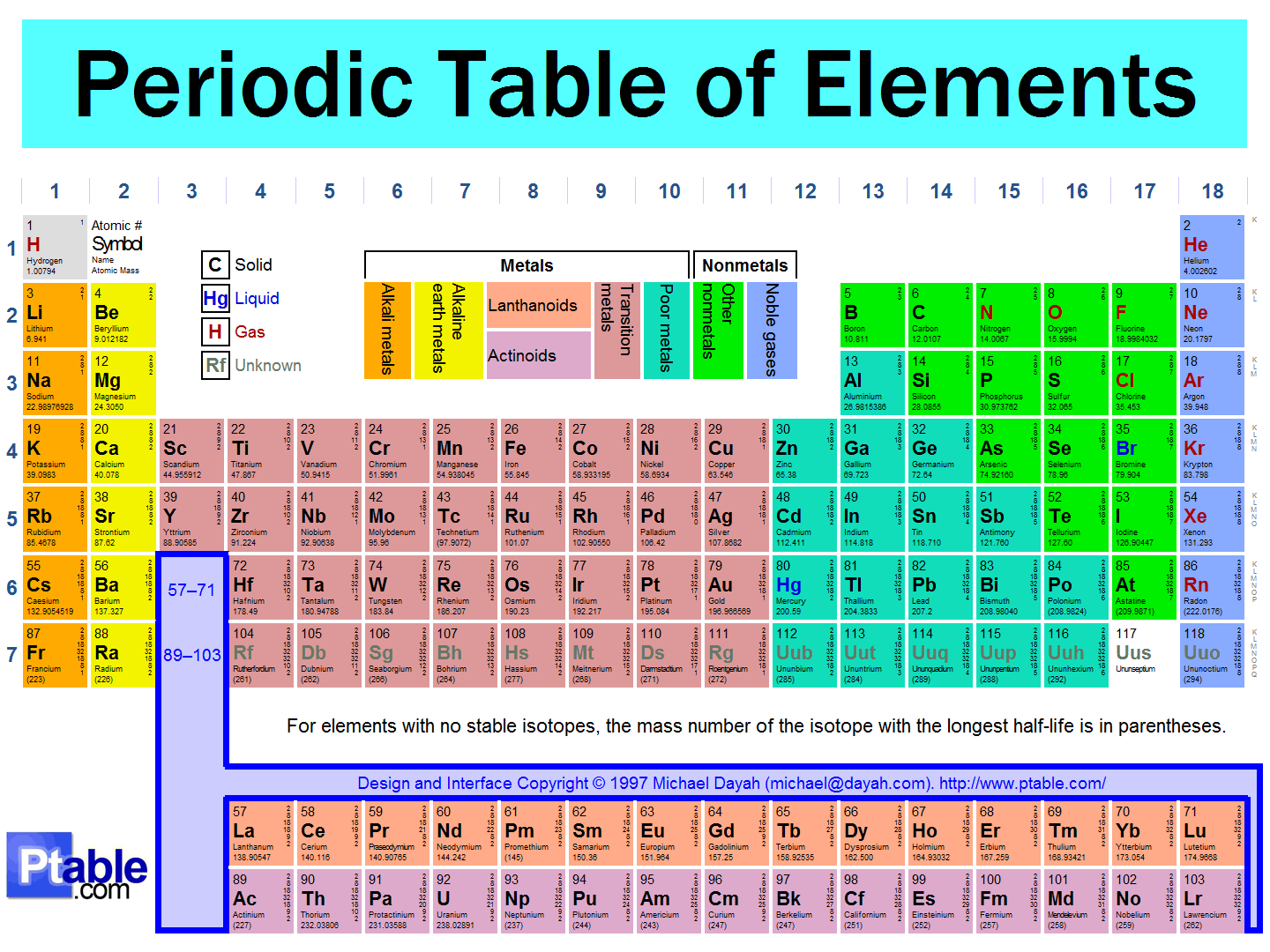
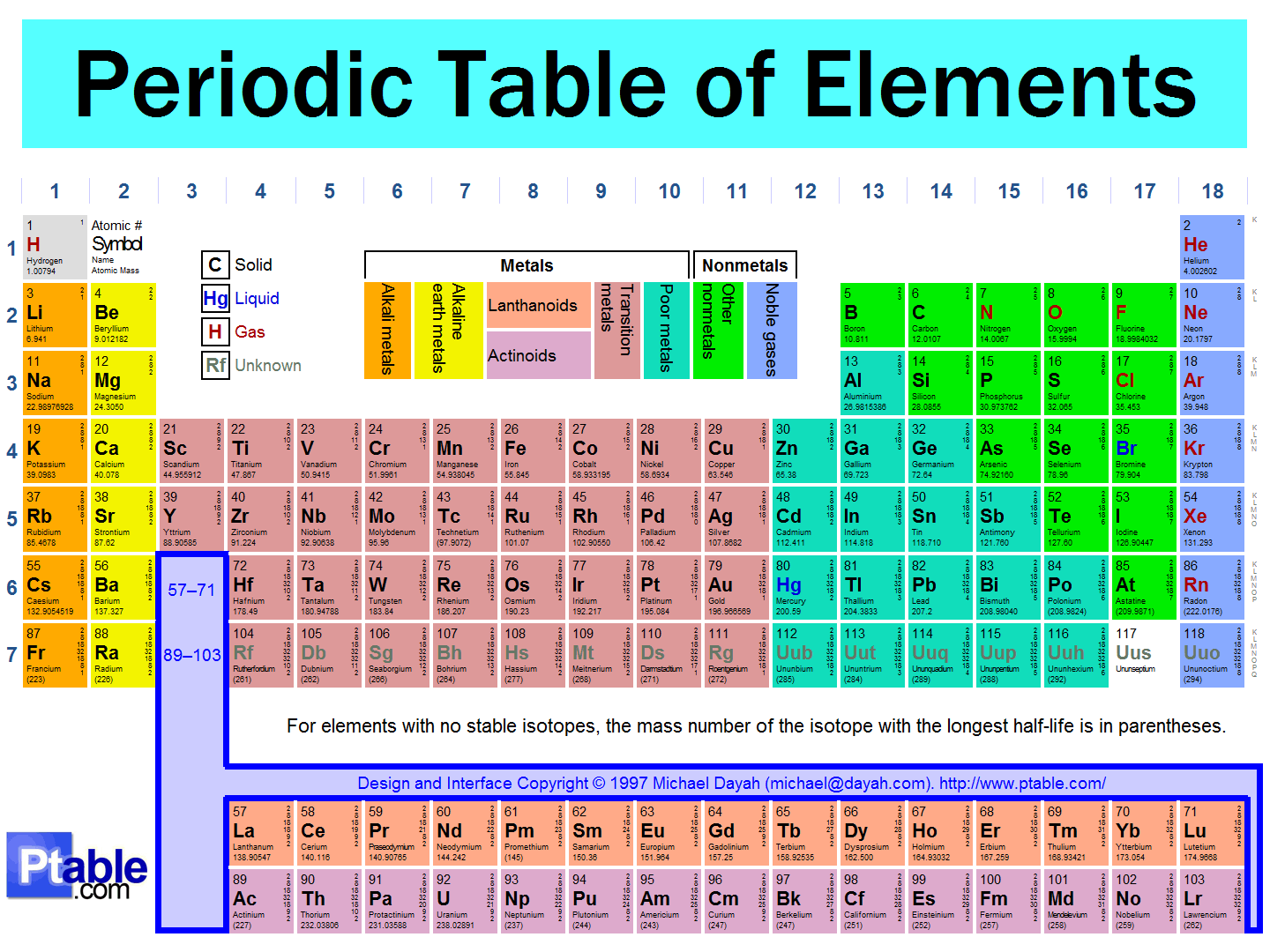
How many electrons does Si contain? (click to see image)
a)
14
b)
28
c)
2
d)
4
130.
Nitrogen will form which of the following ions?
a)
N
b)
N-3
c)
N-5
d)
N+5
131.

A substance that dissolves in a liquid is called the...

a)

Solvent

b)

Solute

c)

Solution

d)

Salient

132.

Which of these statements about the halogens is incorrect?

a)

They are reactive because they easily gain one electron

b)

They form ions with a charge of +1

c)

They include fluorine, chlorine, bromine and iodine

d)

They get less reactive as their atomic number increases

133.

What is the correct formula of silver nitrate?

a)

AgNO3

b)

AgNO2

c)

Ag(NO3)2

d)

Ag2NO3

134.

What is the correct formula of magnesium sulphate?

a)

Mg(SO4)3

b)

MgSO4

c)

MnSO4

d)

Mg(SO4)2

135.

What is the correct formula of calcium hydroxide?

a)

Ca(OH)3

b)

Ca(OH)2

c)

CaOH

d)

Ca2OH

136.

Which of these equations is correctly balanced?

a)

Mg + O2 → 2MgO

b)

2Mg + O2 → MgO

c)

2Mg + O2 → 2MgO

d)

Mg + O2 → MgO

137.

Which of the following terms describes the structure of common salt, quicklime, and copper sulphate?

a)

simple covalent

b)

giant covalent

c)

giant ionic

d)

metallic

138.

Which of the following terms describes the structure of iodine, oxygen, and carbon dioxide?

a)

simple covalent

b)

giant covalent

c)

giant ionic

d)

metallic

139.

Name this molecule.

a)

Methane

b)

Ethane

c)

Propane

d)

Butane

140.

Damp red litmus paper turning blue is a positive test for which gas?

a)

hydrogen

b)

oxygen

c)

carbon dioxide

d)

ammonia

e)

chlorine

141.

Damp red litmus paper turning blue, then bleaching white, is a positive test for which gas?

a)

hydrogen

b)

oxygen

c)

carbon dioxide

d)

ammonia

e)

chlorine

142.
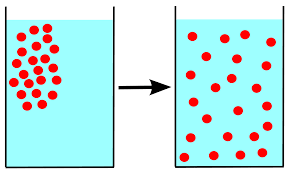
The picture below is an example of _________________.
a)
osmosis
b)
isotonic
c)
diffusion
d)
active transport
143.
Reactions that release energy are called-
a)
activation
b)
endothermic
c)
mesothermic
d)
exothermic
144.
What is the electron configuration of sodium?
a)
2.8
b)
2.8.2
c)
2.8.1
d)
11
145.

Which of the "Halogens" is found in liquid state at room temperature?

a)

Flourine

b)

Astatine

c)

Iodine

d)

Bromine

146.

Crude oil is a a mixture of hydrocarbons

a)

True

b)

False

147.
How many electrons does chlorine need to gain in order to have a full outer shell? 
a)
7
b)
0
c)
1
d)
8
148.

A measuring cylinder is used to measure the volume of a liquid. What is the volume of the liquid?

a)

43 cm3

b)

46 cm3

c)

48 cm3

d)

54 cm3

149.
Molecules are closest together in a 
a)
Solid
b)
Liquid
c)
Gas
150.

What is diffusion?

a)

when molecules move

b)

when molecules move from a high concentration to a low concentration

c)

no movement

d)

molecules move everywhere

151.
The horizontal row on the periodic table is called a
a)
group
b)
family
c)
period
d)
atomic number
152.
A vertical column is called...
a)
group
b)
tower
c)
period
d)
crew
153.
Most of the mass in an atom is concentrated in the...
a)
electrons
b)
nucleus
c)
protons
d)
empty space
154.
What does the nucleus consist of?
a)
Protons + Electrons
b)
Neutrons + Electrons
c)
Atoms
d)
Protons + Neutrons
155.

Isotopes are the atoms of the same element with the same number of.............. but different number of............

a)

electrons/neutrons

b)

neutrons/protons

c)

protons/neutrons

d)

electrons/protons

156.

Elements contain only one type of atoms.

a)

True

b)

False

157.
What is a pure substance made of two or more elements that are chemically combined called?
a)
A. element
b)
B. compound     
c)
C. mixture
d)
D. solution
158.
silver spoon
a)
A. MIXTURE
b)
B. COMPOUND
c)
C. ELEMENT
159.
A pure substance...
a)
is an element or a compound
b)
is an element or a mixture
c)
is a compound or a mixture
d)
is a mixture
160.
NaHCO3 is an example of —
a)
an abbreviation
b)
a compound
c)
a mixture
d)
an element
161.

How can you get salt from salty water?

a)

evaporate the water; then crystallisation

b)

condense the water; then crystallisation

c)

Filtration

162.

What separation method could you use to separate water from ink?

a)

filtration

b)

distillation

c)

electrolysis

163.

Mixtures can be separated using chromatography.

a)

True

b)

False

164.

Ink can be separated by a method of -----------------------------------------------

a)

distillation

b)

filtration

c)

chromatography

d)

sedimentation

165.
Which element has an electron configuration of 2.5?
a)
Oxygen
b)
Nitrogen
c)
Phosphorus
d)
Carbon
166.
Which element has the electron configuration of 2.7?
a)
Krypton
b)
Iodine
c)
Flourine
d)
Barium
167.
When an atom loses an electron, it becomes a:
a)
positive ion
b)
negative ion
c)
neutral ion
d)
neutral atom
168.

Nitrogen will ____ electrons to become stable.

a)

gain 1

b)

lose 1

c)

gain 3

d)

lose 3

169.
Is Hydrogen considered a metal or a non-metal?
a)
Metal
b)
Non-metal
170.
How are covalent bonds explained?
a)
When one atom takes the other atom's electron
b)
When the atom shares an electron with an another atom
c)
When the two nucleus merge
d)
When the neutrons leave the nucleus
171.
What region of the periodic table contains atoms that form covalent bonds?
a)
the left side
b)
the middle
c)
the right side
d)
top left
172.

What is the mass number of magnesium?

a)

2

b)

4

c)

12

d)

24

173.
What is the relative formula mass of NaOH?
a)
20
b)
39
c)
40
d)
45
174.

Which alkali metal is most reactive out of the following?

a)

rubidium

b)

potassium

c)

sodium

d)

lithium

175.

What happens to the reactivity of the alkali metals as you move down the group?

a)

increases

b)

decreases

176.

Which gas is released when the alkali metals react with water?

a)

hydrogen

b)

oxygen

c)

hydroxide

d)

carbon dioxide

177.

Which of the "Halogens" has yellowish green color?

a)

Chlorine

b)

Bromine

c)

Flourine

d)

Iodine

178.
Which gas in our atmosphere is most abundant?
a)
Argon
b)
Oxygen
c)
Nitrogen
d)
Carbon Dioxide
179.
What percentage of our atmosphere is made up of other gases such as argon, water vapor, and carbon dioxide?
a)
1%
b)
21%
c)
78%
d)
90%
180.
The pH scale is a range from:
a)
1-7
b)
0-14
c)
1-14
d)
1-20
181.

The laboratory test for oxygen is that

a)

it relights a glowing splint

b)

it relights a burning splint

c)

it changes lime water to milky

d)

it makes a glowing splint go out

182.

Turns limewater milky

a)

Hydrogen

b)

Oxygen

c)

Ammonia

d)

Carbon dioxide

183.

Makes a squeaky pop sound when lit

a)

Hydrogen

b)

Oxygen

c)

Chlorine

d)

Ammonia

184.

This causes the mass of the nucleus to increase.

a)

adding an electron

b)

adding a neutron

c)

more orbitals

d)

adding negatively charged particles

185.

Has a mass of 1/2000th the mass of a proton.

a)

electron

b)

neutron

c)

nucleus

d)

electron cloud

186.

What are valence electrons?

a)

electrons on the first orbital always

b)

nucleus

c)

the outermost shell

d)

electrons on the outermost orbital

187.
The particles of the atom you can find by knowing the atomic number.
a)
neutrons
b)
protons and electrons
c)
protons and neutrons
d)
atomic mass
188.
The subatomic particle that determines the identity of an element.
a)
neutron
b)
proton
c)
electron
d)
outer shell
189.
What charge does the nucleus have and why?
a)
positive - the neutrons do not have a charge
b)
positive - the neutrons and protons are positively charged particles
c)
neutral - the neutral charge dominates the positive charge
d)
neutral - electrons cancel out the positive charge of the atom
190.

What is the atomic number of this atom?

a)

1

b)

3

c)

4

d)

7

191.

What is the mass number of this atom?

a)

1

b)

3

c)

4

d)

7

192.

How many electrons does it have?

a)

197

b)

79

c)

118

d)

none of the above

193.

What do these isotopes of carbon all have in common?

a)

neutrons & mass number

b)

atomic number and neutrons

c)

atomic number

d)

protons, atomic number, and mass number

194.
What does the Law of Conservation of Mass state?
a)
Matter cannot be gained or lost in a chemical reaction.
b)
Matter can only be lost in a chemical reaction.
c)
Matter can only be gained in a chemical reaction.
d)
Matter can be gained and lost in a chemical reaction. 
195.

The following is a:

a)

Compound

b)

Element

c)

Mixture of elements

d)

Mixture of compounds

196.
This picture represents which of the following?
a)
Element
b)
Compound
c)
Mixture
197.

Milk contains water, fat, salt and protein.


Milk is an example of ....

a)

an element

b)

a mixture

c)

a compound

198.

What happens to the mass of a liquid into which a soluble solute is added?

a)

The mass decreases

b)

The mass stays the same

c)

The mass increases

d)

It is impossible to tell

199.

Which of these phrases describes the particles in a solid?

a)

The particles are not in a regular arrangement and can move past each other.

b)

The particles are in a regular arrangement and can move past each other.

c)

The particles are far apart and can move randomly.

d)

The particles are in a regular arrangement and can only vibrate around fixed positions.

200.

If you were using filtration, what would you be trying to separate?

a)

A soluble solid from a liquid

b)

A mixture of two solids

c)

An insoluble solid from a liquid

d)

A mixture of two or more liquids

201.

If you were using simple evaporation, what would you be trying to separate?

a)

A soluble solid from a liquid

b)

A mixture of two solids

c)

An insoluble solid from a liquid

d)

A mixture of two or more liquids

202.

If you were using distillation, what would you be trying to separate?

a)

A soluble solid from a liquid

b)

A mixture of two solids

c)

An insoluble solid from a liquid

d)

A mixture of two or more liquids

203.

If you were using chromatography, what would you be trying to separate?

a)

A soluble solid from a liquid

b)

A mixture of two solids

c)

An insoluble solid from a liquid

d)

A mixture of two or more liquids

204.

Which of these statements is true?

a)

A neutron has a mass 1/1840 of a proton

b)

An electron has the same charge as a proton

c)

In any atom, the number of electrons is equal to the number of neutrons

d)

All atoms of a particular element have the same number of protons

205.

What is the electron configuration of the ion that this atom would form?

a)

2,8,2

b)

2,8,1

c)

2,8

d)

2,8,8

206.

75% of naturally occurring chlorine is Cl-35. The remaining chlorine is Cl-37. Which of the below equations shows how to calculate the relative atomic mass of chlorine?

a)

(75x37) + (25x35) / 100 = 35.5

b)

(75x35) + (25x37) / 100 = 35.5

c)

(75x37) + (25x35) / 100 = 35

d)

(75x35) + (25x37) / 100 = 37

207.

Which of these statements about Group 1 metals is incorrect?

a)

They are very reactive because they lose their inner shell electrons

b)

They form ions with a charge of +1

c)

They are very reactive because they lose their outer shell electron

d)

They react with water to form an alkaline solution

208.

Why are the noble gases so unreactive?

a)

They made a group decision not to react

b)

They have a large number of electrons

c)

They don't like to give up electrons

d)

They have a full outer shell of electrons

209.

Which of these statements about the halogens is incorrect?

a)

They are reactive because they easily gain one electron

b)

They form ions with a charge of +1

c)

They include fluorine, chlorine, bromine and iodine

d)

They get less reactive as their atomic number increases

210.

Which of the following substances conduct electricity when solid? (Could be more than one)

a)

diamond

b)

potassium chloride

c)

copper

d)

carbon disulfide

211.

Which of the following substances conduct electricity when liquid? (Could be more than one)

a)

diamond

b)

potassium chloride

c)

copper

d)

carbon disulfide

212.

Which of the following terms describes the structure of sand, graphite and diamond?

a)

simple covalent

b)

giant covalent

c)

giant ionic

d)

metallic

213.

Which of the following terms describes the structure of sodium, steel, and iron?

a)

simple covalent

b)

giant covalent

c)

giant ionic

d)

metallic

214.

Simple molecular substances have low melting and boiling points because... (tick all statements that help explain it)

a)

they have weak intermolecular forces

b)

it takes more energy to separate the molecules

c)

the covalent bonds are very strong

d)

it takes less energy to separate the molecules

215.

Simple molecular substances do not conduct electricity because... (tick all statements that help explain it)

a)

they have delocalised electrons

b)

they do not have delocalised electrons

c)

they do not contains ions

d)

the covalent bonds are very strong

216.

Diamond is very hard because... (tick all statements that help explain it)

a)

the carbon atoms are linked by very strong covalent bonds

b)

the intermolecular forces require a lot of energy to be broken

c)

the covalent bonds require a lot of energy to be broken

d)

the atoms are arranged in layers that cannot slide over each other

217.

Diamond has a very high melting point because... (tick all statements that help explain it)

a)

the carbon atoms are linked by very strong covalent bonds

b)

the intermolecular forces require a lot of energy to be broken

c)

the covalent bonds require a lot of energy to be broken

d)

the atoms are arranged in layers that cannot slide over each other

218.

Diamond does not conduct electricity because... (tick all statements that help explain it)

a)

the carbon atoms are linked by very strong covalent bonds

b)

it does not have any delocalised electrons or ions

c)

the covalent bonds require a lot of energy to be broken

d)

the atoms are arranged in layers that cannot slide over each other

219.

Graphite is soft because... (tick all statements that help explain it)

a)

the carbon atoms are linked by very strong covalent bonds

b)

the forces between the layers are weak

c)

the covalent bonds require a lot of energy to be broken

d)

the atoms are arranged in layers that can slide over each other

220.

Graphite has a high melting point because... (tick all statements that help explain it)

a)

the carbon atoms are linked by very strong covalent bonds

b)

the forces between the layers are weak

c)

the covalent bonds require a lot of energy to be broken

d)

the atoms are arranged in layers that can slide over each other

221.

Graphite can conduct electricity because... (tick all statements that help explain it)

a)

the carbon atoms are linked by very strong covalent bonds

b)

the electrons can move along the layers from one atom to the next

c)

the covalent bonds require a lot of energy to be broken

d)

the atoms are arranged in layers that can slide over each other

222.

Which of these are properties of metals? (Tick all that apply)

a)

High densities

b)

High melting and boiling points

c)

Good conductors of heat and electricity

d)

Malleable

223.

In an endothermic reaction, heat is ,,,

a)

given out

b)

taken in

224.
acid + metal ----->
a)
salt + hydrogen
b)
salt + water + carbon dioxide
c)
salt + water
d)
salt + carbon dioxide
225.

Acid + Carbonate ----->

a)

salt + hydrogen

b)

salt + water + carbon dioxide

c)

salt + water

d)

salt + carbon dioxide

226.
Magnesium + sulphuric acid --> ?
a)
magnesium sulfate + water
b)
magnesium sulfate + hydrogen
c)
magnesium chloride + hydrogen
d)
magnesium chloride + water
227.
Zinc + nitric acid --> ?
a)
zinc sulfate + water
b)
zinc sulfate + hydrogen
c)
zinc nitrate + hydrogen
d)
zinc chloride + water
228.
Which metal is the least reactive out of: copper, magnesium, zinc and iron?
a)
copper
b)
magnesium
c)
zinc
d)
iron
229.
Which equation correctly shows the displacement of copper by zinc?
a)
copper + zinc sulphate --> copper sulfate + zinc
b)
zinc sulphate + copper --> copper sulfate + zinc
c)
copper sulfate + zinc --> zinc sulfate + copper
230.
Salts produced by the reactions of hydrochloric acid are known as... 
a)
chlorines
b)
nitrates
c)
chlorides
d)
bromides
231.
How do you know when a reaction between a metal and an acid is complete?
a)
All the metal is dissolved
b)
There is a color change in the acid
c)
Bubbles don't form when more metal is added
d)
All the acid evaporates
232.
Why is burning a salt one way to determine the metal used in preparing it?
a)
Each metal burns a different color.
b)
Some metals burn and some don't.
c)
Each metal has a different colored smoke.
d)
Burning salts is not will not help determine the metal.
233.
In a reaction between an acid and a carbonate gas bubbles will appear. What is that gas?
a)
helium
b)
hydrogen
c)
oxygen
d)
carbon dioxide
234.
Interpret the following equation in terms of moles:
Li3N + 3NH4NO3 --> 3LiNO3 + (NH4)3N
a)
lithium nitride reacts with ammonium nitrate
b)
3 moles of lithium nitrate and 3 moles of ammonium nitrate are produced
c)
3 moles of ammonium nitrate produces 1 mole ammonium nitride
d)
1 mole lithium nitride produces 3 moles ammonium nitrate
235.
Which of the following represent a mole ratio between silver nitrate and copper(II) nitrate in the following reaction:
2AgNO3 + Cu --> Cu(NO3)2 + 2Ag
a)
2 mol AgNO3 / 2 mol Ag
b)
2 mol Ag / 2 mol AgNO3 
c)
2 mol AgNO3 / 2 mol Cu(NO3)2
d)
2 mol AgNO3 / 1 mol Cu(NO3)2
236.
For the following reaction, how many moles of copper is need to produce 8 moles of silver?
2AgNO3 + Cu --> Cu(NO3)2 + 2Ag
a)
1 moles
b)
2 moles
c)
4 moles 
d)
8 moles
237.
How many hydrogen atoms are in one molecule of Amonium Sulfite (NH4)2SO3?
a)
6.02 x 10²³
b)
2
c)
4
d)
8
238.
How many moles are in 6 x 10²³ molecules of H2O?
a)
1
b)
2
c)
6
d)
600
239.
Which of the following would have more mass?
a)
1 mole of Li
b)
1 mole of Au
c)
1 mole of Si
d)
None, all are equal
240.
How many moles are in 8.30 X 10²³ molecules of H2O?
a)
1.38 X 10²³ moles H2O
b)
1.38 moles H2O
c)
2 moles H2O
d)
138 moles H2O
241.
How many molecules are there in 31.8 moles of water?
a)
5.28 x 10⁻²³ molecules
b)
1.91 x 1025 molecules
c)
5.28x 10⁻²⁵
d)
1.91 x 10²²
242.

The number 6.022 x 10²³ is called what?

a)

Avocado's Number

b)

Avogadro's Number

c)

Alejandro's Number

d)

Bohr's Number

243.

Which has more molecules?

a)

1 mole H2O

b)

1 mole NaCl

c)

1 mole Al(OH)3

d)

These are all the same

244.

What are the units for molar mass?

a)

g

b)

g/mole

c)

amu

d)

atoms

245.

The best definition for a mole provided below is

a)

The unit for the mass of something

b)

The unit for the amount of a substance

c)

The unit for the volume of something

d)

The unit for the area of a substance

246.
How are the mole and atomic masses of elements related?  
a)
The atomic mass of any substance is always equal to 1 mole of that substance 
b)
The atomic mass added up with itself by 6.02 x 10²³ equals the amount of atoms
c)
The atomic mass is the amount of protons plus number of atoms
d)
Atoms combined make up molecules, which are the measurement of atomic masses 
247.

Why is the mole used to measure the atom?

a)

Atoms are extremely tiny particles, and their size varies from element to element

b)

Atoms are all the same size for every element

c)

Some atoms cannot be counted using the mole

248.
Which compound has the smallest molar mass?
a)
CO
b)
CO2
c)
H2O
d)
H2O2
249.
How many molecules are in 9.44 moles of AlCl3?
a)
5.68 molec AlCl3
b)
5.68x1024 molec AlCl3
c)
0.705 molec AlCl3
d)
1.25x10²³ molec AlCl3
250.
How many grams are in 1.2 x 1024 molecules of CO?
a)
28 grams
b)
56 grams
c)
6.02 grams
d)
1.2 grams
251.
How many moles of carbon atoms are there in 5g of carbon?
a)
60 mol
b)
17 mol
c)
0.42 mol
d)
7 mol
252.
What is the mass of 0.75 moles of (NH4)3PO4?
a)
101.75 g
b)
121.75 g
c)
111.75 g
d)
131.75 g
253.
Hydrochloric acid can react with sodium thiosulfate solution to form a sulfur precipitate. The equation is:
Na2S2O3(aq) + 2HCl(aq) → 2S(s) + SO2(g) + 2NaCl(aq) + H2O(l)
Which list below contains only changes that will decrease the rate of this reaction?
a)
Increase the temperature, increase the hydrochloric acid concentration and add a catalyst
b)
Decrease the temperature and add a catalyst
c)
Decrease in temperature, decrease in concentration of the hydrochloric acid, addition of water to the sodium thiosulfate
d)
Decrease the concentration of the sodium thiosulfate solution and increase the temperature
254.
Under certain conditions, cyclohexane can react to form benzene and hydrogen according to the equation:
C6H12(g) → C6H6(g) + 3H2(g); ΔH=+206 kJ mol-1
Which two changes could be used to increase the rate of reaction?
a)
Add a catalyst and reduce the temperature
b)
Add a catalyst and decrease the pressure
c)
Increase the temperature and the external pressure
d)
Add a catalyst and decrease the concentration of cyclohexane
255.
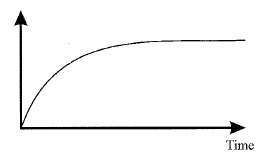
The reaction between zinc and hydrochloric acid may be represented by the equation: 
Zn(s) + 2HCl(aq) → ZnCl2(aq) + H2(g); ΔH = -154 kJ mol-1
In an investigation of this reaction using excess Zn and 2 M HCl(aq) in an open flask, the graph shown was plotted from the data collected.
Which of the following would be a suitable quantity for the vertical axis of the graph?
a)
Number of collisions per second.
b)
Rate of reaction.
c)
Temperature.
d)
Number of ion.
256.
Catalysts are thought to increase the rate of a chemical reaction by
a)
supplying the energy needed to overcome the activation energy
b)
increasing the temperature of the reaction
c)
providing less surface area for the reaction
d)
providing an alternative reaction pathway with a lower activation energy
257.
The equation and energy profile for combustion of methane is shown. 
According to the information provided on this profile, the activation energy for the reaction:
0.5CO2(g) + H2O(g) → 0.5CH4(g) + O2(g)
would be
a)
1635 kJ
b)
2135 kJ
c)
2490 kJ
d)
4270 kJ
258.
The main reason for the use of catalysts in most industrial processes is to
a)
reduce greenhouse gas emissions
b)
reduce the energy requirement for a reaction
c)
reduce waste production
d)
increase the yield of product
259.
Increasing the temperature of a chemical reaction
a)
lowers the activation energy of the reaction
b)
increases the energy of the reactant particles only
c)
increases the value of ΔH for the reaction
d)
increases the energy of the reactant and product particles
260.
Which of the following changes that can be made to a chemical reaction will result in a greater proportion of successful collisions between reactant particles?
I. addition of a catalyst
II. grinding reactant lumps into a powder
III. increasing the concentration of reactants
a)
I only
b)
II and III only
c)
I and II only
d)
I, II and III
261.
Which of the following would increase the INITIAL reaction rate between 5.0 g aluminium and 20.0 mL of 1.00 M hydrochloric acid?
a)
Conducting the experiment in a 50 mL beaker rather than a 100 mL beaker. 
b)
Using a larger volume of acid.
c)
Cleaning the surface of the metal with sandpaper.
d)
Increasing the pressure under which the experiment was conducted.
262.
Not all collisions between reactant particles result in the formation of products. This could be due to
i. the molecules not colliding with sufficient energy
ii. the concentration of reactants being low
iii. the reaction reaching equilibrium
iv. the reactants not colliding in the correct orientation

a)
all of the above
b)
i only
c)
iii only
d)
i and iv