
 Worksheets
1st 6 weeks test review
Total questions: 12
Worksheet time: 24mins
“Life, liberty, and property” were considered by John Locke to be
legal rights.
natural rights.
constitutional rights.
divine rights
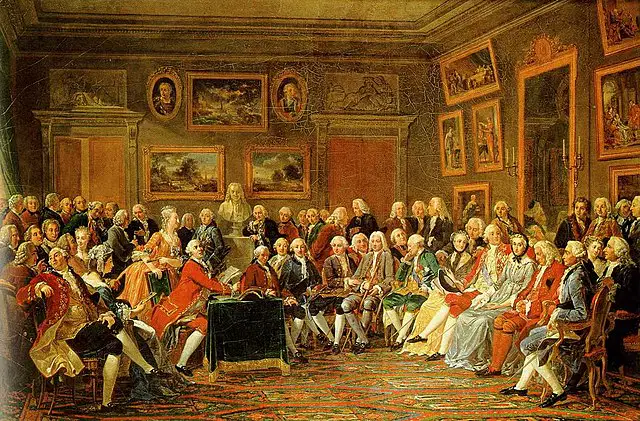
Based on this excerpt, the first Great Awakening was primarily a response to:
[T]he first Great Awakening . . . [was] a revitalization of religious piety that swept through the American colonies between the 1730s and the 1770s. . . . [It reaffirmed] the view that being truly religious meant trusting the heart rather than the head . . . and relying on biblical revelation rather than human reason.
—Christine Leigh Heyrman, “The First Great Awakening” (National Humanities Center, 2008)
the Enlightenment
the Industrial Revolution
mercantilism
democracy.

Which practice outlined in the U.S. Constitution was influenced by the ideas of republicanism?
the division of powers among the three branches
the election of representatives to make the laws
the assurance of due process of law for the accused
the specification of rights granted to every citizen

The framers of the U.S. Constitution believed that good governments were based on an agreement between the government and its citizens. Individuals would accept some limits on their freedom. In exchange, the government would act to preserve their rights and safety through the rule of law.
Which passage from the Constitution describes this agreement between citizens and the government?
“Each house shall be the judge of the elections, returns and qualifications of its own members.”
“We the people of the United States, in order to form a more perfect union . . . do ordain and establish this Constitution.”
“The House of Representatives shall be composed of members chosen every second year by the people of the several states.”
“The times, places and manner of holding elections for senators and representatives, shall be prescribed in each state by the legislature thereof; but the Congress may at any time by law make or alter such regulations.”
Use the excerpt below to answer the question.
. . . when the government is dissolved, the people are at liberty to provide for themselves, by erecting a new legislative . . . as they shall find it most for their safety and good: for the society can never . . . lose the native and original right it has to preserve itself. . . .
—Second Treatise from a Civil Government by John Locke, 1690
Which principle of the Declaration of Independence does this excerpt MOST directly reflect?
the concept that government should be created by the people and for the people
the belief that all people are equal and should be treated as such by the law
the idea that government must implement a system of checks and balances
the notion that representation in the legislature should be based on a two-house system
Use the excerpt below to answer the question.
The . . . right of the subject, that I shall at present mention, is that of having arms for their defence, suitable to their condition and degree, and such as are allowed by law. Which is . . . indeed a public allowance, under due restrictions, of the natural right of resistance and self-preservation, when the sanctions of society and laws are found insufficient to restrain the violence of oppression.
—William Blackstone, Commentaries 1:139
Which part of the U.S. Constitution was MOST influenced by this excerpt?
Article II
Article II
1st Amendment
2nd Amendment
Use the excerpt below to answer the question.
A representation of the people in one assembly being obtained, a question arises, whether all the powers of government, legislative, executive, and judicial, shall be left in this body? I think a people cannot be long free, nor ever happy, whose government is in one assembly.
—John Adams, Thoughts on Government, 1776
Which principle of the U.S. Constitution reflects this belief?
checks and balances
rule of law
unalienable rights
due process
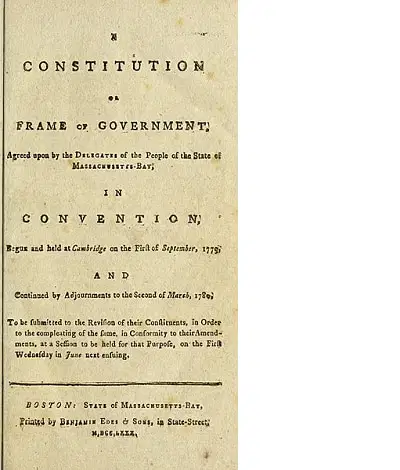
What was one argument against the ratification of the U.S. Constitution?
It lacked a bill of rights
It lacked a strong executive branch.
It granted states too much power.
It included a system of checks and balances.
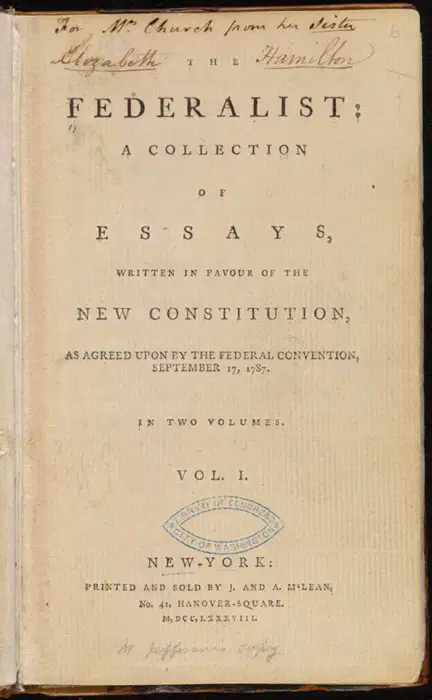
Which event BEST explains what the Federalist Papers were intended to support?
the regulation of slavery in western territories
the ratification of the U.S. Constitution
the annexation of the Louisiana Territory
the drafting of the Declaration of Independence

Which of the following statements BEST identifies a way that democracy differs from other forms of government?
In democracy, government’s role is to promote equality
In democracy, government ensures stability and order.
In democracy, government has the primary responsibility for securing economic prosperity.
In democracy, government promotes individual freedom and rights.
How have Thomas Jefferson’s political beliefs influenced the development of the U.S. government?
Selected Political Beliefs of Thomas Jefferson:
• supported strong state governments
• opposed formation of a national bank
• favored policies that promoted farming and agriculture
He supported policies that limited federal power.
He favored a government that would encourage commerce
He proposed the system of checks and balances.
He devised the system of collecting taxes on income.

Compared to Judeo-Christian traditions, Greco-Roman ideas of responsibility tended to place greater emphasis on which trait?
performing acts of charity
citizen participation in government
ritual preparation of foods
respect for religious elders

