wayground logo

Free Printable Worksheets

Font size

S
M
L
XL
Worksheets

Unit 1 Anatomy Review

Total questions: 60

Worksheet time: 30mins
Name
Class
Date
1.
When is it OK to eat or drink in the lab?
a)
Always
b)
Never
2.
If you break glassware in the lab, you should...
a)
Tell the teacher
b)
Clean it up quickly before the teacher notices
c)
Scream at the top of your lungs
3.
When in the lab...
a)
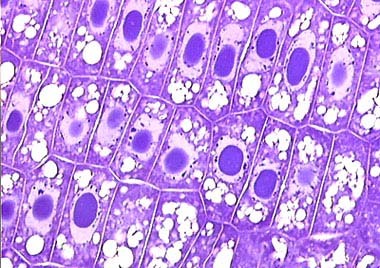
long sleeves and loose clothing should be rolled up
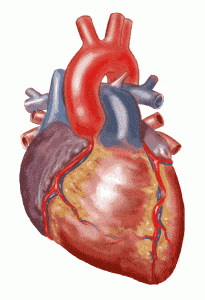
b)
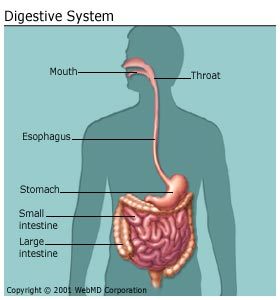
closed toe shoes should be worn
c)
long hair should be pulled back
d)
all of the above
4.
Chipped or cracked glassware is okay to use.
a)
True
b)
False
5.
Read all procedures thoroughly before entering the laboratory
a)
True
b)
False
6.
True or False. It is a bad idea to horse play during lab activities.
a)
True
b)
False
7.
a)
beaker
b)
graduated cylinder
c)
test tube
d)
eyedropper
8.
What is the volume of the liquid in this graduated cylinder?
a)
19 mL 
b)
35 mL 
c)
24 mL 
d)
1.9 mL
9.

If you want to measure volume of a liquid, which tool would be best to use

a)

A flask

b)

A test tube

c)

A graduated cylinder

10.

What measures temperature?

a)

a ruler

b)

a thermometer

c)

scales

d)

a stopwatch

11.
Tool used to measure MASS
a)
Metric Ruler
b)
Triple Beam Balance
c)
Graduated Cylinder
d)
Thermometer
12.
Units used to measure Mass of an object
a)
Centimeters
b)
Milliliters
c)
Grams
d)
Volume
13.

The information you collect while doing your experiment is called

a)

conclusions

b)

data

c)

hypotheses

d)

procedures

14.
A testable explanation to a problem that has not yet been tested. 
a)
data
b)
theory
c)
hypothesis
d)
fact
15.
Testing a hypothesis often involves a(n):
a)
answer
b)
experiment
c)
problem
d)
safety check
16.
The summary at the end of an experiment that explains the results. 
a)
conclusion
b)
procedures
c)
materials
d)
responding variable
17.
What step does every scientific experiment begin with?
a)
hypothesis
b)
question/problem
c)
procedures
d)
conclusion
18.

What is an observation?

a)

A scientific statement based on ideas

b)

Using your senses to notice what is going on around you

c)

To be unaware of your surroundings

d)

The question that you want an answer to.
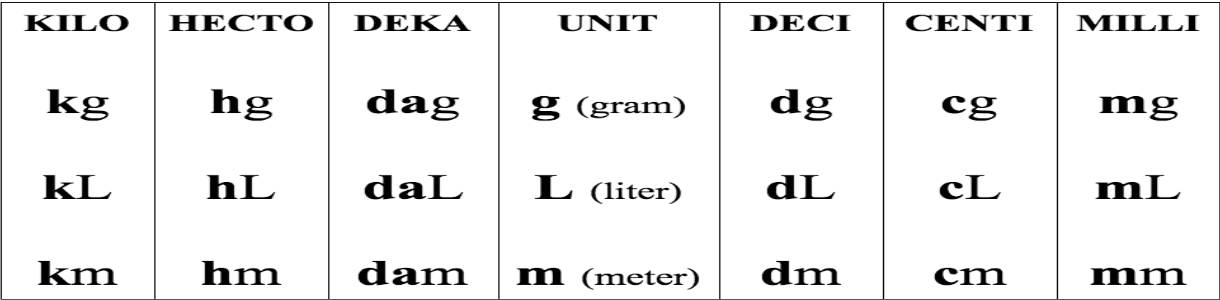
19.
Should experiments be repeated over and over to see if the results are the same each time?
a)
yes
b)
no
20.

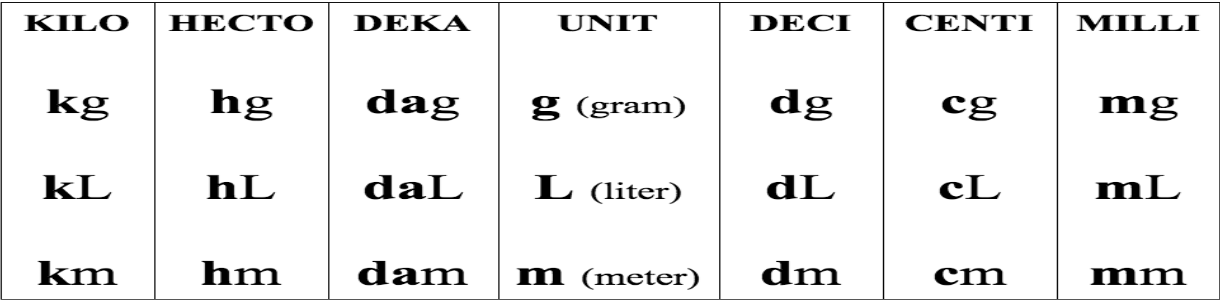
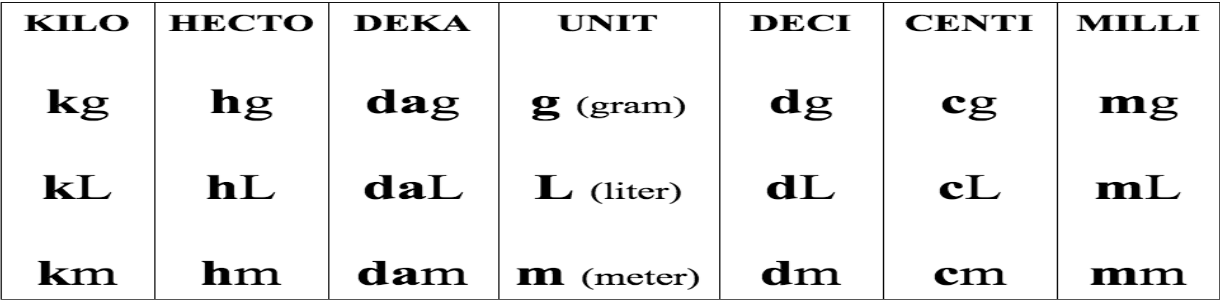
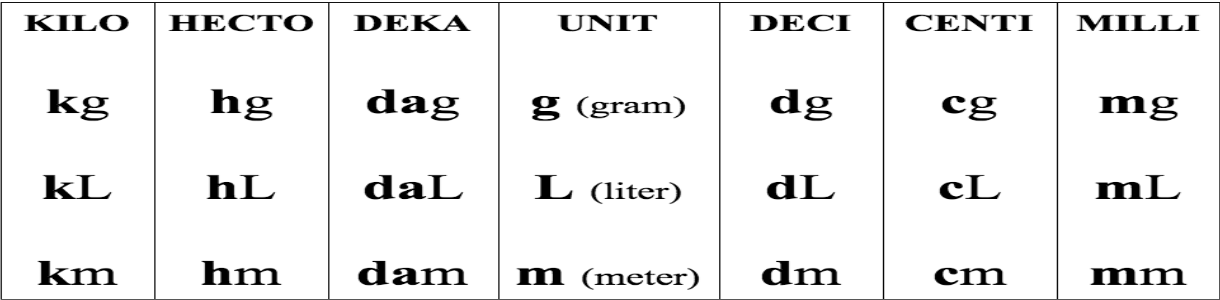
64,600,000 cm = ____ km

a)

646

b)

64.6

c)

6,460

d)

6.46

e)

64,600

21.

64,600,000 cm = ____ km

a)

646

b)

64.6

c)

6,460

d)

6.46

e)

64,600

22.

425,000 mL = ___ L

a)

425

b)

42.5

c)

4,250

d)

4.25

e)

42,500

23.

6.81 cm = ___ m

a)

0.0681

b)

0.681

c)

0.00681

d)

0.000681

e)

6.81

24.

14,700 cm = ___ m

a)

147

b)

14.7

c)

1,470

d)

1.47

e)

147,000

25.

What is the basic unit of mass in the metric system?

a)

Liter

b)

Meter

c)

Gram

d)

Kilometer

26.
Which unit is a a measure of volume?
a)
meters
b)
grams
c)
inches
d)
liters
27.

Select the largest unit.

a)

kilogram

b)

centigram

c)

decigram

d)

decagram

28.

What is the basic unit of length/distance in the metric system?

a)

Liter

b)

Meter

c)

Gram

d)

Kilometer

29.
What are the three base units?
a)
mass,length,grams
b)
meters,length,grams
c)
measuring,liters,games
d)
meters,liters,grams
30.

What is a cell?

a)

Groups of similar types of cells that work together to carry out a specific task

b)

Groups of different tissues working together to perform a particular job

c)

Groups of different organs working together to complete a series of tasks

d)

The smallest unit of life

31.
This is a example of........ 
a)
organ system
b)
cells
c)
organ
d)
tissue
32.
This is a example of ........
a)
cell
b)
organ system
c)
organ
d)
tissue
33.
This is a example of ........
a)
cell
b)
tissue
c)
organ 
d)
organ system
34.

What are organs made out of?

a)

cells

b)

organisms

c)

tissues

d)

organ systems

35.

The basic building block of living things, made up of organelles.

a)

Tissue

b)

Organelle

c)

Cell

d)

Atom

36.

Groups of cells with similar functions.

a)

Organs

b)

Molecules

c)

Tissues

d)

Organelles

37.

Group of tissues with similar functions.

a)

Organelles

b)

Cells

c)

Tissues

d)

Organs

38.

Group of organs with similar functions.

a)

Organism

b)

Cell

c)

Organ

d)

System

39.

Any single living individual, and can refer to a single human, animal, plant,

Protista, bacteria, or fungi.

a)

Community

b)

Cell

c)

Population

d)

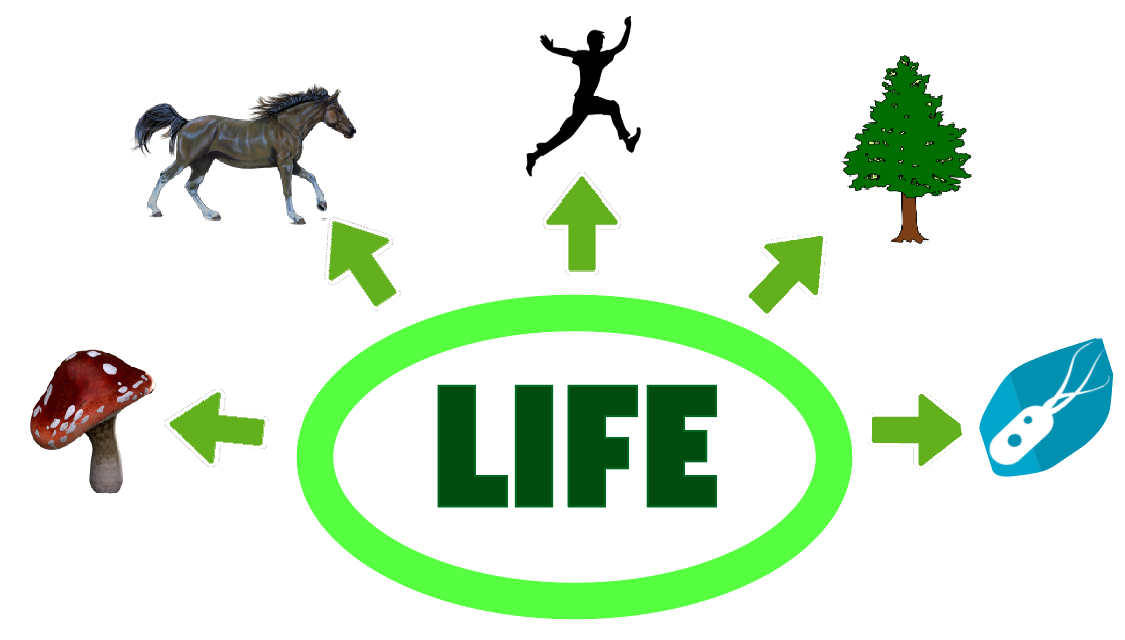
Organism

40.
The back is my ____________ side
a)
super 
b)
inferior
c)
 ventral
d)
dorsal
41.

The forehead is my ____________ side

a)

inferior

b)

superior

c)

dorsal

d)

ventral

42.
My nose is ______________ to my shoulders
a)
inferior
b)
superior
c)
proximal
d)
distal
43.
My elbow is ______________ to my fingers
a)
proximal
b)
distal
c)
superior
d)
inferior
44.

My ear is _____________ to my nose

a)

Medial

b)

lateral

c)

anterior

d)

posterior

45.
My lungs are ______________ to my small intestine.
a)
Posterior
b)
Anterior
c)
inferior
d)
superior
46.
Used on limbs only.
a)
anterior/posterior
b)
inferior/superior
c)
proximal/distal
d)
ventral/dorsal
47.
Which of the following best describes anatomical position?
a)
Erect position of the body with the face directed forward, the arms at the side, and the palms of the hands facing forward
b)
erect position of the body with the face directed forward, the arms at the side, and the palms of the hands facing backwards
c)
laying position of the body with the face directed forward, the arms at the side, and the palms of the hands facing forward
d)
laying position of the body with the face directed forward, the arms at the side, and the palms of the hands facing backwards
48.

Closer to the head.

a)

Anterior

b)

Proximal

c)

Superior

d)

Medial

49.

Away from the head.

a)

Inferior

b)

Lateral

c)

Deep

d)

Distal

50.

Toward the midline of the body

a)

Inferior

b)

Superficial

c)

Proximal

d)

Medial

51.

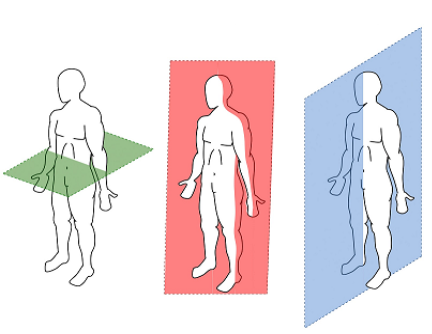
Divides the body into left and right portions.

a)

Frontal

b)

Transverse

c)

Sagittal.

52.

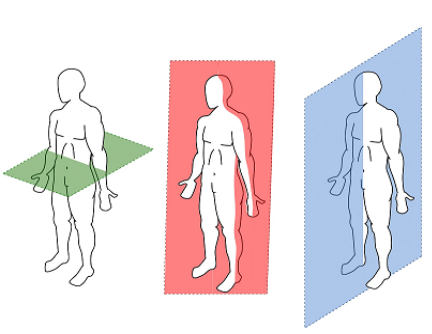
Divides the body into front and back portions.

a)

Sagittal

b)

Frontal

c)

Transverse

53.

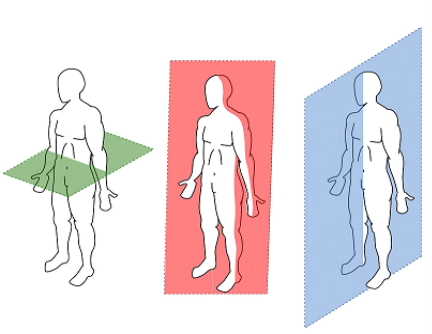
Divides the body into top and bottom portions.

a)

Sagittal

b)

Frontal

c)

Transverse

54.

Identify letter e

a)

mediastinum

b)

pleural cavity

c)

thoracic cavity

d)

diaphragm

e)

abdominal cavity

55.

Identify letter a

a)

diaphragm

b)

thoracic cavity

c)

pleural cavity

d)

mediastinum

56.

What are the 2 main categories of body cavities?

a)

viscera and ventral

b)

dorsal and ventral

c)

dorsal and posterior

d)

anterior and ventral

57.

The stomach is located in which cavity?

a)

pelvic cavity

b)

thoracic cavity

c)

abdominal cavity

d)

dorsal cavity

58.

Identify #6

a)

pelvic cavity

b)

diaphragm

c)

abdominopelvic cavity

d)

abdominal cavity

59.

Body cavity that contains the heart

a)

abdominal

b)

pericardial

c)

pelvic

d)

pleural

60.

Which of the following cavities holds the heart AND lungs?

a)

pleural

b)

pericardial

c)

thoracic

d)

abdominal