
Ukuran huruf
 Lembar kerja
Influences on America Part One
Total soal: 32
Worksheet time: 17mins
What kind of democracy did Athens have?
Indirect Democracy
Presidential Democracy
What type of democracy did Rome have?
Indirect Democracy
Pure Democracy
Anarchy
What does Charles de Montesquieu believe would happen in a state of nature?
Men would fight each other
Men would be peaceful and happy
Men would avoid fighting out of fear
Men would respect natural rights
What does John Locke believe would happen in a state of nature?
Men would fight each other
Men would be peaceful and happy
Men would avoid fighting out of fear
Men would respect natural rights
What does Thomas Hobbes believe would happen in a state of nature?
Men would fight each other
Men would be peaceful and happy
Men would avoid fighting out of fear
Men would respect natural rights
What does Jean-Jacques Rousseau believe would happen in a state of nature?
Men would fight each other
Men would be peaceful and happy
Men would avoid fighting out of fear
Men would respect natural rights
What does Thomas Hobbes believe a social contract should be?
The people give up their rights to a king
The people give up their rights to the community
The people join it to protect their rights
The people join it to limit the government
What does John Locke believe a social contract should be?
The people give up their rights to a king
The people give up their rights to the community
The people join it to protect their rights
The people join it to limit the government
What does Jean-Jacques Rousseau believe a social contract should be?
The people give up their rights to a king
The people give up their rights to the community
The people join it to protect their rights
The people join it to limit the government
What is Thomas Hobbes's ideal form of government?
Absolute Monarchy
Direct Democracy
Representative Democracy
What is John Locke's ideal form of government?
Absolute Monarchy
Direct Democracy
Representative Democracy
What is Jean-Jacque Rousseau's ideal form of government?
Absolute Monarchy
Direct Democracy
Representative Democracy
What are natural rights, according to Locke?
Life, Liberty, Property
Life, Liberty, Pursuit of Happiness
Speech, Religion, Press
Speech, Religion, Petition
Why were the American colonists so angry about the Stamp Act and other taxes?
They weren't represented in Parliament
The people were never taxed before
The King was not using the money from taxes for anything
They were losing the profit the colonies had from mercantilism
What war did England fight to have to tax the colonies so heavily?
The English Civil War
The Opium War
The Hundred Years War
What did the Intolerable Acts do?
Forced colonists to trade only with England
Restricted colonists' rights
Made a tax on stamps
Made a tax on tea
What was the point of Patrick Henry's "Give me Liberty or Give me Death" Speech?
America shouldn't go to war.
Liberty is not possible unless you are dead.
He would rather die in war than live under England's rule.
People will lose their liberty if they go to war.
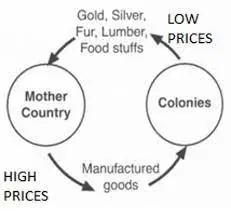
How does mercantilism make the relationship between England and the American colonies worse?
It makes the colonies ally with the Indians in the French and Indian War.
They make more money than England who starts to tax them in response.
It makes them go to war with each other over the resources in America.
It hurts the colonies' economy through an unequal trade agreement.
What was the relationship between England and the American colonies like before it started to enact taxes?
The colonies elected representatives in the English Parliament
England allowed America to self-govern
England exercised extreme control over the colonies
England did everything except defend the colonies
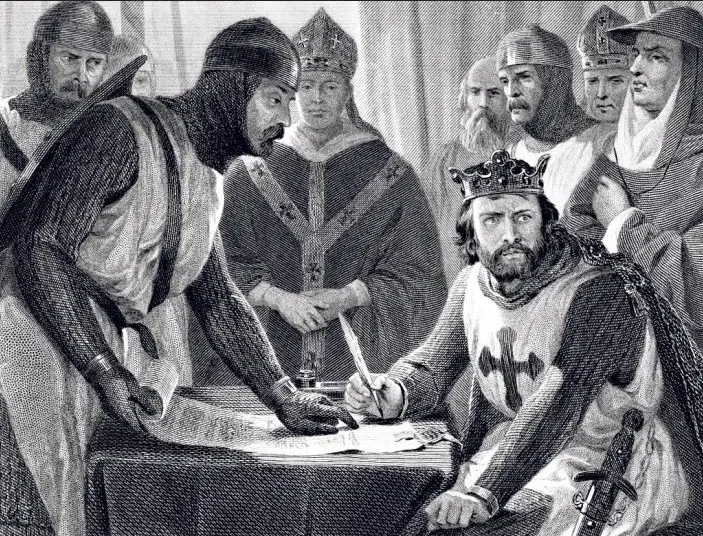
Which of the following is NOT one of the principles included in the Magna Carta?
Self-Government
Private Property
Due Process
Rule of Law
What was the purpose of the Magna Carta (TWO ANSWERS)
Establish a new government
Overthrow the king
Give power to the barons/people of England
Limit the power of the king
Which of the following are important to Montesquieu for limiting the government's power? (TWO ANSWERS)
Absolute Monarchy
Separation of Powers
Anarchy
Checks and Balances

What was the purpose of the English Bill of Rights? (TWO ANSWERS)
Limit the power of the king
Establish a new government
Give power to the Parliament/people of England
Declare independence
How did the English Bill of Rights influence the founders of America?
Gave Americans religious teachings
Convinced Americans that they shouldn't be taxed
Showed Americans rights that should be in their Bill of Rights
Helped Americans overthrow the king

What was the purpose of the Mayflower Compact? (TWO ANSWERS)
Unite the settlers
Declare independence from the king
Establish a framework for government
Abolish slavery

Which principle was NOT included in the Mayflower Compact?
Common Consent
Private Property
Unity
Self-Government

How was the Mayflower Compact different from the Magna Carta?
The Mayflower Compact was a forced signing rather than an agreement
The Mayflower Compact overthrew the king
The Mayflower Compact was an agreement rather than a forced signing
The Mayflower Compact was a much longer document
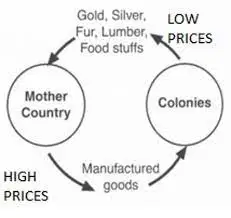
Who profits and benefits in the economic theory of mercantilism?
The Colonies (America)
The Mother Country (England)
Definition: Fair and equal treatment through the justice/judicial system
Rule of Law
Due Process
Common Consent
Self-Government
Definition: Everyone has to follow the law, even the most powerful in society
Rule of Law
Due Process
Unity
Self-Government
Definition: The people must give permission to the government to rule and agree with its authority
Common Consent
Private Property
Unity
Self-Government
Definition: The people rule themselves
Common Consent
Private Property
Unity
Self-Government

