
 Worksheets
Bio 171 Exam 1 Review
Total questions: 71
Worksheet time: 39mins
Which of these are necessary life functions?
Digestion
Metabolism
Growth
Oxygen
A sign is a subjective change, a symptom is an objective change
True
False
All of these are included in anatomical position
hands by the side
palms are supine
subject is sitting
body is in prone position
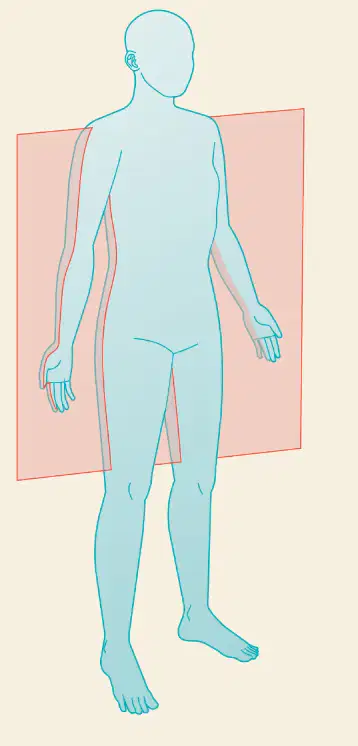
What type of plane is this?
frontal
transverse
sagittal
oblique
What is the serous membrane surrounding the lungs?
pericardium
peritoneum
pleura
perineum
Order serous membranes from inside to outside
parietal layer, serous fluid, visceral layer, viscera
serous fluid, viscera, visceral layer, parietal layer
viscera, visceral layer, serous fluid, parietal layer
viscera, parietal layer, serous fluid, viseral layer
In negative feedback, the body senses a change and works to _______ it
reverse
amplify
maintain
The axial region includes
upper and lower extremeties
head
neck
abdominal region
A sagittal plane divides the body into:
right/left
anterior/posterior
superior/inferior
superficial/deep
Which of the following have a retroperitoneal position?
kidneys
adrenal glands
urinary bladder
pancreas
General term for any derangement or abnormality function?
sign
diagosis
disorder
disease
Which of these is not an organ system?
cardiovascular system
muscular system
pancreatic system
digestive system
Which of the following are types of tissue found in the body?
epithelial
connective
nervous
muscular
Atoms, cells, molecules, organelles, tissues, organs, organ system
true
false
the hormone responsible for positive feedback during birth is...
oxygen
serotonin
oxytocin
prolactin
a local disease affects the whole body
true
false
the mediastinum does not include the lungs
true
false
viscera of the abdominal cavity includes the urinary bladder, reproductive structures, and some of the large intestines
true
false
order the components of a feedback loop:
receptor, then control center, then effector
effector, then control center, then receptor
What is the "reference man?"
24 year old man, 154 pounds, light physical activity, 2800 calories a day
22 year old man, 154 pounds, light physical activity, 2000 calories a day
22 year old man, 154 pounds, light physical activity, 2800 calories a day
22 year old man, 128 pounds, light physical activity, 2000 ccalories a day
The appendix is located in the...
Left lower quadrant, left iliac
left lower quadrant, left lumbar
right lower quadrant, right iliac
right lower quadrant, right lumbar
Neutrons have no charge.
true
false
______ are salts that ionize in water.
electrolytes
free radicals
lipids
enzymes
Why is heat stroke more likely to occur on a hot, humid day than a hot, dry day?
The moisture turns off our thirst reflex so we're less likely to drink water
Our sweat forms H bonds with the moisture so the sweat can't leave our skin
It isn't, this is a trick question
organ system that contains our hair, skin, and nails protects our deeper tissues
skeletal system
cardiovascular system
muscular system
integumentary system
organ system that contains the stomach, intestine, esophagus, liver, pancreas, gallbladder
digestive system
endocrine system
respiratory system
urinary system
the muscular system...
produces heat
maintains posture
protects our organs
allows for movement
the cranial and vertebral cavities are apart of the ventral cavity
true
false
weight is the amount of matter a substance contains, while mass is the force of gravity acting on a mass
true
false
an example of chemical energy is
riding a bike
the energy from food
ions moving across cell membranes
light energy
catabolism is energy-releasing, anabolism is energy-storing
true
false
6 elements that make up 98.5% of our body weight are
hydrogen, oxygen, sulfur, potassium, calcium, phosphorus
nitrogen, hydrogen, oxygen, calcium, phosphorus, carbon
carbon, sulfur, oxygen, potassium, hydrogen, nitrogen
nitrogen, oxygen, calcium, sulfur, hydrogen, carbon
when an atom gains or loses electrons, it becomes an ______
compound
ion
cell
antioxidant
the strongest chemical bonds are _____, while the weakest are _____
covalent, hydrogen
hydrogen, covalent
covalent, ionic
ionic, covalent
most ionic compounds form salts
True
False
When energy is liberated from ATP, it is decomposed to adenosine diphosphate and phosphorus
True
False
What are the four nitrogenous bases in DNA?
A, G, C, U
A, G, T, U
A, C, G, T
A, C, U, T
Passive transport processes include
facilitated diffusion
simple diffusion
primary active transport
osmosis
Proteins are constructed from combinations of peptide bonds, joined together by amino acids
True
False
Which of the following are types of lipids?
steroids
eicosanoids
triglycerides
phospholipids
glucose is a...
monosaccharide
disaccharide
polysaccharide
aminosaccharide
glycogen is a...
monosaccharide
disaccharide
polysaccharide
aminosaccharide
we break down glucose into glycogen for energy
true
false
Which of the following increase the rate of diffusion?
membrane surface area decrease
temperature increase
a steep gradient
greater molecular weight
a pH of 6.2 is
acidic
basic
has a lower concentration of H+ ions
has a greater concentration of H+ ions
which are properties of water
universal solute
it is polar
has high heat capacity
protective cushion around body organs
What bonds are disrupted with pH changes or temperature drops?
ionic
covalent
hydrogen
What type of cell junctions let action potentials pass?
tight junctions
gap junctions
desmosomes
we get the easiest access to energy through
carbohydrates
lipids
nucleic acids
amino acids
adding an acid to a buffered solution will cause the pH to
increase
decrease
stay the same
become a homoegenous solution
what happens in type 2 diabetes
too much insulin
too little insulin
hyperglycemia
hypoglycemia
Extracellular fluid contains
interstitial fluid
blood plasma
cerebrospinal fluid
organelles
Wet gangrene is a block from the venous side.
True
False
The plasma membrane can be described as
selectively permeable
made of phosopholipids and nucleic acids
lipid trilayer
a fluid mosaic
If the phosopholipid heads are polar, they are uncharged
true
false
Red blood cells have a nucleus
true
false
Na+ is an extracellular cation that wants to enter our cells, K+ is an intracellular cation that wants to leave our cells
true
false
A transport protein is needed for which molecule?
oxygen
small alcohols
ammonia
glucose
A cell placed in a hypertonic solution will shrink.
true
false
If a cell secreted a lot of proteins and lipids, it would have a lot of
nucleoli
golgi
lysosomes
mitochondria
Which of the following is a disease that results from faultly lysosomes?
graves disease
alzheimer's disease
tay-sachs disease
cushing's disease
What happens when cells lose their telomeres?
they increase in size
they undergo mitosis
they copy their DNA
they undergo apoptosis
What do enzymes do?
speed up reactions
slow down reactions
Cystic fibrosis results from a fauly _____ pump that causes mucus to build up _____ the cell
calcium; outside
sodium; outside
chloride; outside
sodium; inside
phagocytosis is
moving molecules out of the cell
ingestion of solid particles
pre-programmed cell death
phospholipids are
polar
nonpolar
amphipathtic
a type of protein
when females release an egg and it does NOT get fertilized, what happens?
apoptosis
necrosis
gangrene
Endometriosis dangerous cell growth inside of the uterus
True
False
Interphase involves cell division
true
false
mRNA brings the nucleotide sequence to the ribosome, tRNA delivers a specific amino acid to the codon
true
false
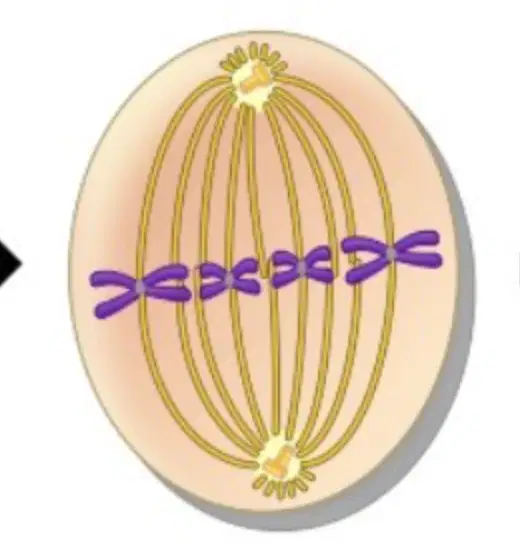
what phase of the cell cycle is this?
prophase
metaphase
anaphase
telophase

