wayground logo

Free Printable Worksheets

NEW

Font size

S
M
L
XL
Worksheets

History of periodic table

Total questions: 20

Worksheet time: 45mins

Name
Class
Date
1.
What was Dmitri Mendeleev's greatest contribution to the history of the periodic table?
a)
He arranged all of the known elements by their atomic number
b)
He realised that there was a pattern of reactivity which repeated every 8 elements
c)
He predicted the existence (and properties) of new elements
d)
He identified the "law of triads" which became the groups
2.

Who was the second scientist to attempt to organise the elements?

a)

Dmitri Mendeleev

b)

Mendeleev

c)

John Newlands

d)

Alexandre-Émile Béguyer de Chancourtois

3.

Who is the Father of Periodic Table of Elements?

a)

Lothar Meyer

b)

Dmitri Mendeleev

c)

John Newlands

d)

Henry Moseley

4.

He classified some elements into groups of three, which he called triads.

a)

John Newlands

b)

Johann Wolfang Döbereiner

c)

Antoine Lavoisier

d)

Lothar Meyer

5.

Mandeleev arranged the elements in each row according to the increasing in their:

a)

Atomic Mass

b)

Electrons

c)

Atomic number

d)

Protons

6.

Atomic number of any element is the number of

a)

Protons

b)

Electrons and Neutrons

c)

Neutrons

d)

None of above

7.
Why did scientists need/want to organize the elements?
a)
Scientists like things organized
b)
make it easier to understand the elements
c)
have one list of the known elements.
d)
none of the above
8.
Why were there blank spaces left in Mendeleev's periodic table?                                              
a)
He didn't know what to put there.
b)
 Undiscovered elements not yet known.
c)
Multiple elements could have fit
d)
He forgot to add the elements in.
9.
Each column in the periodic table is called a 
a)
period
b)
group
c)
cluster
d)
unit
10.

Horizontal Rows on the periodic table are called

a)

groups

b)

families

c)

periods

d)

cluster

11.

A column of the periodic table is a ________.

a)

group

b)

period

c)

range

12.

A row on the periodic table is a _______.

a)

group

b)

period

c)

range

13.

Elements on the periodic table are arranged in rows and columns according to their _________.

a)

properties

b)

categories

c)

atomic number

d)

boiling point

14.

In the periodic table, the elements are classifies acording to...

a)

The atomic number

b)

The mass number

c)

The electronic number

d)

The number of neutrons

15.
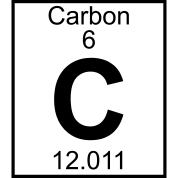
What does the 6 represent?
a)
atomic mass
b)
atomic number
c)
element name
d)
chemical symbol 
16.
These are found on the Periodic Table.
a)
Compounds
b)
Elements
c)
Mixtures
17.
Particles in an atom that are neutral and have no charge are 
a)
negatrons 
b)
electrons 
c)
neutrons 
d)
protons 
18.
all matter is made of what 
a)
energy 
b)
atoms 
c)
electrons 
d)
compounds 
19.
What does the nucleus of an atom contain?
a)
Electrons and neutrons
b)
Protons and neutrons
c)
Neutrinos and positrons
d)
DNA and RN
20.

An electron has a _________ charge

a)

positive

b)

neutral

c)

negative

d)

massive