wayground logo

Free Printable Worksheets

Font size

S
M
L
XL
Worksheets

Bio 120 Unit 1 Review

Total questions: 37

Worksheet time: 37mins

Name
Class
Date
1.

A pH of 1 is very ___

a)

strong

b)

basic

c)

acidic

d)

weak

2.

A pH of ____ is neutral

a)

0

b)

5

c)

7

d)

10

3.

A pH of 14 is very ____

a)

acidic

b)

basic

c)

strong

d)

weak

4.

Something acidic on the pH scale has a higher ___ concentration

a)

H+

b)

OH-

c)

O+

d)

He-

5.

Something that is basic has a higher ___ concentration

a)

He-

b)

H+

c)

OH-

d)

O+

6.
45Sc 
___ protons, ___ neutrons, ___ electrons
a)
45, 45, 45
b)
21, 45, 21
c)
21, 21, 24
d)
21, 24, 21
7.
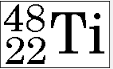
How many protons does this isotope of titanium have?
a)
48
b)
22
c)
26
d)
70
8.
Where are neutrons located in the atom?
a)
shells/orbitals
b)
rings
c)
center
d)
nucleus
9.
Fluorine has an atomic number of 9. What can you conclude about an atom of fluorine from this fact?
a)
it has 9 protons
b)
it weighs 9 grams
c)
it has 9 electron shells
d)
it has a boiling point of 9 degree celsius
10.

an isomer of a molecule has

a)

different formulas and different shapes

b)

same formulas and same shapes

c)

same formulas and different shapes

d)

different shapes and same formulas

11.

which functional group is shown in the picture?

a)

hydroxyl group

b)

carbonyl group

c)

carboxyl group

d)

amino group

12.

Which functional group is shown in the picture?

a)

hydroxyl group

b)

carbonyl group

c)

carboxyl group

d)

amino group

13.

which functional group is shown in the picture?

a)

hydroxyl group

b)

carbonyl group

c)

carboxyl group

d)

amino group

14.

The four most common elements in living things are

a)

carbon, hydrogen, sulfur, iron

b)

cobalt, helium, nitrogen, oxygen

c)

carbon, hydrogen, nitrogen, oxygen

d)

calcium, lithium, nitrogen, oxygen

15.

What is the chemical formula for water?

a)

H2O

b)

H2O2

c)

HO2

d)
16.
Which of the following is true about structural isomers?
a)
Have the same molecular formula
b)
Have different physical and chemical properties.
c)
Have the same number of elements
d)
all of the above
17.
Are the compounds shown isomers
a)
Yes
b)
No
18.
Are the following molecules isomers
a)
Yes
b)
No
19.

What type of bond is found BETWEEN water molecules?

a)

hydrogen bonds

b)

ionic bonds

c)

nonpolar covalent bonds

d)

polar covalent bonds

20.
Which end of the water molecule has a slightly positive charge?
a)
the oxygen end
b)
the hydrogen end
c)
both ends are slightly positive
d)
neither end is positive
21.
What word describes when water is attracted to other substances?
a)
cohesion
b)
adhesion
c)
capillary action
d)
surface tension
22.
When water molecules stick easily to other water molecules, this is called what?
a)
cohesion
b)
adhesion
c)
solution
d)
polar molecule
23.
The fact that ice floats on liquid water is due to the fact that water's solid is ___________ than it's liquid form
a)
less polar
b)
more polar
c)
less dense
d)
more dense
24.
The tightness across the surface of water that enables paper clips to float is ____________.
a)
adhesion
b)
capillary action
c)
surface tension
d)
polarity
25.
Large bodies of water help to keep nearby climates from being too hot or too cold  because they...
a)
absorb heat in the spring and slowly release that heat in the fall
b)
absorb heat in the fall and slowly release that heat in the spring
c)
absorb heat in the summer and slowly release that heat in the winter
d)
absorb heat in the winter and slowly release that heat in the summer
26.

Which of the following can water NOT dissolve?

a)

Salt

b)

Sugar

c)

Oil

d)

Baking Soda

27.
What is the primary role of enzymes inside of living cells? 
a)
organizing the translation of proteins
b)
allowing cells to be motile
c)
absorbing ultraviolet rays
d)
speeding up chemical reactions 
28.
What are all of the chemical reactions that occur within an
organism referred to?
a)
Enzymes
b)
Macromolecules
c)
Metabolism
d)
Activation Energy
29.
In an Endergonic reaction, heat is ________.
a)
Released 
b)
Absorbed
c)
Created
d)
Destroyed
30.

When you eat fruits and vegetables, chemical bonds are releasing stored energy, this is...

a)

a. thermal energy

b)

b. sound energy

c)

c. electrical energy

d)

d. chemical energy

31.

The ability to do work

a)

A. chemical energy

b)

B. Friction

c)

C. electrical energy

d)

D. Energy

32.

A student is holding the end of a pendulum. The student releases the pendulum. What energy transfers are taking place?

a)

potential energy is transferred to kinetic energy

b)

chemical energy to thermal energy

c)

mechanical energy to chemical energy

d)

kinetic energy is tranferred to potential energy

33.
Energy due to motion is ____________ energy. 
a)
Potential 
b)
Energy
c)
Kinetic
d)
Friction
34.
What element is considered the building block of life?
a)
carbon
b)
hydrogen
c)
oxygen
d)
water
35.

What is used or released when ATP becomes ADP?

a)

phosphate released / energy used

b)

phosphate used / energy released

c)

phosphate released / energy released

d)

phosphate used / energy released

36.

What is the full name of the molecule ATP?

a)

Adenine Diphosphate

b)

Adenosine Diphosphate

c)

Adenine Triphosphate

d)

Adenosine Triphosphate

37.

All of the following are parts of an ATP molecule except:

a)

Adenine

b)

Ribose

c)

Ribosomes

d)

Phosphates