
 Worksheets
Professional Communication Quiz
Total questions: 15
Worksheet time: 8mins

Welcome aboard, rookie! Your boss has thrown you a challenge to get to know the company's communication rules better. So, what's your take on 'email etiquette' in this corporate jungle?
Email etiquette is all about using cool emojis and hip slang, right?
Is email etiquette about responding to all those emails within a day?
Does email etiquette mean forwarding all those chain emails to everyone in your contact list?
Or, is email etiquette about following certain guidelines to ensure polite and correct email communication?
Picture this! You're the boss at a global powerhouse. Why do you think mastering the art of email etiquette is crucial when you're exchanging words with your team?
Email etiquette is crucial in professional communication because it helps keep things light and breezy.
Email etiquette? That's just for personal chats, right?
Email etiquette is crucial in professional communication because it helps maintain a level of professionalism, clarity, and respect in written interactions.
Email etiquette in professional communication? Nah, not important.

Welcome aboard, rookie! You've just landed your first gig at a global powerhouse. Your boss has thrown you a challenge - you've got to shoot an email to a client. But wait, there are rules to this game! Can you guess the right email etiquette to follow?
Option 1: Use a funky email address, keep the subject line as mysterious as a thriller novel, address the recipient like your old college buddy, use a tone that's as rude as a grumpy cat, go wild with all caps and punctuation, send without a second glance, and take your sweet time to respond.
Option 2: Use your personal email address, make the subject line as complex as a riddle, address the recipient with a wrong name, use a tone that's as aggressive as a bull in a china shop, write in all lowercase or forget punctuation, send without proofreading, and respond whenever you feel like it.
Option 3: Use a generic email address, make the subject line as misleading as a clickbait, don't bother addressing the recipient, use a tone that's as sarcastic as a stand-up comedian, go overboard with capitalization or punctuation, send without bothering to correct, and respond inconsistently.
Option 4: Use a professional email address, keep the subject line clear and concise, address the recipient correctly, use a tone that's as polite as a butler, avoid using all caps or excessive punctuation, proofread before sending, and respond faster than a pizza delivery.

Imagine you're penning down an email to the big boss of your company, the one and only Mr. Johnson. What's the best way to address him in your email?
Stick to the formal route with the recipient's appropriate title and surname
Go casual with a nickname or an informal name.
Keep it simple with just the recipient's first name.
Play it safe with a generic greeting like 'Dear Sir/Madam'.

Imagine you're in a corporate meeting. Can you guess why we're all here chit-chatting?
Are we here to exchange information, ideas and emotions between us and other departments?
Or, are we here to prevent the exchange of information, ideas and emotions between us and other departments?
Maybe, we're here to create barriers and misunderstandings between us and other departments?
Or, are we here to confuse and deceive each other and other departments?

Imagine you're in a bustling business meeting. The manager is about to unveil a new policy to his team. Can you identify the key elements of the communication process in this scenario?
The manager (playing the role of the transmitter), the policy details (acting as the content), the meeting room (serving as the medium), the team members (being the receivers), their understanding (forming the response) and any distractions (acting as interference).
The manager (stepping into the shoes of the sender), the policy details (being the message encoding), the meeting room (acting as the channel), the team members (being the receivers), their understanding (acting as the decoding), their feedback.
The manager (taking on the role of the speaker), the policy details (forming the content), the meeting room (serving as the medium), the team members (acting as the listeners), their understanding (forming the response) and any distractions (acting as interference).
The policy details (acting as the encoding), their understanding (acting as the decoding), the meeting room (serving as the medium), the team members (being the listeners), their understanding (forming the response) and any distractions (acting as interference).

Imagine you're in a room with John, a master of communication, who's about to give an exciting lecture on the various forms of communication. Can you guess what types of communication he's going to talk about?
Could it be oral communication, body language, email communication and graphic communication?
Or maybe spoken communication, sign language, text messages and pictorial communication?
Could he possibly discuss auditory communication, physical communication, textual communication and illustrative communication?
Or will he delve into verbal communication, non-verbal communication, written communication and visual communication?
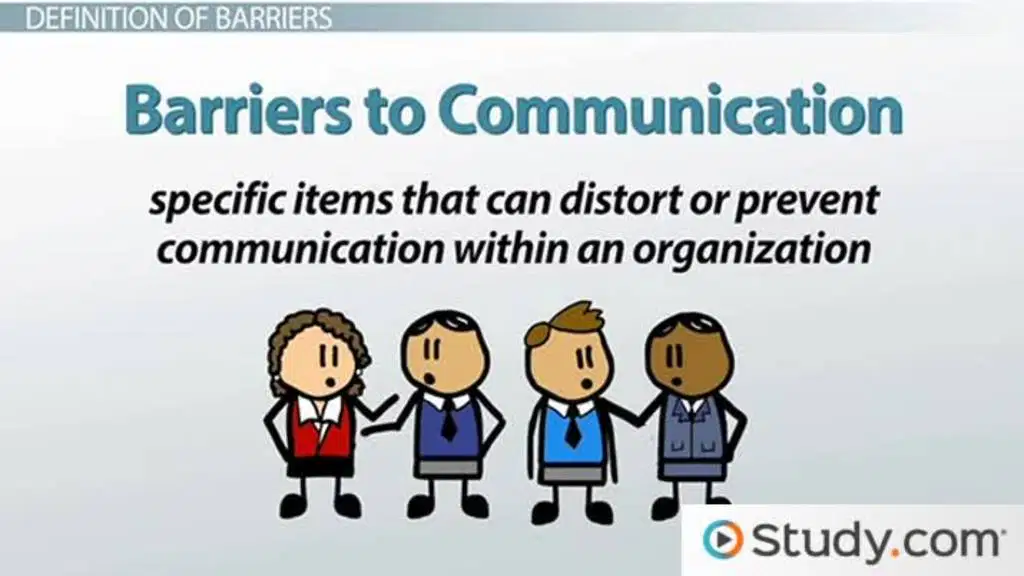
Imagine you're in a bustling meeting with a multinational company. What do you think could be the hurdles in effective communication?
Language barriers due to different nationalities, physical barriers due to the large meeting room, emotional barriers due to stress, cultural barriers due to diverse backgrounds, and noise barriers due to the bustling environment.
Time barriers due to different time zones
Psychological barriers due to personal issues
Technological barriers due to poor internet connection
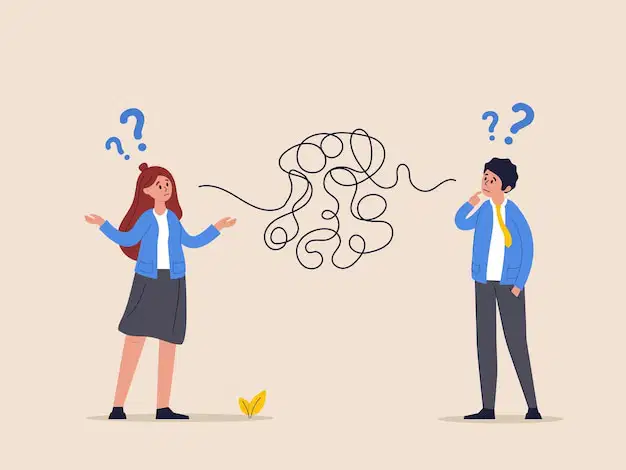
Imagine you're in a vibrant, multicultural office space. What's your strategy to leap over those pesky communication hurdles with your teammates?
Simply brush off your colleague's viewpoint
Turn up the volume and add some force when you talk to your colleagues
Keep your eyes on the floor and use closed body language when chatting with your colleagues
How about using active listening, clearing up any misunderstandings, using non-verbal communication, being aware of cultural differences, and practicing empathy with your colleagues?
Imagine you're the team leader at XYZ Corporation. Why would you emphasize effective communication during team meetings?
Would you do it to create a chaotic work environment, hinder productivity, strain relationships, and foster misunderstandings or conflicts?
Or to maintain a neutral work environment, keep productivity at an average level, have average relationships, and occasionally have misunderstandings or conflicts?
Perhaps to create a positive work environment, boost productivity, build strong relationships, and prevent misunderstandings or conflicts?
Or would you prioritize individual work over collaboration, discourage productivity, weaken relationships, and allow frequent misunderstandings or conflicts?
Imagine you're in a superhero team meeting (yes, you're a superhero!). What super communication skills should you use to make the meeting effective?
Using your super hearing to listen to your team, observing their non-verbal cues with your x-ray vision, being clear and concise in your points, providing and receiving feedback with your telepathy, and showing empathy.
Speaking loudly like a thunder god, using complex vocabulary like a scholar superhero and writing long emails like a tech wizard.
Ignoring feedback like a villain, avoiding eye contact like a shy superhero and speaking in a monotone voice like a robot sidekick.
Using jargon like a science hero, speaking quickly like a speedster and avoiding questions like a mysterious vigilante.
Imagine John, a newbie in the corporate jungle, is a bit lost when it comes to email etiquette. Can you spot the email faux pas that John should steer clear of in his corporate journey?
Maintaining a professional tone, keeping messages crisp and concise, and ensuring proper grammar and punctuation.
Typing in all caps, forgetting the subject line, and bombarding with large attachments without a heads-up.
Replying to emails in a timely manner, avoiding 'Reply All' unless necessary, and refraining from forwarding chain emails.
Signing off emails properly, not using 'BCC' when emailing a large group, and neglecting to check for spelling and grammar errors.
Imagine John is crafting a professional email to his client. Can you guess why he's putting extra effort into writing a clear and concise subject line?
Could it be to grab the client's attention and give them a sneak peek of what the email is about?
Maybe to make the email look more appealing?
Or is it to stretch the email length?
Or perhaps, it doesn't matter, the client will dive into the email regardless of the subject line?
Imagine you're crafting an email to your superhero team about a top-secret mission. What secret ingredients would you use for effective written communication?
Use cryptic vocabulary, write lengthy sentences, and maintain a formal tone regardless of whether you're addressing Captain America or Spiderman.
Use simple language, be concise, be respectful, and review before hitting the 'send' button to the Avengers Tower.
Use superhero jargon, be vague, and don't bother to review because superheroes don't make mistakes, right?
Write in ALL CAPS, use excessive punctuation, and don't bother addressing whether it's Mr. Stark or just Tony.
Imagine you're at a global conference with team members from all corners of the world. What do you think could be the hurdles in having a smooth and effective conversation?
Could it be unclear ideas, noisy environment, cultural differences, language barriers, and emotional walls?
Or is it clear ideas, noisy environment, cultural similarities, language proficiency, and emotional stability?
Maybe it's the absence of noise, cultural similarities, language proficiency, and emotional stability?
Or could it be clear ideas, a quiet environment, cultural differences, language barriers, and emotional walls?

