
 Worksheets
Population Ecology Practice
Total questions: 30
Worksheet time: 20mins
What is an Abiotic Factor?
A NON-living factor that can affect an ecosystem
A living factor that can affect an ecosystem
The carrying capacity of an ecosystem
What is a Biotic Factor?
The carrying capacity of an ecosystem
A NON-living factor that can affect an ecosystem
A living factor that can affect an ecosystem
Check all of the boxes that show examples of biotic factors.
Rain
Humans hunting
Predators
Wildfire
Check all of the boxes that are examples of abiotic factors.
Prey
Rainfall
A pack of wolves
A tornado
What is a limiting factor?
Factors that always increase a population
Factors that always decrease a population
Resources that are unlimited
Factors/resources that limit how many organisms can live in an area at the same time
If there was a wildfire in the forest that destroyed the plant life, what would happen to the herbivore population?
Herbivores would decrease due to a lack of food
Herbivores would increase due to an increase of food
Herbivores would not be affected
Herbivores would decrease due to an increase in predators
If humans were to release a pack of wolves into the forest, what type of factor would this be?
Abiotic
Biotic
What does the carrying capacity of a population show?
How many organisms live in the ecosystem
The maximum number of organisms that an ecosystem can support for a long period of time
The minimum number of organisms that can live in an area
The types of organisms living somewhere
What is a population?
All the organisms living in an area
The living and non-living organisms in an area
A group of the same species living in an area
What is an ecosystem?
All the organisms living in an area
A group of the same species living together
All of the organisms living in an area and the non-living environment around them
Can a population go over its carrying capacity?
Yes
No
Maybe
What happens if a population goes over its carrying capacity?
It will continue to grow
It will eventually decrease due to a lack of resources
It will die immediately
It will get unlimited resources
Choose the 4 limiting factors.
Food
Water
Time
Space
Shelter
Which of the following would cause an increase in the omnivore population?
Increase in carnivores
Humans hunting
Increase in rain
Increase in competition
Which of the following would lead to a decrease in tertiary consumers?
An increase in herbivores and omnivores
An increase in rain
A decrease in competition
A new carnivore population moving to the area

What is the overall trend of this population graph?
Increasing
Decreasing
Constant
No trend
What would happen to the omnivore population if there was an increase in rain?
The population would increase
The population would decrease
The population would stay the same
The population would die off completely
Abiotic is the same as dead
true
false

This graph shows ....
When one population increases, the other decreases.
When one population decreases, the other increases.
When one population increases, the other increases instantly.
When one population increases, it causes the other to increases shortly after.
Which of the following are density dependent factors?
competition for resources
predation
disease
natural disasters
Which of the following are examples of a density independent factors?
forest fire
seasonal cycles
storms
disease
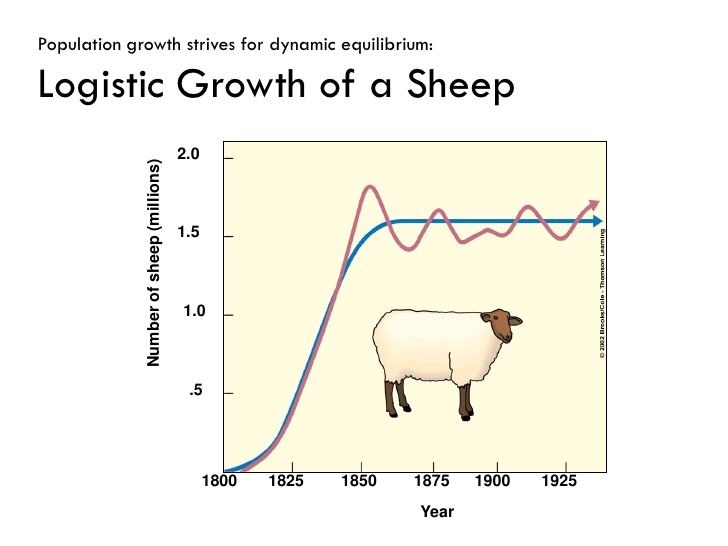

What happens if a population grows past its carrying capacity?
The population keeps growing
The population starts to die off
The entire species will go extinct
The carrying capacity just increases

Something that regulates the size of a population is called...
a limiting measure
a limiting factor
carrying capacity
biodiversity

What is the carrying capacity of the graph?
1000
8000
800
600
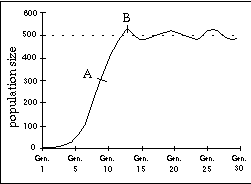
What is the carrying capacity of the graph?
around 500
more than 800
less than 300
around 700


A scientist was studying a population of fish in a pond over a period of 10 years. He observed that the population increased each year for 3 years, and then remained nearly constant for the rest of the study. The best explanation for this observation is that the population had
stopped reproducing
reached carrying capacity
mutated into a different species
run out of food and all died

