
 Worksheets
September Review Biology 7th
Total questions: 36
Worksheet time: 38mins
What is an observation?
A scientific statement based on ideas
Using your senses to notice what is going on around you
To be unaware of your surroundings
The question that you want an answer to.

What part of the scientific method is this an example of?
What is the first step of the scientific method?
observe
question
hypothesis
experiment
Select all the steps of the scientific method.
hypothesis
conclusion
question
answer
experiment
What do we use when we observe?
hearing
touching
taste
smell
all of the above
Who was Charles Darwin?
A man who liked birds.
The man who studied natural selection and became the foundation of modern evolutionary studies.
A doctor.
A lawyer.
What animals did Charles Darwin Study?
Cats.
Cows.
Dogs.
Finches.
What is Evolution?
When only people change.
When people change from a monkey to a person.
The process by which different kinds of living organisms are thought to have developed and diversified from earlier forms during the history of the earth.
When animals change to a human.
What is natural selection?
Animals that have acquired traits to survive and reproduce.
Animals who pick who they want to mate with.
People pick the mates for the animals.
People change the DNA of animals to make them have desired traits.
What did Charles Darwin think when he saw the Finches?
He thought they were smart
He thought they were the same species
He thought they were pretty
He thought that they had a common ancestor
Selective Breeding is the same as Natural Selection.
False
True
Charles Darwin made his first observation in the Galapagos Island.
True
False
Dogs are an example of natural selection.
True
False
Which statement was NOT included in cell theory?
All living things are composed of cells.
Living cells come only from other living cells.
Each cell contains a cell membrane, cytoplasm, nucleus, mitochondria, and endoplasmic reticulum.
Cells are the smallest structure of living things that can perform the functions necessary for life.
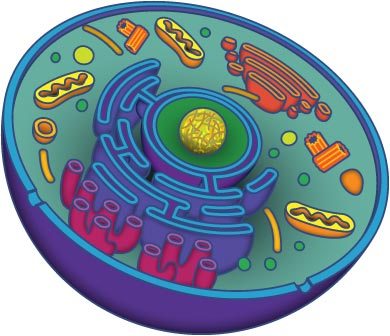
All living things are made up of...
cells
tissues
organ
organ systems
What is the basic structural and functional unit of all living things?
atom
cell
bacteria
animalcules
All cells -----
come from other dead cells
come from other living cells
crystallize out of the air
This scientist came up with a method still used today for preserving our food and drink.
Needham
Redi
Pasteur
Spallanzani
This scientists finally disproved spontaneous generation once and for all.
Needham
Miller and Urey
Pasteur
Spallanzani
Theory that states that microscopic organisms named germs can cause disease in the human body.
The big bang Theory
Spontaneous Generation Theory
Germ theory of disease
The Pasteur Theory
What did people believed were the cause of diseases until the acceptance of the germ theory?
That disease was a punishment for sins.
That disease were cause due the flow of life
That disease were caused by books
That disease were caused by movements of the earth
Which widely accepted theory began to rise doubts as the existence of microorganism became to our knowledge.
The spontaneous combustion theory
The spontaneous generation theory
The spontaneous gravitational theory
The spontaneous mechanical theory
The type of science that seeks to gather knowledge and explain why things happen...
Basic science
Applied Science
Scientific Method
Scientific Theory
The type of science that seeks to find a use for previously gathered knowledge...
Basic science
Applied Science
Scientific Method
Scientific Theory
Developing penicilin (medicine) from cultives of fungi is an example of...
Basic science
Applied Science
Scientific Theory
Scientific Method
Keeping cultives of fungi to study their development is an example of...
Basic science
Applied Science
Scientific Theory
Scientific Method

