
Font size
 Worksheets
cell membrane/transport
Total questions: 41
Worksheet time: 44mins


Which type of transport requires energy?
Endocytosis
Exocytosis
Active Transport
Diffusion

This arrangement within the cell membrane allows it to

This image is an example of a phospholipid. Which part of a phospholipid is HYDROPHOBIC?
the phosphate "head"
the lipid "tails"
This image is an example of a phospholipid. Which part of a phospholipid is HYDROPHILIC?
the phosphate "head"
the lipid "tails"
____ cells have a cell membrane.
No
All
Only prokaryote
Only eukaryote
Passive Transport uses ____ energy
no
a lot of
a little bit of
some
Passive Transport is the movement of particles across the membrane from an area of [ ___ ] to an area of [ ___ ]
high to low
low to high
low to low
high to high
The cell membrane is made up of a phospholipid bilayer. What does "bilayer" mean?
one layer
two layers
laminated
bilateral
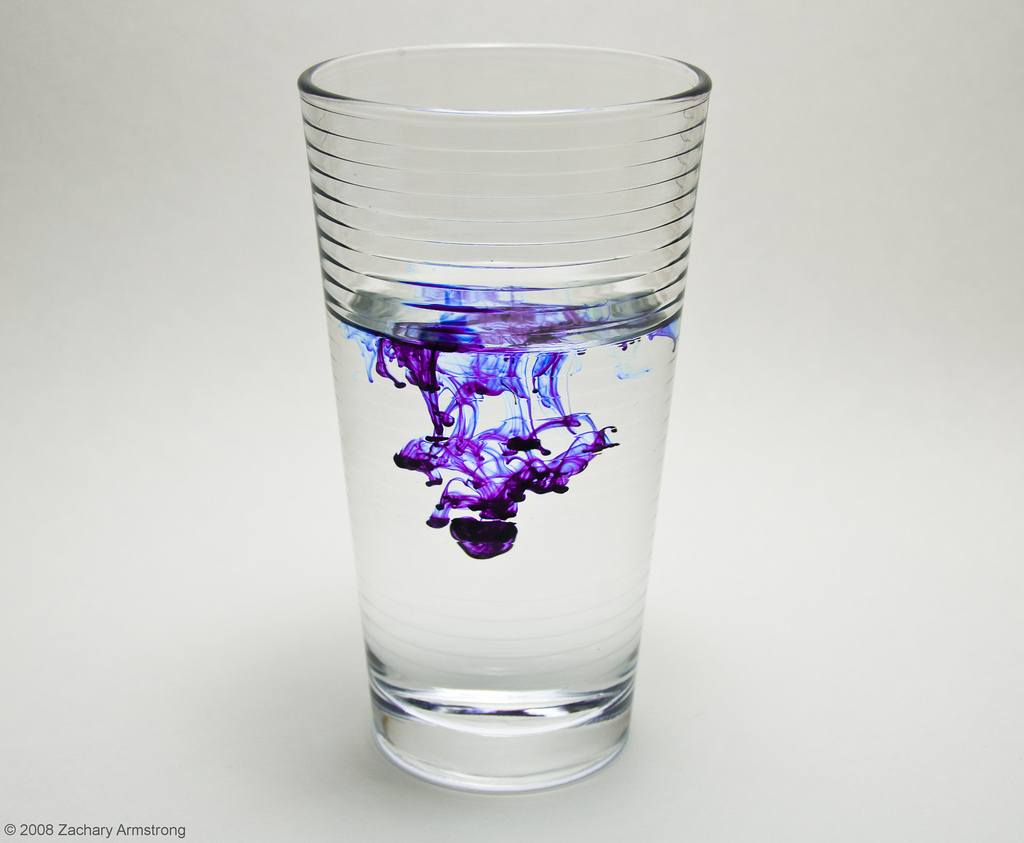
What is DIFFUSION?


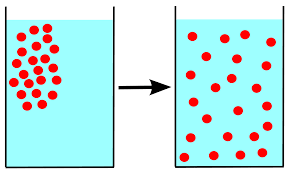
Osmosis is what type of transport?
Active
Passive

If the dots represent sugar, what direction will water flow?
Into the cell
Out of the cell
Into and out equally (equilibrium)

If the percentage represents sugar, what direction will water flow?
Into the cell
Out of the cell
Into and out equally (equilibrium)
True or false: Water always moves from the hypotonic solution to the hypertonic solution
True.
False
An animal cell placed in a hypertonic (salty) solution will ___________
Shrink (get smaller)
Swell up (grow bigger)
Stay the same

_______ regulates what enters and leaves a cell.
Cell Membrane
Nucleus
Mitochondria
Cytoplasm
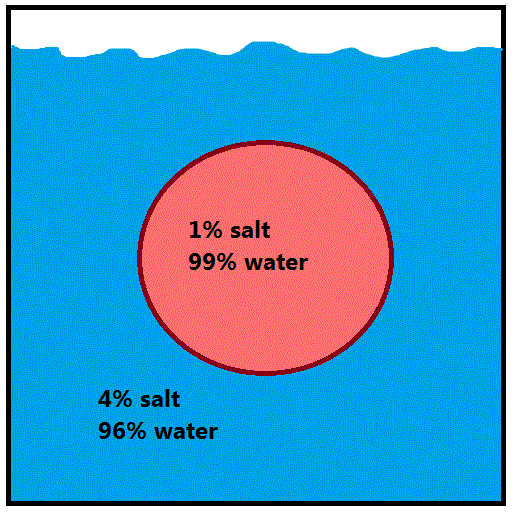
Where will the water go?
Into the cell
Out of the cell
Equally in & out - it's isotonic
There is no water
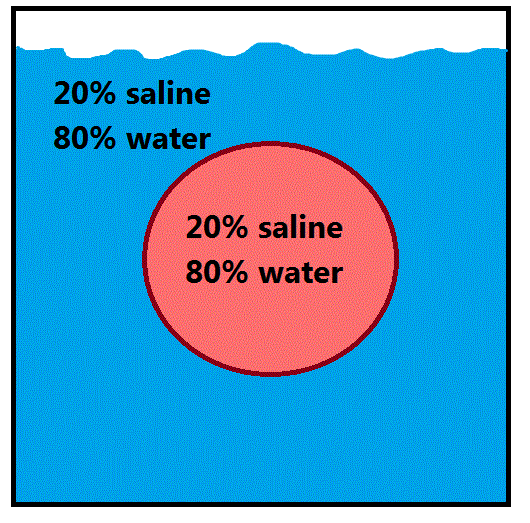
A blood cell is placed into the jar, as seen. Where will the water go?
Into the cell
Out of the cell
Equally in & out - it's isotonic
The water is a lie
HYPO means...
Low
High
Equal
Fat
ISO means...
Low
A lot
Equal
Mammal
A ________ solution has a higher concentration of water molecules.
hypotonic
isotonic
hypertonic

