
Font size
 Worksheets
Languages of Chemistry
Total questions: 40
Worksheet time: 26mins
Chemistry is a branch of science to study
(I) Interactions between matter
(II) Structure of matter
(III) Composition of matter
(IV) Properties of matter
I, II and III
I, II and IV
II, III and IV
I, II, III and IV
Which of the following is described by the basic unit of matter?
Atom
Element
Compound
Molecule
Elements in the Periodic Table are arranged in order of
increasing proton number
increasing atomic mass
increasing nucleon number
increasing oxidation number
The vertical column in a Periodic Table is known as ...
(a)
Which of the following is not a part of an atom's nucleus?
Proton
Neutron
Electron
All are part of the nucleus
The elements in Group 17 are also known as
(a)
Phosphorus trichloride is an example of __________.
monoatomic molecules
diatomic molecules
triatomic molecules
polyatomic molecules
What is the formula of the compound formed between calcium and oxygen?


The symbol of tungsten is :
Te
Ta
Ti
W
Co represents :
Carbon monoxide
Carbon dioxide
Cobalt
Calcium
The element cobalt is represented by the following symbol :
Co
CO
Cb
Cob
Name the elements present in ammonia
(a)
A chemical equation does not provide information about
Reactants
Products
Mol of reactants and products
Rate of reaction
What is the name of Na2S2O3?
Sodium sulphate
Disodiumsulphideoxide
Sodium thiosulphate
Sodium disulphide
What are the products of a neutralisation reaction?
Salt and water
Salt and hydrogen gas
Salt and oxygen gas
Water
Positively-charged particles in an atom are
Electrons
Protons
Neutrons
Neurons
Name one of the states of matter water can be found in :
(a)
What is the formula of iron(III) hydroxide?
(a)
___ PbO + ____ NH3 -----> ____ Pb + ____ H2O + N2. Balance this equation. Select the numbers in correct order as in question
3, 2, 3, 3
3, 1 , 2 , 2
3,1, 3, 3
2, 3, 2, 3
___ S + ____ HNO3 -----> ____ NO2 + ____ H2O + H2SO4 . Balance this equation. Select the numbers in correct order as in the question.
1, 6, 6, 2
1, 6 , 2 , 2
1,4, 3, 3
1, 2, 2, 3
Find the relative molecular mass of CuSO4.5H2O
(Ar Cu = 64, H = 1, O = 16, S = 32)
250
252
249
240
If the formula of a sulphate of a metal M is MSO4 What will be the formula of chloride of metal M?
MCl
MCl2
MCl3
M2Cl
The correct formula for potassium dichromate is
K2CrO7
KCrO7
K2Cr2O7
K2Cr2O2
Sodium ion is isoelectronic to one of the following species :
Argon
Magnesium ion
Aluminium
None of the above
Calculate the percentage composition of calcium in calcium chloride.
(Ar Ca = 40, Cl = 35.5)
33
34
35
36
Reduction is .. of electrons
gain
loss
sharing
mutual distribution
Which of the following is NOT an organic solvent?
Benzene
Ethanol
Acetone
Sodium hydroxide
Which of the following reactions is not balanced?
a. 2NaHCO3 ⟶ Na2CO3 + H2O + CO2
b. 2C4H10 + 12O2 ⟶ 8CO2 + 10H2O
c. 2Al + 6H2O ⟶ 2Al(OH)3 + 3H2
d. 4NH3 + 5O2 ⟶ 4NO + 6H2O
a, b and c
only b
only c
only a and c
Write the chemical formula of acetic acid.
(a)
What is the molecular geometry of phosphorus pentachloride, PCl5?
Linear
Trigonal planar
Tetrahedral
Trigonal bipyramidal

This symbol is commonly found on many laboratory reagents such as formaldehyde and chloroform. What does this symbol mean?
Irritant
Flammable
Toxic
Explosive
One mole of substance equals to
6.02 x 10²⁰ particles
6.02 x 10²¹ particles
6.02 x 10²² particles
6.02 x 10²³ particles
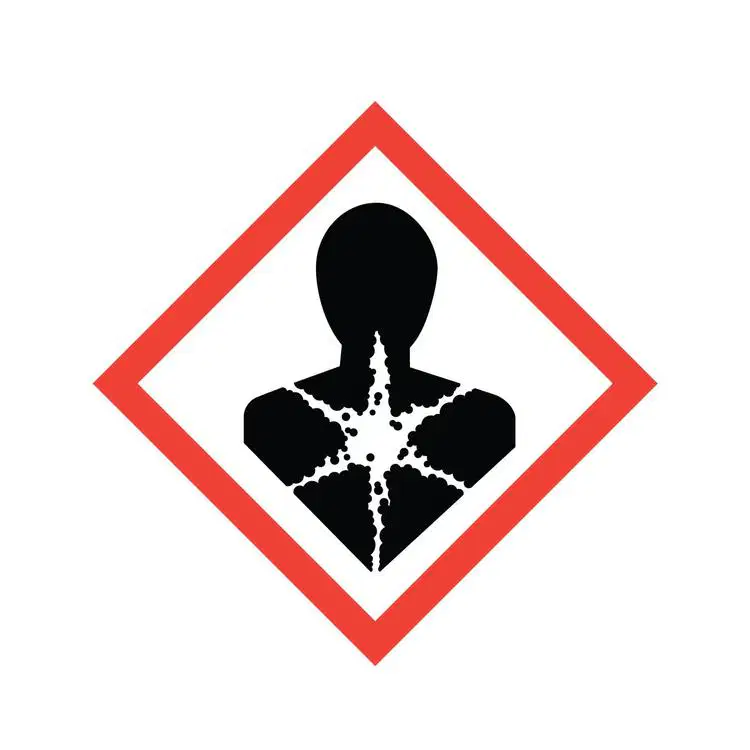
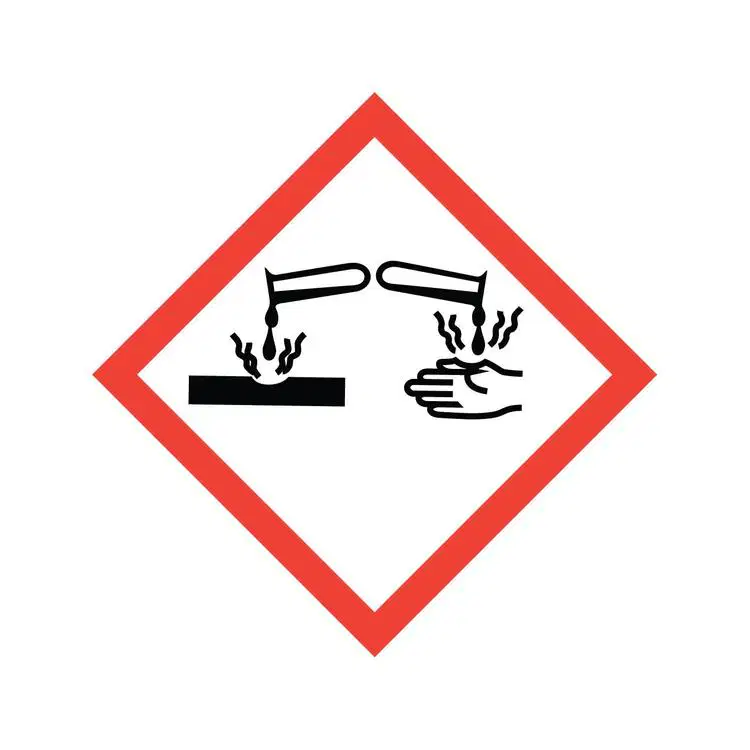
Which of the following hazard symbol shows that a reagent is highly flammable?


Which of the following are polar molecules?
CH4
PCl5
SO2
SF6
Acid is a chemical compound that ionises in water to produce
(a)
A base ionises in water to produce
hydrogen ion, H+
hydroxide ion, OH-
hydrogen gas, H2
oxygen gas, O2
Which of the following is NOT a good laboratory practice?
Putting on lab coat and safety goggles before entering the lab.
Wearing covered shoes.
Eating and drinking in the laboratory.
Washing all apparatus and cleaning the workbench after finishing the experiment.
An ionic substance can conduct electricity in molten form and aqueous solution.
TRUE
FALSE
The type of intermolecular forces that exist within CCl4 molecules is
electrostatic forces
dipole-dipole interaction
London dispersion forces
hydrogen bonding
How do you determine the period of an element in the Periodic Table?
By using the value of the highest principal quantum number, n
By using the number of valence electrons
By using the number of inner electrons

