wayground logo

Free Printable Worksheets

NEW

Font size

S
M
L
XL
Worksheets

Unit 1 Matter Test

Total questions: 50

Worksheet time: 32mins

Name
Class
Date
1.
What are the states of matter?
a)
solid, liquid, and juice
b)
solid and liquid
c)
solid and gas
d)
solid, liquid, and gas
2.
A description of objects that can be measured and observed.
a)
gas
b)
mustangs
c)
physical properties
d)
melting point
3.
A physical property can be observed with your
a)
Eyes
b)
Ears
c)
Tastes
d)
All of the above
4.
Cutting an orange is a physical change.
a)
True
b)
False
5.
An example of a physical property is 
a)
flammability
b)
acidic
c)
color
d)
ability to rust
6.
What causes a change in the state of matter?
a)
physical properties
b)
chemical energy
c)
temperature
7.
The ability to move, work or cause a change in matter is...
a)
mass
b)
volume
c)
energy
d)
density
8.
A watermelon has more matter than a grape, so it has more
a)
mass
b)
eat
c)
solid
d)
greater
9.
Which physical property is measured in liters?
a)
color
b)
length
c)
mass
d)
volume
10.
What form of matter has a definite shape?
a)
Solid
b)
Liquid
c)
Gas
d)
Square
11.
Which state of matter has particles that are tightly packed?
a)
liquid
b)
gas
c)
solid
12.
The amount of matter something contains. 
a)
volume
b)
mass
c)
density
d)
measurement 
13.
Adding HEAT to matter causes its particles to:
a)
move faster and farther apart
b)
Move slower and farther apart
c)
Move faster and closer together
d)
Move slower and closer together
14.
Liquid matter takes the shape of _______.
a)
a gas
b)
water
c)
a pet
d)
Its container
15.

How much matter an object contains for it´s size

a)

Mass

b)

Density

c)

Matter

d)

Volumen

16.

The amount of space accupied by a substance is called?

a)

Density

b)

MAtter

c)

Volume

d)

Space

17.

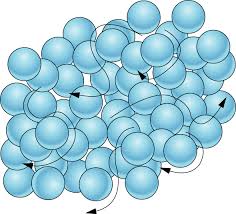
This is an example of what type of matter?

a)

solid

b)

liquid

c)

gas

18.

What tool measures mass?

a)

Triple beam balance

b)

Measuring spoons

c)

beaker

d)

graduated cylinder

19.
To attract means....
a)
The part of the magnet where the force is the strongest
b)
A force created by magnets that pulls some metals
c)
To Pull towards
d)
An object able to pull some metals towards itself
20.

The ___ is the thing being dissolved.

a)

solute

b)

solvent

c)

mixture

d)

solution

21.
Is Iron a Conductor or Insulator?
a)
Conductor
b)
Insulator
22.
Is Wood a conductor or Insulator?
a)
Conductor
b)
Insulator
23.
Why is a balloon with air in it heavier than a balloon without air?
a)
it's larger
b)
it has matter in it
c)
it takes up more space
d)
none of the above
24.
Matter is made up of
a)
cells
b)
carbon
c)
metal
d)
atoms
25.
Temperature when a solid becomes a liquid
a)
boiling point
b)
melting point
c)
freezing point
d)
sublimation point
26.
When a substance can dissolve into another substance, it has
a)
solubility
b)
conductivity
c)
chemical reactivity
d)
melting point
27.
When something freezes, what is being removed?
a)
particles
b)
gases
c)
heat
d)
cold air
28.
When liquid changes into a gas, it is called
a)
melting point temperature
b)
boiling point temperature
c)
condensation point
d)
freezing point temperature
29.
Which phase of matter has no definite shape and no definite volume?
a)
solid
b)
liquid
c)
gas
d)
plasma
30.

Substances usually have more energy in what state of matter?

a)

Solid

b)

Liquid

c)

Gas

d)

The state of matter is not changed by energy.

31.

This is a type of mixture where one substance dissolves into another

a)

Solution

b)

Miscibility

c)

Compound

d)

Solubility

32.

The substance that does the dissolving

a)

Solute

b)

Solvent

c)

Solution

d)

Miscibility

33.

This is an example of a

a)

Solution

b)

Mixture

34.

This is an example of a

a)

Solution

b)

Mixture

35.
You know that a substance has dissolved when it-
a)
becomes a solid
b)
produces condensation and has water droplets 
c)
spreads evenly throughout a liquid
36.
If I added 27 grams of salt to water and separated the solution with a hot plate, what amount of salt would be left behind?
a)
20 grams
b)
0 grams
c)
27 grams
d)
10 grams
37.
If you spilled nails in a sandbox, what separation tool/method could you use to clean out the sandbox so it would be safe for children to play in?
a)
Filter
b)
Screen
c)
Magnet
d)
Evaporation
38.
What happens when sand and water are mixed together?
a)
sand will settle to the bottom
b)
water will change physical properties
c)
the cup will get really cold
39.
Matter can not be created nor destroyed: it can only be
a)
Destroyed a little bit
b)
Invisible
c)
Transformed, changed
d)
None of the above
40.
Jamie weighs a glass of water and observes its weight to be 12 ounces. Jamie then adds 6 ice cubes to the glass of water. Each ice cube weighs one ounce. After all of the ice cubes have melted, what will be theapproximate weight of the glass of water?
a)
b)
12 
c)
18 ounces
41.

According to the Law of Conservation of Mass, what happens to the wood and oxygen when it is burned?

a)

The wood disappears.

b)

It stays the same chemically.

c)

The atoms in the wood and oxygen rearrange and form smoke and ash.

d)

Nothing.

42.
Joe melted two 4-oz sticks of butter. Which best describes the weight of the melted butter?
a)
2 oz.
b)
4 oz.
c)
6 oz.
d)
8 oz.
43.
Which thing in this picture represents a gas? 
a)
ice cubes
b)
bubbles 
c)
soda
44.

Has a definite volume but not a definite shape

a)

Solid

b)

Liquid

c)

Gas

45.

What state of matter?

a)

Solid

b)

Liquid

c)

Gas

d)

Plasma

46.
Physical or Chemical Property? If copper comes in contact with water, it will turn green.
a)
Physical
b)
Chemical
c)
Neither
47.
Physical or Chemical Property?  The temperature of boiling water is 100 degrees Celsius.
a)
Physical
b)
Chemical
c)
Neither
48.
Define a Chemical Property
a)
A property which depends on the objects size or matter.
b)
A property of matter not involving in its manifestation a chemical change
c)
A property or behavior of a substance which undergoes a chemical change or reaction.
d)
A property which makes the object smell or taste different.
49.
 mixture that does NOT appear to be evenly mixed throughout:
a)
an atom
b)
a compound
c)
a homogeneous mixture
d)
a heterogeneous mixture
50.
A mixture that appears to be evenly mixed throughout:
a)
an atom
b)
a compound
c)
a homogeneous mixture
d)
a heterogeneous mixture