
 Worksheets
CEA Quiz 1 - History
Total questions: 20
Worksheet time: 40mins
Which ancient civilization is first known for its advanced civil engineering techniques?
Ancient Greeks
Mayans
Incas
Ancient Egyptians
What is was the primary purpose of Roman aqueducts?
To generate electricity.
To provide irrigation for crops.
To serve as a transportation system for goods.
To transport water
Which ancient road system connected Rome to Britain, to Asia Minor,
to Gaul as well as the Southern shores of the Mediterranean?
Roman Road System
Inca Road System
Great Wall of China
Silk Road
What material was commonly used to construct arches for ancient bridges?
stone
iron
bamboo
wood
What is vernal architecture?
Architectural style inspired by autumn or change.
Architectural style inspired by summer or heat.
Architectural style inspired by winter or decay.
Architectural style inspired by native materials and climate.
Which ancient civilization built the Great Wall of China?
Han Dynasty
Qin Dynasty
Ming Dynasty
Tang Dynasty
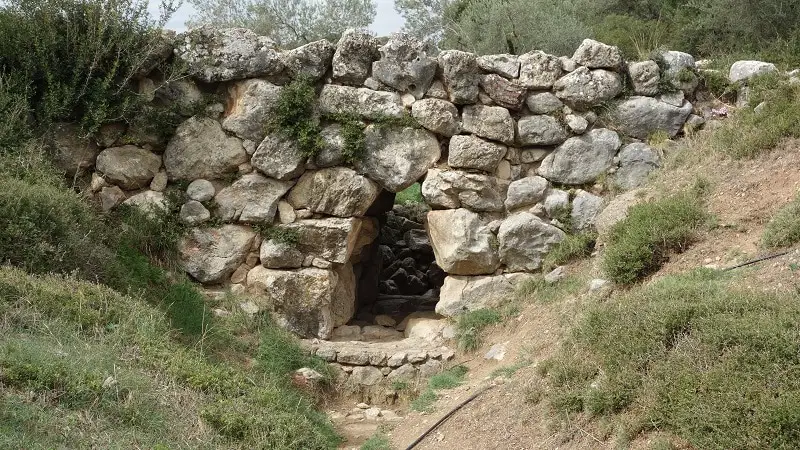
Built in 1300BCE-1190BCE, this bridge is the oldest known bridge in the world?
Arkadiko Bridge
Golden Gate Bridge
Brooklyn Bridge
Tower Bridge
Which ancient civilization built the city of Machu Picchu?
Maya
Aztec
Egyptian
Inca
What is the purpose of an arch in bridge or dome construction?
To distribute weight, provide stability, and increase load-bearing capacity.
To decrease the load-bearing capacity of the bridge.
To make the bridge more aesthetically pleasing.
To increase the cost of construction.
Which ancient civilization is known for its use of arches in architecture?
Mayan
Roman
Egyptian
Greek
What traits are not found in Civil Engineering?
oldest form of engineering
early engineering was centered around food,
trained to design and construct a variety of public works.
help people transcend to nirvana.
True or False:
Vernal architecture is about using native materials as adjusted for local climates.
True
False
Which is not an example of vernal architecture:
Apache Wikiup
Alaskan Igloo
Zulu Beehive Hut
Row Houses in Trenton
Beam and (a) construction was superseded by arches and vaults.
Ancient Roman roads were built with
(a)
Ancient concrete was weak until the 1800's where it was reinforced with
fiberglass.
aggregate stone
polymers
steel
Hydration is the reaction that causes concrete to harden. If a reinforced concrete foundation is poured with 2000psi concrete in the middle of a river, what happens to the structural integrity after 20 years?
the concrete looses structural integrity
the concrete gains
structural integrity
the foundation must be reinforced
the foundation must be abandoned
Which is stronger, (steel or iron) AND why?
Iron:
because steel corrodes faster than iron
Steel:
because it has more carbon than iron
Steel:
because it can be shaped into H beams
Iron:
because it is cheaper than steel and more can be put into structures
If you're building an arch, or any other curved shape out of stone, rectangle bricks just won't do.
Masonry arches and vaults require
key-stones and voussoir
voussoir and viche
voussoir and lintels
columns and lintels
Ancient Roman roads were built in layers; which of the following were not in road stratum.
large blocks of stone (stratumen)
broken stone or debris (rudus)
large polished polygonal basalt blocks (summum dorsum) over a sand layer (nucleus)
layer of straw mixed with ashes
(ruinus quisquilia)

