
 Worksheets
Unit 3- Chemical Bonding and Nomenclature TEST Review
Total questions: 36
Worksheet time: 29mins

What is an ionic bond?
A chemical bond formed by the transfer of electrons between atoms.
A chemical bond formed by the repulsion of like charges between ions.
A chemical bond formed by the attraction of opposite charges between ions.
A chemical bond formed by the sharing of electrons between atoms.

Which of the following an example of a compound formed by an ionic bond? Remember that ionic bonds are formed between a metal and a non-metal. SELECT TWO (2)
water (H2O)
sodium chloride (NaCl)
carbon dioxide (CO2)
magnesium sulfate (MgSO4)
Tetraphosphorus decoxide (P4O10)

What is a covalent bond?
A covalent bond is a chemical bond that involves the repulsion of like charges between atoms.
A covalent bond is a chemical bond that involves the attraction of opposite charges between atoms.
A covalent bond is a chemical bond that involves the sharing of electron pairs between atoms.
A covalent bond is a chemical bond that involves the transfer of electron pairs between atoms.

What is the difference between a polar covalent bond and a nonpolar covalent bond?
The difference between a polar covalent bond and a nonpolar covalent bond is the unequal sharing of electrons and the resulting charge separation in a polar covalent bond.
A nonpolar covalent bond occurs when electrons are completely transferred from one atom to another.
A polar covalent bond involves the sharing of electrons between two atoms of the same element.
A polar covalent bond is stronger than a nonpolar covalent bond.

What is a metallic bond?
A metallic bond is a type of chemical bond that occurs between atoms in a metal that involves free floating valence electrons.
A metallic bond is a type of chemical bond that occurs between atoms in a liquid that involves free floating electrons.
A metallic bond is a type of chemical bond that occurs between atoms in a non-metal that involves the sharing of valence electrons.
A metallic bond is a type of chemical bond that occurs between atoms in a gas that involves free floating electrons.
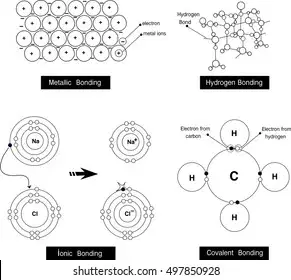
How are metallic bonds formed?
Metallic bonds involve the sharing of electrons between positive metal ions and a sea of electrons.
Metallic bonds involve the sharing of protons between positive metal ions and a sea of delocalized electrons.
Metallic bonds involve the sharing of electrons between positive metal ions and localized electrons.
Metallic bonds involve the sharing of electrons between negative metal ions and a sea electrons.

What is polarity in chemistry?
Separation of electrical charge in a molecule, either by unequal sharing or full transfer of electrons.
The process of combining two or more substances to form a new substance.
The ability of a substance to dissolve in water.
The process of converting a solid into a liquid.
Covalent bonds can be found as _______ at room temperature? (Hint: check slides 16-19 in the first set of notes for this unit)
only solids
solids and liquids
solids, liquids, or gases
only gases

Which of the following properties describe ionic compounds? Select THREE.
high melting point
low melting point
solids
dissolve in water
bond between 2 nonmetals

What is a property of non-polar covalent bonds?
They are pretty
They have a VERY LOW melting point
They can dissolve in water
They have a HIGH melting point

What is a property of non-polar covalent bonds?
They cannot be dissolved in water.
They have a high melting point
They are orange
They conduct electricity

Students are analyzing the Periodic Table to decide which region represents non-metal elements. Which of the following colors is the correct region for the non-metal elements?
The left side that is yellow
The middle that is purple
The right side that is green.
Not enough information
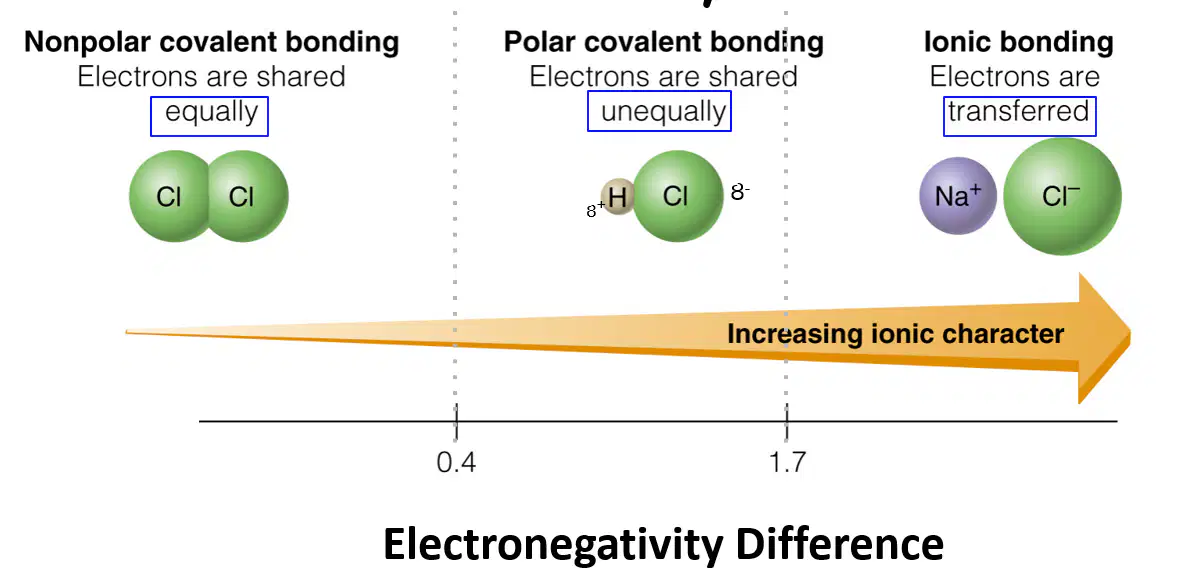
If a molecule is said to be "polar," what does that mean?
That is has full or partial charges (positive end and negative end) .
That is has no charge.
That is it a white bear.
That electrons are shared equally.

Atoms can lose or gain electrons to achieve a stable outer energy level. What is the third way an atom can attain a stable outer energy level?
Atoms can share electrons between them.
Atoms can split electrons into pieces.
Atoms can create new electrons.
Atoms can destroy electrons.
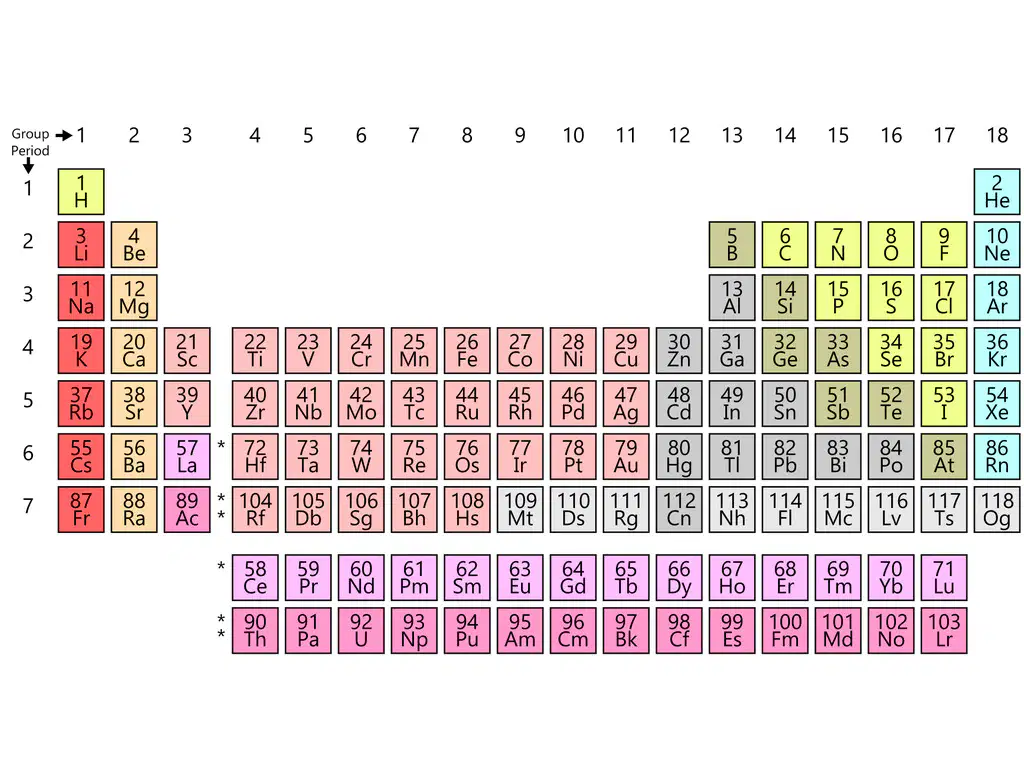
Which pair of atoms will combine with each other and form an ionic bond?
C and O
B and H
Ca and Mg
Ca and Br

Which formula represents a substance that contains a covalent bonds and the correct reasoning?
LiCl, because it contains bond between a metal and a non-metal.
Fe, because it contains a bond between metals.
NH3, because it contains a bond between a metal and a non-metal.
CO2, because it contains a bond between 2 non-metals.

Students observe and describe the model. Which of the following explanations best describes what happens in the model?
Calcium receives 2 valence electrons in order to achieve a stable octet in its valence shell.
Calcium donates 2 valence electrons to a single chlorine so that all atoms have a stable octet in their valence shells.
Calcium donates a single electron to each chlorine so that only chlorines have stable octets in their valence shells.
Calcium donates a single electron to each chlorine so that all atoms have stable octets in their valence shells.
Which of the following is a similarity between ionic and covalent bonds? HINT: check slide #4 in the first set of notes for a clue.
Both include the gaining and losing of electrons
Both include the sharing of electrons
Both make the elements more stable
Both are typically found as solids at room temperature
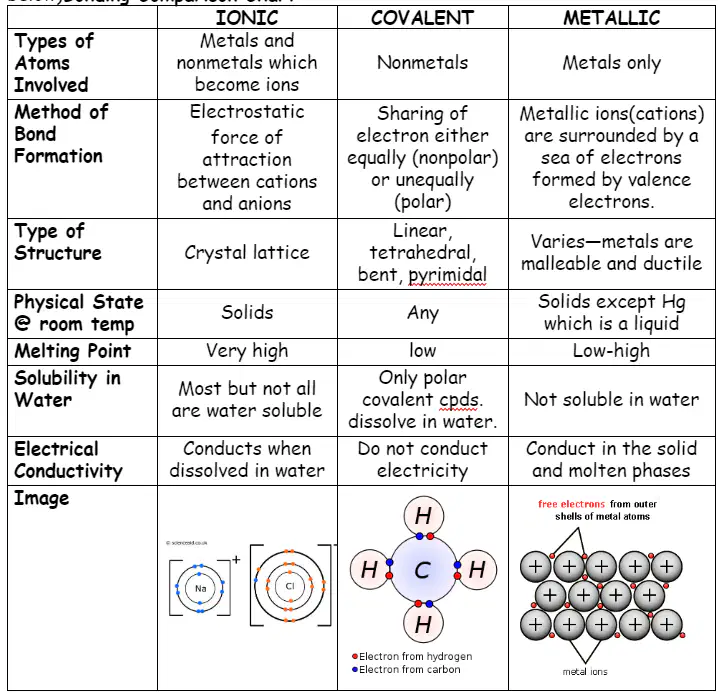
Students observe a material that is malleable, ductile, and conducts electricity. Which type of bond is most likely present in this material?
Ionic bonding
Metallic bonding
Covalent bonding
Hydrogen bonding

Students observe a material that has an extremely high melting point, does not conduct electricity as a solid, and has a crystalline structure. What type of bond is present in this material?
Ionic
Nonpolar covalent
Polar covalent
Metallic

Which two (2) of the following questions would help a student write the formula for diphosphorus trioxide? SELECT 3.
What are the charges of each ion?
Does the formula need a Roman numeral?
What are the Greek prefixes?
What are the element symbols?
Is the first element listed a metal or a non-metal?

In order to write the correct formula for a compound that forms from the Fe (III) ion and oxygen (O) ion, which question would a student need to ask? SELECT TWO (2).
What Greek prefixes are needed?
How many valence electrons are shared?
What are the oxidation numbers for each ion?
How many molecules are present?
Is the first element listed a metal or a non-metal?

2 students are analyzing 3 different compounds. Match the following compounds with their type of bond.
C-H
Polar covalent
Br-Cl
Non-polar covalent
K-O
Ionic
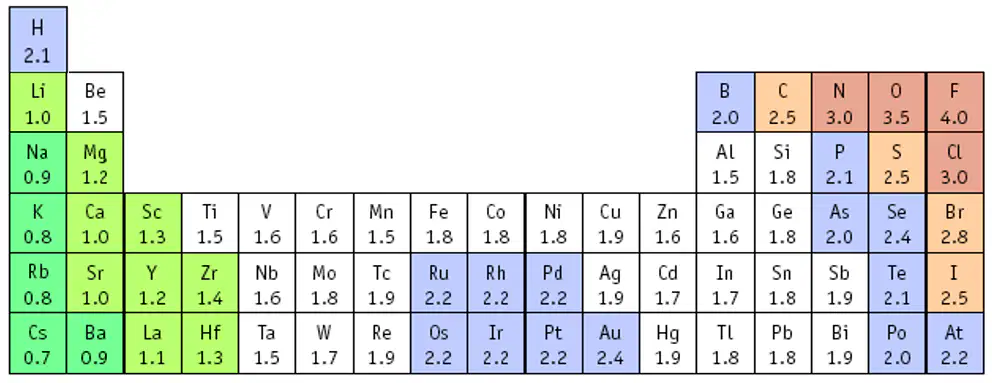
Which of the following molecules would be the least polar and have the weakest intermolecular forces (IMF's)? HINT: check slides 16-19 in the first set of notes
F2
H2O
HCl
CO2

If given the formula Al2O3, what are three questions to ask to help write the appropriate name of this compound? SELECT 3.
Is the first element listed a metal or a non-metal?
Is there a transition metal present?
What are the Greek prefixes for 3 and 2?
How many different elements are present?
Does the first element name need a Greek prefix?
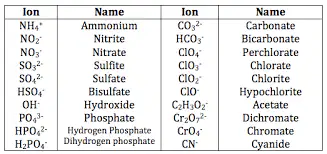
What is the proper name for the polyatomic ion: SO42- ?
Sulfide
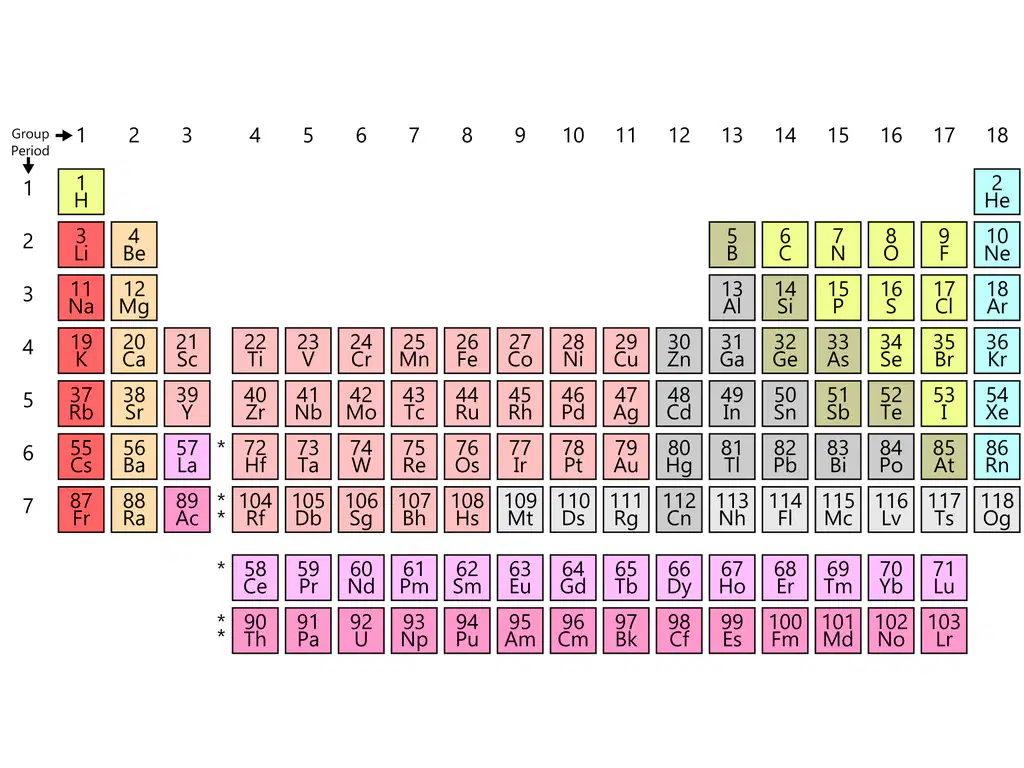
What formula results when Ca ions and Br ions bond?
Ca2Br2
CaBr
Ca(br)2
CaBr2

Which choice is the correct formula for copper (I) phosphide?

CCl

Greek Prefixes
We just make up different rules for every single compound.

What is the correct name for B2Si3?
Boron silicide

When naming ionic compounds with transition metals, why do we need to include a Roman Numeral?
The Roman Numeral communicates the atomic number.
The Roman Numeral communicates the mass number.
The Roman Numeral communicates the charge (oxidation number).
The Roman Numeral communicates the subscript for the transition metal.

Which choice is the correct formula for copper (I) phosphide?
Cu1P3

Which formula is correct for calcium phosphate?

Which choice is the correct name for PCl5?
Phosphorus Pentachloride
Phosphorus (V) Chloride
Phosphorus Chloride
Phosphorus chlorine
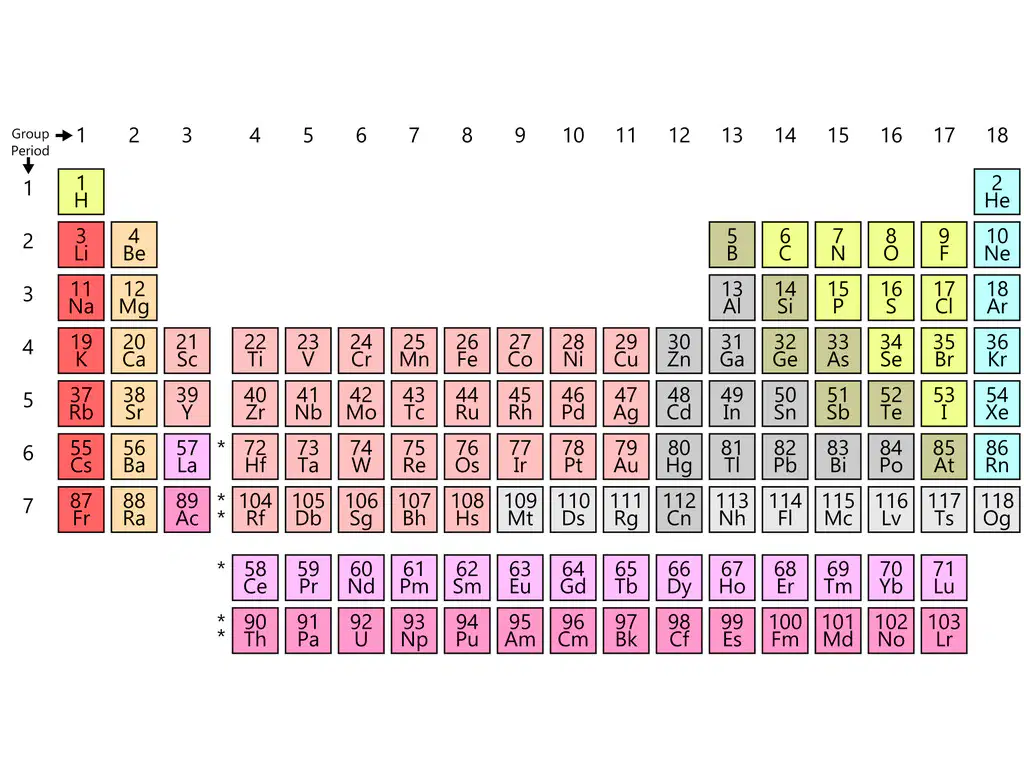
An element from Group 1 on the Periodic Table will react by losing one (1) electron, while Group 16 elements react by gaining two (2) electrons. If an element from Group 1 were to react with an element from Group 16, which of the following general formula units would represent the resulting ratio? (The 'X's and 'Y's are representations of elements, not actual elements.)
XY2
X2Y
XY
X3Y

