wayground logo

Free Printable Worksheets

Font size

S
M
L
XL
Worksheets

EOY Review #2

Total questions: 80

Worksheet time: 2hrs 51mins

Name
Class
Date
1.

What is the net force (direction and magnitude) on this object?

a)

4N

b)

Left

c)

Right

d)

0N

e)

No direction since the forces are balanced

2.

What is the net force (direction and magnitude) acting on the box?

a)

30N, right

b)

30N, left

c)

5N, left

d)

25N, left

3.

Looking at all four boxes, which box is experiencing a net force of 0N?

a)

A

b)

B

c)

C

d)

D

4.
The unit for force is a called a: 
a)
Galileo
b)
Newton
c)
Aristotle
5.
What is a force?
a)
the PUSH or PULL on an object 
b)
The MOTION an object creates
c)
The objects HITTING one another
d)
Going REALLY FAST
6.

A gymnast on a balance beam doing a back flip.

a)

balanced

b)

unbalanced

7.

A book sitting on a shelf.

a)

balanced

b)

unbalanced

8.
Describe the energy in this picture.
a)
Gravitational Potential
b)
Kinetic
c)
Elastic Potential
d)
No Energy
9.
What word best describes Kinetic Energy?
a)
Stored
b)
Motion
c)
Elastic
d)
Gravity
10.
What word best describes potential energy?
a)
Stored
b)
Motion
11.
Kinetic energy is related to the ________ of an object.
a)
Position
b)
Elasticity
c)
Speed
d)
Volume
12.

What is a Net Force?

a)

the sum of all forces that are acting on a object.

b)

The total force multiplied together.

c)

The total amount of force that is applied to the object.

13.

How does the mass of an object affect it's motion?

a)

It has no effect

b)

The less the mass the less effect a force will have

c)

The greater the mass the greater the effect a force will have

d)

The greater the mass the less effect a force will have

14.
What is the formula to calculate speed?
a)
S = t/d
b)
S = d/t
c)
S = d x t
d)
S = t x d
15.

A runner races in the 100 meter dash. It takes her 10 seconds to finish. What is her average speed?

a)

10 m/s

b)

1000 m/s

c)

100 seconds

d)

10 seconds

16.
What is speed?
a)
how far you go
b)
how much distance is covered over a period of time
c)
how fast you accelerate
d)
the change in the location of a object
17.

Distance formula

a)

S X T

b)

T X S

c)

T/D

d)

D/T

18.

Time formula

a)

T= D/S

b)

T= S X T

c)

T = D/ T

d)

T= T/ T

19.
Speed plus direction.
a)
Velocity
b)
Motion
c)
Position
d)
Acceleration
20.
How is speed calculated?
a)
S= D/M
b)
S= D/T
c)
S= T/D
d)
T= S/D
21.

What kind of energy?

a)

thermal

b)

electrical

c)

nuclear

d)

chemical

22.

Usain Bolt of Jamaica holds the world record for the Men's 100 meter race. He finished in 9.58 seconds! What was his average speed? (Round to the nearest tenth.)

a)

10.4 m/s

b)

.1 m/s

c)

1 m/s

d)

10.5 m/s

23.
If it takes Heather 3 seconds to run from the batter's box to first base at an average speed of 6.5 meters per second, what is the distance she covers in that time?
a)
19.5 m
b)
0.46 m
c)
2.2 m
d)
3.5 m
24.
Sarah backstrokes at an average speed of 8 meters per second. How long will it take her to complete a 200-meter race?
a)
0.04 s
b)
1600 s
c)
50 s
d)
25 s
25.
An aircraft carrier made a trip to Guam. The trip took four hours at an average speed of 6 km/h. How far did the ship travel?
a)
24 km
b)
1.5 km
c)
0.67 km
d)
5 km
26.
Tina's calculations of a tarantula found that the spider was able to cover 20 cm in 5 seconds. What was the average speed of the spider?
a)
4 m/min
b)
4 m/s
c)
4 cm/min
d)
4 cm/s
27.
True or False:  The amount of force needed to move an object is dependent on the object's mass.
a)
True
b)
False
28.
What is friction?
a)
the force that sparks a fire.
b)
the force that opposes motion and acts between two objects that are touching.
c)
the force that causes protons to jump on other atoms and creates static electricity.
d)
the force in Star Wars.
29.
energy from the sun
a)
radiant energy
b)
thermal energy
c)
gravitational energy
d)
electrical energy
30.
What happens when two forces act in the same direction? 
a)
They cancel each other out.
b)
The stronger one wins and pushes in that direction.
c)
Their strengths are added together. 
d)
Their sum divided by two is the total force. 
31.
Looking at the roller coaster, were does the cart have the most potential energy?
a)
A
b)
B
c)
C
d)
D
32.
Determine the speed of a golf ball that was hit 200meters in 5 seconds.  Use the equation SPEED = DISTANCE/TIME

a)
1000 m/s
b)
40 m/s
c)
.025 m/s
d)
100 m/s
33.
Determine the speed at 20 seconds based on the information shown in the graph.  Speed = distance/time
a)
2 m/s
b)
10 m/s
c)
20 m/s
d)
.5 m/s
34.
At 60 seconds, how far had this object traveled? 
a)
0 m
b)
10 m
c)
20 m
d)
40 m
35.
How many times does this object STOP moving?
a)
None
b)
Once
c)
Twice
d)
Three times
36.
Which of the graphs shows that one of runners started 10 yards further ahead of the other (note that graph c is the bottom right and graph d is the bottom left)? 
a)
Graph A
b)
Graph B
c)
Graph C
d)
Graph D
37.
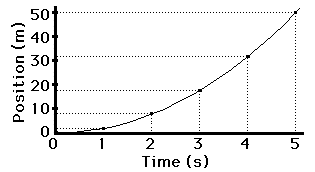
The picture of the position vs. time graph shows an object that is...
a)
accelerating/speeding up
b)
moving at a constant speed 
c)
not moving 
d)
accelerating/slowing down. 
38.

What is the object's average speed from 0-4 seconds?

a)

1 cm/s

b)

1 mi/hr

c)

1 m/s

d)

1 km/hr

39.
Which runner complete the 100 meter race in the least amount of time?
a)
Albert
b)
Bob
c)
Charlie
40.

The 2 objects have the same average speed over the 7 seconds. Why?

a)

Both objects traveled the same distance in the same amount of time.

b)

The graph for Object B is steeper at the end of the time.

c)

Object B has sections of zero speed while Object A is never stopped

d)

The final position on the graph for Object A is much greater.

41.
The diagram shows a circuit with the bulb glowing. How does the energy change as it moves from inside the battery, along the wires, and through the light bulb?
a)
electrical → light → chemical
b)
light → electrical → chemical
c)
chemical → electrical → light
d)
chemical → light → electrical
42.

When water falls through a dam and turns a turbine connected to a generator, electricity is produced. The electricity is used to light a home. Which shows the energy transformation?

a)

electrical➡light➡mechanical

b)

chemical➡mechanical➡electrical

c)

mechanical➡chemical➡light

d)

mechanical➡electrical➡light

43.

What type of energy transformation occurs, when a hawk eats a mouse and then uses the energy from the mouse to fly?

a)

mechanical energy to chemical energy

b)

thermal energy to mechanical energy

c)

chemical energy to mechanical energy

d)

mechanical energy to thermal energy

44.

Which object shows an energy transformation from electrical to mechanical?

a)
b)
c)
d)
45.

What sort of energy transformation is this?

a)

Chemical to Thermal

b)

Thermal to chemical

c)

Kinetic to potential

d)

Open to closed

46.

Which type of energy transfer occurs when a flashlight shines?

a)

chemical➡thermal➡electrical

b)

chemical➡electrical➡light

c)

thermal➡chemical➡light

d)

chemical➡electrical➡chemical

47.

The total energy in our universe...

a)

will not change, but can transform to other types.

b)

changes and expands over time.

c)

only changes form once.

48.

Pangaea was an ancient supercontinent made up of...

a)

America, Greenland, and Europe

b)

Antarctica, India, and America

c)

all of Earth’s continents

d)

South Africa, India, Australia, and South America

49.

The movement of the tectonic plates is caused by

a)

the rotation of the Earth

b)

convection currents in the Asthenosphere

c)

the gravity of the iron-nickel core

d)

the Moho discontinuity

50.

Tectonic plates “float” on

a)

the lithosphere

b)

the mantle

c)

the ocean

d)

the asthenosphere

51.

In the region where two continental plates collide, what geological feature MOST often forms?

a)

an ocean

b)

a volcano

c)

a river valley

d)

a mountain chain

52.
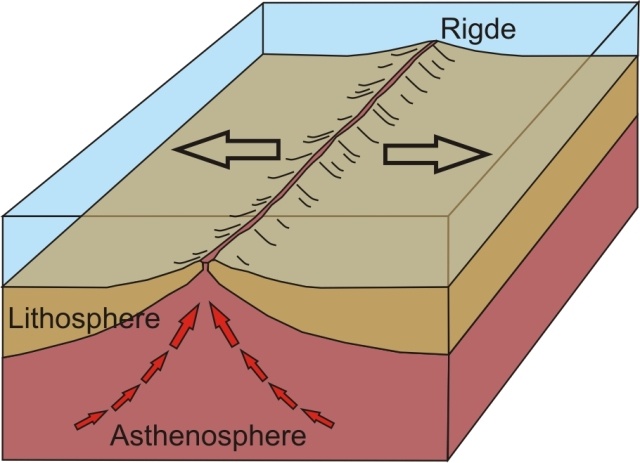
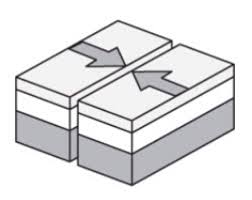
What kind of plate boundary is shown here?
a)
divergent
b)
convergent
c)
transform
d)
submergent
53.
What kind of plate boundary is shown here?
a)
divergent
b)
convergent
c)
transform
d)
subducting
54.
What kind of plate boundary is shown here?
a)
divergent
b)
convergent
c)
transform
d)
strike slip
55.
What geologic feature/event you be most likely to find at a transform boundary?
a)
Earthquakes
b)
Volcanoes
c)
Mountains
d)
Rift Valleys
56.
What geologic feature/event would you most likely to find at a divergent boundary between two pieces of oceanic crust?
a)
Rift Valley
b)
Mid-Ocean Ridge
c)
Island Arc
d)
Flat land
57.
What geologic feature/event would you most likely to find at a convergent boundary between two pieces of continental crust?
a)
Volcano
b)
Mountain
c)
Rift
d)
Island Arc
58.
Name the boundary
a)
convergent boundary
b)
divergent boundary
c)
transform boundary
d)
sergent boundary
59.

What type of boundary is this?

a)

convergent

b)

divergent

c)

transform

60.

Temperature and pressure ___ as you move towards the center of the Earth.

a)

decrease

b)

increase

c)

neither answer is correct.

61.

Which of the following is the correct order of the Earth's layers moving inward to the center.

a)

Crust

Mantle

Inner Core

Outer Core

b)

Mantle

Outer Core

Inner Core

Crust

c)

Inner Core

Outer Core

Crust

Mantle

d)

Outer Core

Inner Core

Mantle

Crust

62.

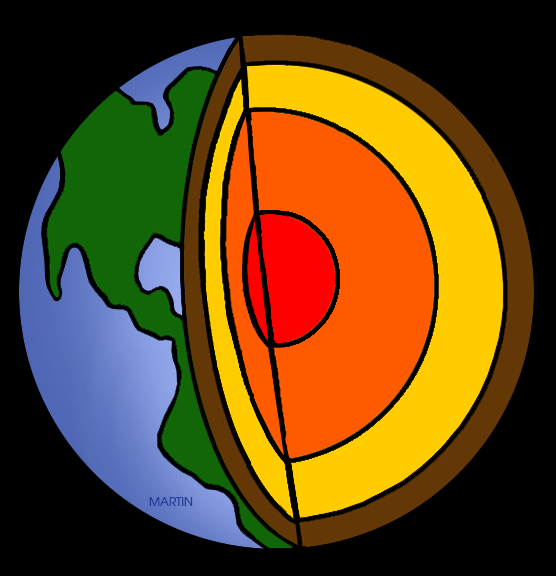
Which layer is shown in red?

a)

crust

b)

mantle

c)

outer core

d)

inner core

63.

Which layer of the Earth is shown in ORANGE?

a)

Crust

b)

Mantle

c)

Inner Core

d)

Outer Core

64.

Which layer of the Earth is shown in YELLOW?

a)

Crust

b)

Mantle

c)

Inner Core

d)

Outer Core

65.

What Are The Three Main Types Of Rocks?

a)

Igneous, Depository, Metamorphic

b)

Depository, Igneous, Sedimentary

c)

Metamorphic, Igneous, Depository

d)

Igneous, Metamorphic, Sedimentary

66.

How are metamorphic rocks formed?

a)

Heating and cooling

b)

Deposition

c)

Heating and pressure

d)

Materials gathering and pressing together

67.

How are igneous rocks formed?

a)

Sediment forming together

b)

Heating and pressure

c)

Cooling

d)

Deposition

68.

How are sedimentary rocks formed?

a)

Heating and pressure

b)

Sediment forming together

c)

Weathering

d)

Cooling

69.

An organism's scientific name is based on how it is classified. Which of the following levels of classification determine the name?

a)

kingdom & phylum

b)

class & species

c)

domain & order

d)

genus & species

70.

Largest and most general group into which organisms are classified is called...

a)

Species

b)

Class

c)

Domain

d)

Family

71.

Which is the correct order?

a)

Kingdom Phylum Order Class

b)

Class Order Family Genus

c)

Domain Phylum Kingdom Species

d)

Order Family Species Genus

72.
Which of the following is a characteristic of both Eukaryotic and Prokaryotic cells?
a)
ribosomes
b)
nucleus
c)
membrane bound organelles
d)
simple
73.
Eukaryotic cells are complex.
a)
true
b)
false
74.
Prokaryotic cells include bacteria.
a)
True
b)
False
75.
Unicellular means
a)
single-celled
b)
unicycle
c)
multi-celled
d)
united cells
76.
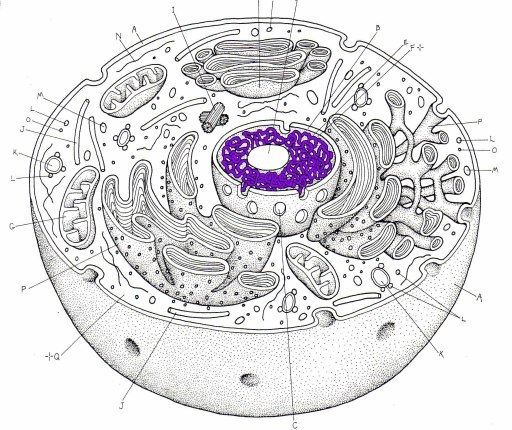
Which type of cell?
a)
Prokaryote
b)
Eukaryote
77.
Has membrane bound organelles
a)
Prokaryote
b)
Eukaryote
c)
both
78.
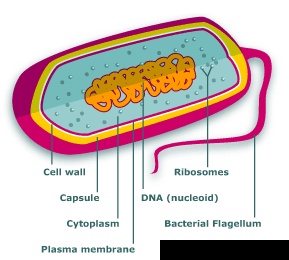
What kind of cell is this?
a)
Eukaryotic
b)
Prokaryotic
79.
What is multicellular? 
a)
one cell 
b)
no cells 
c)
many cells 
d)
no nucleus 
80.
All living things are made of...
a)
atoms 
b)
cells 
c)
bacteria 
d)
plants