
 Worksheets
Interdependence
Total questions: 20
Worksheet time: 10mins

A remora is a fish that has an adhesive disk on the back of its head that it uses to attach to a large shark. When uneaten food bits float away from the shark's mouth as it feeds, the remora fish eats the scraps.
The relationship of the remora and the shark is........
Predation
Parasitism
Commensalism
Competition
After a wheat field is cleared, wild grasses and weeds begin growing. This process is considered —
primary succession because pioneer species appear
primary succession because there are no large trees
secondary succession because soil is already present
secondary succession because the field contains inorganic matter
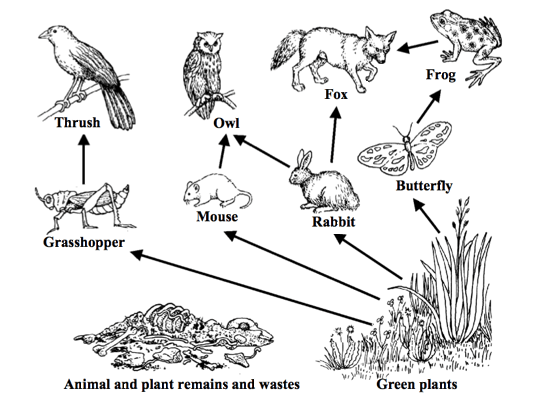

What is the cause of increased carbon dioxide in the atmosphere?
burning fossil fuels
breathing
garbage
What do limiting factors do?
Separate biotic factors from abiotic factors.
Determine which is the predator and which is the prey.
Regulate how many organisms live in an ecosystem.
Determine which natural disasters will hit an area.
Which of the following are abiotic limiting factors?
The decomposers in an ecosystem.
The populations of producers in a given habitat.
Carrying capacities of several species.
Water, space, and oxygen.
In biology, what is carrying capacity?
The maximum population size an ecosystem can support.
A total list of the limiting factors.
How much weight an organism can lift.
How much pain an organism can tolerate.
If a natural disaster devastates an ecosystem, what will this do to the carrying capacity of the population of a species within that ecosystem?
Increase it.
Will not affect it, so it will stay the same.
Always reduce it down to zero.
Decrease it.
Select ALL of the factors that contribute to the growth rate of a population.
birth rate
death rate
immigration
emigration
Under ideal conditions with unlimited resources, a population will increase ___.
slowly
it will not increase, but decrease
logistically
exponentially


