
 Worksheets
06 - 04 - Ancient Israel (6.20 - 6.24)
Total questions: 134
Worksheet time: 2hrs 35mins

Which number identifies the location of ancient Israel?
1
2
3
4
Which historical figure led the Israelites out of Egypt and to Mt. Sinai?
Abraham
Jesus
Moses
Ramses
The ancient Israelites migrated from Mesopotamia to which region?
Athens
Canaan
Babylon
Rome
At the time of its creation, how was Judaism different from other religions at its time?
It supported the creation of large temples
It supported the belief in one god.
It supported a complex system of laws.
It supported a patriarchal society.
What is the purpose of the 10 commandments in Judaism?
Their an ethical code for people to live by.
They explain the reasons people must be monotheistic
They explain how an individual should pray.
They are a code for the government
Who is the patriarch of the Jews and was told by God to move to Canaan from Mesopotamia?
Saul
David
Moses
Abraham
What was the first monotheistic religion?
Buddhism
Christianity
Hinduism
Judaism
What continent is Israel located in?
Asia
Africa
Europe
Antarctica
How did King Saul increase the influence of ancient Israel?
He created the first Jewish temple.
He united all the tribes of Israel into one nation.
He united Israel with Egypt.
He brought Judaism to Rome.
Why is King David historically significant?
He made Jerusalem the capital of Israel
He was the first king of Israel
He wrote many books of the Tanakh
He was a kind leader
What is the holy book of the Jews?
The Bible
The Tanakh
The Book of the Dead
The Vedas

The changes in these maps took place after the death of which historical figure?
Ashoka
Confucius
Saul
Solomon
Why was King Solomon historically significant?
He was the first king of Israel.
He made Jerusalem the capital city
He built the first temple of Jerusalem
He was a military genius.
How did the growth of the Persian Empire in 530 BCE impact the Jewish people?
It prevented Judaism from being practiced.
Cyrus the Great allowed the Jews to return to Israel.
It forced the Jews into slavery in Babylon.
It allowed Judaism to become the main religion of the Middle East.

Put the kings of Israel in order from first to third
Saul, Solomon, David
David, Saul, Solomon
Saul, David, Solomon
Solomon, David, Saul
Which king built the first Temple?
Saul
David
Solomon
Abraham
He is considered the Father of the Hebrews
Abraham
Moses
David
Saul
the belief in one God
monotheism
polytheism
religion
economics
the Hebrew religion
Buddhism
Hebrewism
Judaism
Hinduism
The Exodus was the migration of the Israelites out of...
Babylon
Israel
Greece
Egypt
The 10 Commandments are stone tablets containing ....
the history of Jewish people
rules for them to follow
a map of the Promised Land
leader who led the Exodus and received the ten commandments
Abraham
Moses
David
Solomon
spiritual leaders of the Jews during exile
Messiahs
prophets
rabbis
judges
the second king of Israel
Saul
David
Solomon
Han Solo
Who destroyed the first temple of Israel?
Romans
Syrians
Babylonians
Greeks
The kingdom of Israel split into two, Israel and_____________
Judah
Judea
Jerusalem
Judaism
1. The Hebrews’ religion was __________ which became a major influence on later civilizations.
Jerusalem
Judaism
Moses
Abraham
God told _____________ to leave Mesopotamia to go to a new land called Canaan and he would make his descendants into a mighty nation.
Moses
Abraham
David
Solomon
The Hebrews’ moved to __________ where the Pharaoh feared them becoming too powerful and enslaved the Hebrews’.
Jerusalem
Israelites
Egypt
Moses
In the 1200s BC God told ________ to lead the Hebrews out of Egypt.
Abraham
Saul
David
Moses
The ____________________ are a code of ten moral laws.
Israelites
David
Ten Commandments
Judaism
King _________ became the first king of Israel.
David
Solomon
Saul
Abraham
King ____________ was the third king of Israel.
Daivd
Solomon
Saul
Abraham
The capital of Israel was ___________.
Judaism
Egypt
Jerusalem
Israelites
_________________ are members of the ancient Hebrew nation.
Egypt
Ten Commandments
Israelites
Jerusalem
Which beliefs are important parts of Judaism? (Choose 2)
polytheism
mummification
individual worth
strict social hierarchy
personal responsibility
Which statements accurately describes the sacred texts of Judaism? (Choose 2)
They are about the many gods of Judaism
They were written on large tablets originally
They contain the same books as the Old Testament of the Christian Bible
They were meant to replace the Torah
They are called the Tanakh
How was Judaism different from other religions practice in the region at the time it began?
Judaism told the story of all people.
Judaism was monotheistic.
Judaism focused on the afterlife.
Judaism was matriarchal.
Why is individual worth emphasize in Judaism?
Jews believe every individual has their own story to tell
Jews believe every individual is created in the image of God.
Jews believe individuals should make sacrifices to gods that control nature.
Jews believe every individual is part of the community.
What rules do Jews try to follow because they believe these rules come from God?
The Tanakh
The Ziggurats
The 10 Commandments
Hammurabi's Code
Which beliefs are important parts of Judaism? (Choose 2)
polytheism
mummification
individual worth
strict social hierarchy
personal responsibility
Why did King Nebuchadnezzar allow the Israelites to establish their own community during the Babylonian captivity?
He wanted them to help revive the Babylonian economy.
He wanted them to keep their two kingdoms separate.
He wanted them to convert to Babylonian religious beliefs.
He wanted them to fight against the Assyrians.
How did the Babylonian captivity end?
The Babylonians conquered the Assyrians and released the captives.
The Persians conquered the Babylonians and allowed the exiles to return to Israel.
The Babylonians conquered the Persians and released the captives.
The Assyrians conquered the Babylonians and allowed the exiles to return to Israel.

What was the Torah?
The first 5 books of the Hebrew Bible
A hat worn by Jewish men
The descendants of Jacob
The set of laws the Hebrews believed were given to Moses

Which sea is NOT in the Middle East?
The Mediterranean Sea
The Red Sea
The Dead Sea
The Caspian Sea

What concepts means that you believe in only ONE God?
polytheism
atheism
monotheism
What makes Judaism so different from the other ancient religions we studied, such as Hinduism and the Egyptian beliefs?
The Jewish people were monotheistic; they believed in ONE God
The Jewish people had no true leaders or a caste system
The Jewish people did not pray in temples or ziggurats
The Jewish people did not develop a form of written language

Who is the FATHER of the Israelites?
Moses
Abraham
Jacob
Isaac
The Torah describes how each person can contributes to society and how their personal actions can impact the whole community. What can we call this?
individual worth
divine justice
personal honest
the power of God

What was the name of laws believed to be given by God to Moses that were used to control social behavior in Ancient Israel (and still today!)
The New Testament
Hammurabi's Code
The 10 Commandments
The Torah
Who was considered the first Hebrew patriarch and is present in all three major monotheistic religions? (Christianity, Islam and Judaism)
Abraham
Moses
Isaac
Jacob

Which type of religion is the belief in multiple Gods?
monotheism
polytheism
atheism
When people are forced to leave a land or a country, they are considered to be in..
diaspora
exile
Exodus
atheism
The Biblical story of Moses leading the Israelites out of Egypt is called
Exodus
exile
diaspora
atheism

The Sinai Peninsula is part of which country?
Egypt
Jordan
Israel
Syria
What is one similarity of both Hammurabi's Code and the Ten Commandments?
they are both written on stone and preserved in museums today
they both regulated social behavior
they both regulated religious behavior
they are both written in Cuneiform

What is a rabbi? (a)

Judaism played a part in the development of Christianity and Islam.
True
False
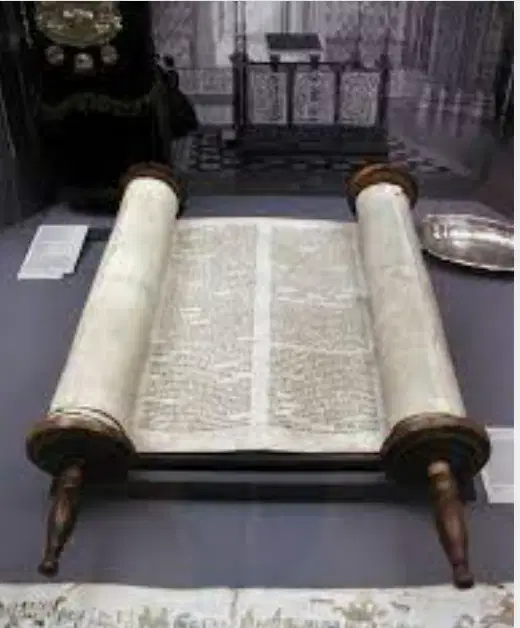
What Jewish beliefs are shared by Christianity and Islam?
monotheism, the afterlife, the ten commandments, and the Torah is written by the inspiration of GOD.
polytheism
pharaohs are gods
greek gods
Which king ordered the destruction of Jerusalem and the removal of the Israelites to Babylon?
Hammurabi
Antiochus IV
Cyrus the Great
Nebuchadnezzar
Which king allowed the Israelites to return to Judah after they had been exiled to Babylon?
Alexander the Great
King Cyrus the Great
King David
King Solomon
Ten of the tribes of Israel were conquered and scattered by what people?
Egyptians
Chaldean
Assyrians
Romans
Philistines

After King Solomon died, 10 of the 12 tribes set up their own nation in the north called_____
Jerusalem
Judah
Phoenicia
Israel

Israelites spoke a language called _______.
Greek
Egyptian
Assyrian
Hebrew

__________ is the language and writing of the Israelites.
cuneiform
Latin
hieroglyphics
Hebrew
What is the first temple?
The first five books of the bible and the most important book in the Judaism religion
Also known as "Solomon's Temple" or the "Holy Temple"
The Jews believed that certain religious teachers were sent by Go to serve as a voice
A belief that there is on;y one God for all people
What is a nomad?
a person who moves from place to place
a belief that there is only one God for all
a group who founded the kingdom of Israel
Groups from the Kingdom of Israel scattered to parts of the Assyrian empire. They eventually lost their identity
What caused the Israelites to migrate to Egypt?
King Solomon
Jeruselum
drought
Assyrian
What group of people conquered Israel?
King Solomon
Jeruselum
drought
Assyrian
What happened when the Israeilites migrated to Egypt?
The Israelites angered the Egyptians and they were enslaved until Moses rescued them by taking them to Palestine.
Judaism influenced the Christian Bible by defining good versus evil, they are both traced back to Abraham, and they are both monothistic.
Judaism is the belief of Israel. They believe in one God, instead of the belief in many. They also believe that prophets are able to speak the words directly from God.
His son became king, treated the kingdom unfairly and divided the nation.
How did Judaism influence the Christian Bible?
The Israelites angered the Egyptians and they were enslaved until Moses rescued them by taking them to Palestine.
Judaism influenced the Christian Bible by defining good versus evil, they are both traced back to Abraham, and they are both monothistic.
Judaism is the belief of Israel. They believe in one God, instead of the belief in many. They also believe that prophets are able to speak the words directly from God.
His son became king, treated the kingdom unfairly and divided the nation.
How was the religion of Israel unique among other religions in Ancient civilizations?
The Israelites angered the Egyptians and they were enslaved until Moses rescued them by taking them to Palestine.
Judaism influenced the Christian Bible by defining good versus evil, they are both traced back to Abraham, and they are both monothistic.
Judaism is the belief of Israel. They believe in one God, instead of the belief in many. They also believe that prophets are able to speak the words directly from God.
His son became king, treated the kingdom unfairly and divided the nation.
The ___________defeated the Chaldeans and conquered Babylon.
Persians
Romans
Greeks
Picts
The idea that the law should apply to everybody equally is called the____
Rule of Law
10 Commandments
Torah covenant
Code of Hammurabi
Persian king who allowed the Jews to return to Judah
Cyrus
Herrod
Saul
Soloman
period of time when Jews were sent to Babylon by Nebuchadnezzar
migration
colonization
exile
retreat
descendents of Abraham who left Mesopatamia and settled in Canaan
Chaldeans
Israelites
Philistines
Babylons
The ancient Israelites settled in a land they called...
Patagonia
Rome
Canaan
Canada

Which geographic feature is located at number 2 on the map?
Ancient Edgypt
Asia Minor
Arabian Peninsula
Mediterranean Sea

At which point on the map would the ancient kingdom of Israel have been located?
1
2
4
3

Which leader in the history of the Israelites belongs in the circle?
Moses
Abraham
David
Solomon

Which of the following completes the chart?
Saul
Abraham
Solomon
David

Which of the three kings is best described by the traits?
Solomon
Saul
Barak
David
Who was the Persian king who defeated the Chaldeans and allowed the exiled Jews to return to Judah?
Alexander the Great
Cyrus the Great
Samuel
Herod

Based on your knowledge of Israelite history, which leader best completes the chart?
Xerxes
Cyrus the Great
Nebuchadnezzar
Darius the Great
After Solomon's death, poor leadership and revolts caused Israel to
join forces with the Chaldeans.
ask for help from neighboring Assyria.
split into two kingdoms of Israel and Judah.
unite under the leadership of a Jewish prophet.
Who defeated the Chaldeans and conquered Bablyon?
Persians
Greeks
Assyrians
Israelites
Why were the Jews accepting of Persian rule?
The Persians allowed them to continue to follow Jewish cultural laws and traditions.
They were frightened of Persian punishments for rebellion.
The Persians adopted a monotheistic religion and converted their people to Judaism.
They were exiled to many different lands and they were persecuted.

