
 Worksheets
Modern China
Total questions: 70
Worksheet time: 54mins
The last Chinese emperor was a two year old boy.
True
False


After the last emperor was overthrown, what two political parties emerged in China?
Nationalist & Communist
Communist & Democratic
Republican & Democratic
Whigs & Tories
Who was the leader of the Communist party?
Chiang Kai-Shek
Sun Yat-Sen
Mao Zedong
Ho Chi Minh
What did the Communist party promise to bring to China?
Government own all land, property, and business
Improve peasants living conditions
Command economy
All of the above
Who was the leader of the Nationalist Party afterthe 1920's?
Sun Yatsen
Mao Zedong
Chiang Kai-shek
This group wanted a classless society and the landless peasants liked this!
The Nationalists
The Communists
Before 1911, China was ruled by:
Emperors
The Mongols
Wealthy Merchants & Traders
Who won the civil war in China in 1949?
The Nationalists
The Communists
Which group of people really liked the communists?
Wealthy landlords
Wealthy people who lived in cities
Landless Peasants
The type of government the Nationalists wanted in China was...
Communism
Democracy
Marxism
After the end of the civil war, the nationalist party...
were arrested and spent the rest of their lives in jail.
were executed.
fled to Taiwan
Sun Yatsen was the:
1st President of the Republic
leader of the Communist Party
Last Emperor
What areas of economic growth did China's leader focus on in the 1950's decade?
T.V.'s, radios, and other consumer household products
Agriculture and Industrialization
Mining, rocket building, and household products
Tractors, fishing, and rice
Which group overthrew the Qing Dynasty in 1912, but was too weak to keep control of the country?
Chinese Nationalist Party
Chinese Communist Party
Democratic Party
There were two political parties that were formed, the Communist Party and the Nationalist Party. They had the same interest in doing what?
Having the biggest army
Creating a Communist government
Solving starvation and poverty in China and modernizing the nation
Being the leader of the world
Who was the leader of the nationalist party during 1924?
Chiang Kai-shek
Mao Zedong
Qing Dynasty
Sun YatSen
What kind of economic system did the Nationalist party want for China?
traditional economy
command economy
market/capitalist economy
For most of its history, China had been ruled by ruling families.
A ___ is a line of rulers from the same family.
parliament
dynasty
magistrate
True or False?
Throughout the centuries, China's people have made many inventions that include: woodblock printing, the magnetic compass, gunpowder, and fireworks.
True
False
China is on which continent?
Asia
Africa
Australia
America
Antartica
Which Chinese political party believes the government should own and control education, factories and agriculture?
democrats
nationalists
communists
republicans
China experienced Imperialism?
True
False


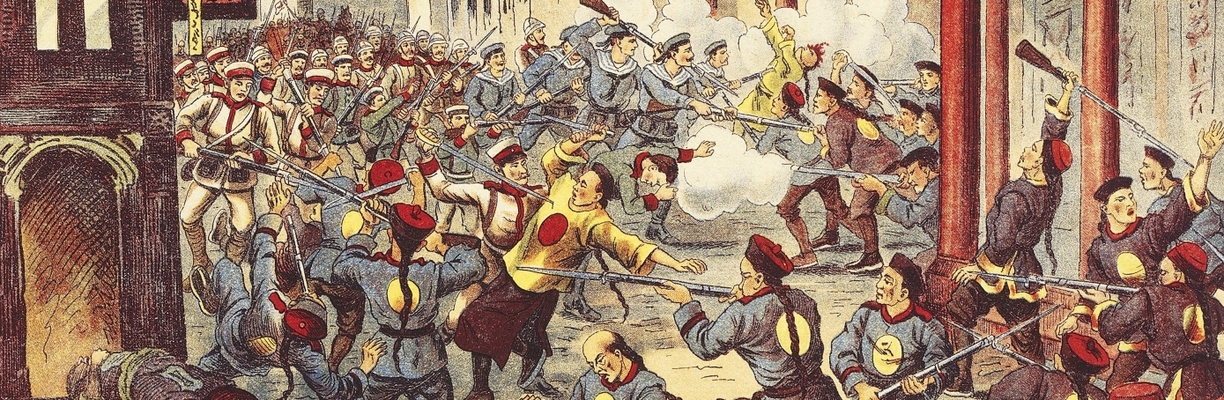

an alliance of imperialist nations defeated the rebels
Select the European countries that maintained a sphere of influence in China by 1905:
Great Britain
France
Germany
Japan
Russia
The Qing Dynasty:
fell as a result of several factors, especially the Boxer Uprising
still is in power in China today
fell as a result of the Opium War
fell as a result of WWI
As a result of the Treaty of Nanjing, Britain was
forced to stop all trade with China and Japan
paid millions of dollars worth of Chinese silk, teak, and porcelain as war reparations
unable to balance its trade with China
given the island of Hong Kong, among other concessions
Practice of Europeans being governed by their own laws while living on Chinese soil
extraterritoriality
self-strengthening
militarism
What led Sun Yatsen to plan to overthrow the Qing dynasty?
Opium Wars
Trans-Saharan Trade
Failure of the Boxer Rebellion
What led Sun Yatsen to plan to overthrow the Qing dynasty?
Opium Wars
Trans-Saharan Trade
Failure of the Boxer Rebellion
Which was not one of Sun Yatsen's principles?
Nationalism
Democracy
Advancement of the empire
livelihood of the people
Why did the army join the rebellion in 1911?
They hated the emperor
They were pro-European spheres of influence
They wanted to modernize
What Chinese leader followed Sun Yatsen after his death?
Empress Lu
Mao Zedong
Khruschev
Chiang Kaishek
Who won the Chinese Civil War?
Chinese Nationalists
Chinese Communists
What outside country did both the Nationalists and the Communists have to fight together during World War II?
USA
Japan
Great Britain
What group of people gave their support to the Chinese Communist Party (CCP)?
Peasants
Upper class
Educated middle class
Mao totally protected people's rights and personal freedoms.
True
False

These wars between China and England significantly weakened China during the Qing Dynasty, which was the last Chinese Dynasty.
The Anglo-Spanish War
The Seven Years War
The Opium Wars
The Crimean War
Japan's invasion of (a) led to the beginning of World War II in Asia
Why was the Nationalist Party less popular than the Communist Party in China?
Name three out of four.
They ignored the needs of the majority peasant population
The Nationalist Party's democratic ideals were not fully understood by the peasants
The Nationalist Party allied itself with foreign powers
The Nationalist Party was supported by the Japanese government
One result of the Opium Wars was....
Britain gained control over Hong Kong
Britain was forced to end the opium trade
China became increasingly isolated from the rest of the world
China banned British ships from its ports
Why were the Opium Wars significant?
It forced China to change to a democratic government
It forced Great Britain to recognise the importance of Confucian values
It forced China to open its doors to trade with the western world
It forced Great Britain to open its doors to trade with the Qing dynasty.
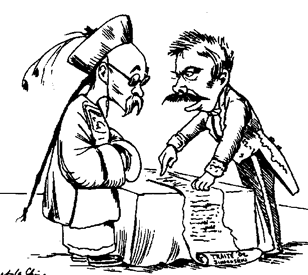
A. To force out foreign influences in China
After the emperor was overthrown, what two political parties emerged in China?
Republican & Democrats
Nationalist & Communist
Fascists & Socialsts
The People for Republic of China & The Japanese Communist Party
A forcible overthrow of a government or social order in favor of a new system.
migration
conservatism
infrastructure
revolution
He was the author of The Communist Manifesto and argued that the working class would rebel to replace capitalism with communism.
Adam Smith
Winston Churchill
Karl Marx
Andrew Carnegie
What product did England want?
opium
Silver
tea
coffee
What did the Communist party promise to bring to China?
More freedom of speech
Freedom of religion
Food to the poor and more wealth to all Chinese, and land reforms
More personal freedoms
Name of the 6,000 mile long march lead by Mao to avoid capture.
The Long March
The Patriotic March
The Red March
The Soviet Voyage

Sun Yatsen


Chiang Kai Shek

Madame Chiang Kai Shek was famous for her fashion and spending habits
True
False

