
 Worksheets
Science 4 Unit 7 Review
Total questions: 24
Worksheet time: 13mins
Which of the following are examples of SLOW changes to rock layers?
Select ALL that apply.
A river cuts a canyon into rock.
Rocks are broken by an earthquake.
Glaciers carve a valley into the rock.
Pressure from above presses sediment into rock.
In undisturbed rock layers, the youngest layer is always
on top
on the bottom
the thinnest
the thickest
Your family is riding in a car. You see some rock layers in a hillside. Your little sister asks how the rocks got there. How can you explain it to her?
Tell her how earthquakes are measured.
Remind her how your family puts newspapers into a recycling bin every day.
Tell her about the Grand Canyon.
Remind her how sand at the playground can be shaped into layers.
Rivers and glaciers can change rock _____.
quickly
slowly
_____ can change rock layers quickly.
earthquakes
fossils
glaciers
rivers
Rocks in the Grand Canyon _______.
are layered
were bent by earthquakes
Rock layers around the world exhibit _____ patterns.
similar
different
All of the rocks in the Grand Canyon will _____ over time.
stay the same
change
What do some fossils and modern-day organisms have in common?
Select ALL that apply.
They are the same age.
They may be related.
They may have similar body structures.
They all come from rock layers.
Which statement is true about fossils?
Fossils can tell us what animals looked like millions of years ago.
Fossils are never organisms that lived in the sea.
Fossils found today are always terrestrial fossils.
Fossils can tell us how animals become extinct.
Which of the following would be evidence of the kind of environment a fossilized organism lived in?
Select ALL that apply.
flat, paddle-like limbs and a broad tail with two fins
jointed legs
a long tail
a small head
You are digging in a desert in the mountains and find fossil imprints of ferns. Based on this, which type of environment did the mountain used to be?
a warmer and drier environment
a colder and drier environment
a warmer and moister environment
a deep, watery environment
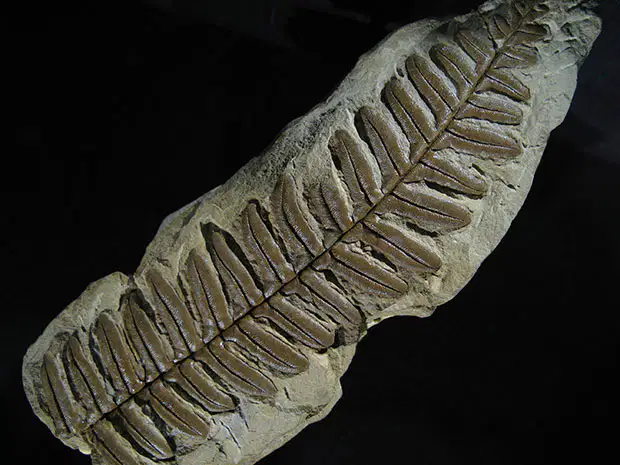
What type of environment did this fossil live in?
aquatic
terrestrial

What type of environment did this fossil live in?
aquatic
terrestrial
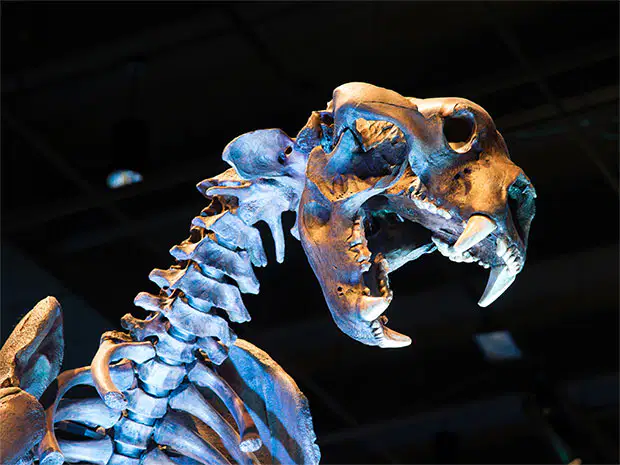
What type of environment did this fossil live in?
aquatic
terrestrial
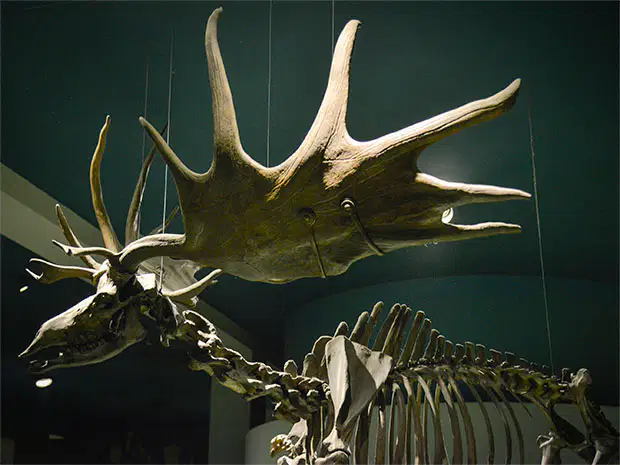
What type of environment did this fossil live in?
aquatic
terrestrial
A _____ indicates an aquatic environment once existed in an area.
wolf fossil
disrupted rock formation
fish fossil
layer that is eroded
If there are four rock layers, the layer at the bottom is most likely the _____.
youngest
thickest
oldest
What can show that the type of environment in an area has changed over time?
Select ALL that apply.
many fossils in different layers of rock
fossils from different climates in different layers of rock
no fossils in any layers of rock
land and water fossils in two layers of rock near each other
What is the most reliable way to judge the relative age of a rock layer? Select the correct choice.
The lower the layer is, the older the rock.
The higher the layer is, the older the rock.
The darker the layer is, the older the rock.
The lighter the layer is, the older the rock.
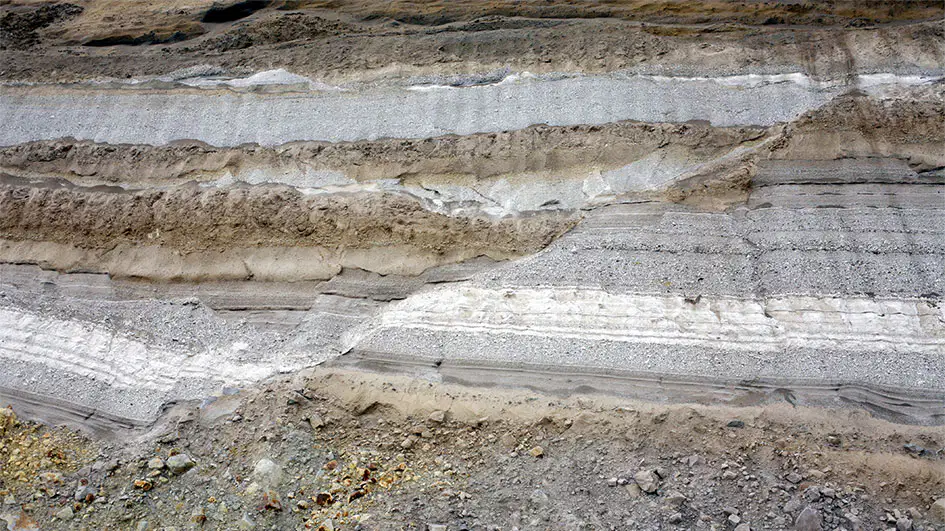
Which of the following may have caused the formation shown here?
Select ALL that apply.
an earthquake
delta formation
volcanic activity
glacier movement
underground pressure
Scientists can determine the age of a rock layer by studying the _____ found in that layer.
fosills
glaciers
formations
layers
_____ of rock can show how an environment has changed.
fossils
glaciers
formations
layers
Which present-day organism has been found in fossil form?
ferns
Irish elk
mosasaurus
giant short-faced bears

