
 Worksheets
OBT I Applied Thermodynamics SY AY 23-24
Total questions: 32
Worksheet time: 1hrs 11mins
Name
Class
Date
1.
The transfer of thermal energy between objects of different temperatures is called...
a)
temperature
b)
heat
c)
internal energy
d)
none of these
2.
It is possible to reach absolute zero
a)
true
b)
false
3.
The second law of thermodynamics states that entropy of a system tends to ______________.
a)
increase
b)
decrease
c)
stay constant
d)
fluctuate wildly
4.
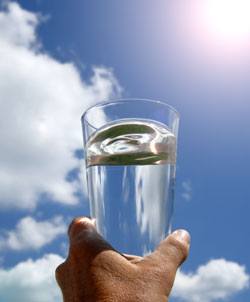
The temperature of a glass of cold water will eventually...
a)
Match the temperature of the surrounding environment.
b)
Always be colder than the surrounding environment.
c)
Become warmer than the surrounding environment.
d)
Never change temperature.
5.
The first law of thermodynamics states that energy is
a)
created
b)
destroyed
c)
conserved
d)
created and destroyed
6.
How many laws of thermodynamics are there?
a)
a lot
b)
3
c)
4
d)
1
7.
Which way does heat flow?
a)
hot to cold
b)
cold to hot
c)
it doesn't
8.
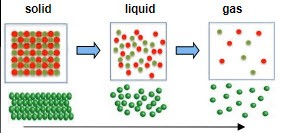
Entropy increases from solid, liquid to gas. Why?
a)
Molecular disorder increases
b)
Molecular randomness decreases
c)
Molecules are more energetic
d)
Molecules are more reactive
9.
Exothermic reactions...
a)
Absorb energy
b)
Release energy
c)
Release Color
d)
Absorb Color
10.
The first law of thermodynamics states that the change in the internal energy of a system is equal to the difference in energy transferred to or from the system as heat and
a)
mass
b)
work done
c)
force
d)
pressure
11.
ΔH value in an endothermic reaction is a positive number.
a)
True
b)
False
12.
The thermodynamic quantity that expresses the degree of disorder in a system is _
a)
entropy
b)
internal energy
c)
heat flow
d)
enthalpy
e)
bond energy
13.
Which of the following situations demonstrates high entropy?
a)
water freezing
b)
water vaporizing
c)
steam condensing to water
14.
When dry saturated steam is further heated, its dryness fraction
a)
Increase
b)
Decrease
c)
Remains same
d)
None
15.
With the increase of pressure, the boiling point of water
a)
Increases
b)
Decrease
c)
No change
d)
None
16.
What is effect of increase of pressure on the enthalpy of steam
a)
Increase
b)
Decrease
c)
No change
d)
None
17.
Dryness of fraction steam can be accurately found with
a)
Separating Calorimeter
b)
Throttling Calorimeter
c)
Separating and throttling Calorimeter
d)
None
18.
During super-heating of steam, the heat supplied is
a)
Sensible heat
b)
Latent heat
c)
both
d)
None
19.
The dryness fraction of super-heated steam is
a)
1
b)
great than 1
c)
less than 1
d)
None
20.
Enthalpy of saturated steam is
a)
Equal to the enthalpy of wet steam
b)
Less than the enthalpy of wet steam
c)
Greater than the enthalpy of wet steam
d)
None
21.
The properties of water are arranged in the steam tables as functions of
a)
Pressure
b)
Temperature
c)
Pressure and temperature
d)
None
22.
Devices such as calorimeters are used to for determining the quality or enthalpy of the mixture.
a)
true
b)
false
23.
What is the dryness fraction (x) on saturated vapour line?
a)
0
b)
1
c)
0.9
d)
0.5
24.
What is the dryness fraction (x) for saturated water, when water just starts boiling?
a)
0
b)
1
c)
0.9
d)
0.5
25.
Find the enthalpy of steam at 12 bar when the steam is dry saturated
a)
2600 KJ/kg
b)
2780 KJ/kg
c)
2782.73 KJ/kg
d)
None
26.
Determine the condition of steam at 10 bar and 200oC
a)
dry
b)
wet
c)
Superheated
d)
None
27.
Boiling point is the function of
a)
Pressure
b)
temperature
c)
enthalpy
d)
None
28.
what is the use of steam
a)
power generation
b)
process heating
c)
drying
d)
all of the mentioned
29.
how to determine the type of steam
a)
using pressure and temperature
b)
using pressure
c)
using temperature
d)
none of the above
30.
When water is heated with rise of temperature, it consumes
a)
Latent Heat
b)
Enthalpy
c)
Sensible Heat
d)
None
31.
Name of Student :
4 lines
32.
Roll Number :
4 lines
100 %

