
 Worksheets
Nuclear Chem Review
Total questions: 38
Worksheet time: 28mins
Name
Class
Date
1.
What would two different isotopes of an atom have in common?
a)
Number of neutrons
b)
Number of protons
c)
Atomic weight
d)
Atomic mass
2.
What happens when the number of protons in an atom changes?
a)
The number of electrons changes too
b)
Usually nothing happens, unless the atom is radioactive
c)
The atomic nucleus explodes
d)
It becomes a completely different atom, with different properties
3.
In what part of an atom can protons be found?
a)
Inside the electrons
b)
Inside the neutrons
c)
Inside the atomic nucleus
d)
Inside the electron shells
4.

What element is the ?
a)
Ag-115
b)
Cd-115
c)
Pd-115
d)
Not Listed
5.

Which type of nuclear radiation is being emitted here?
a)
alpha
b)
beta
c)
gamma
d)
none
6.

Which type of nuclear radiation is being emitted here?
a)
Alpha
b)
beta
c)
gamma
d)
none
7.
Balance the following equation:
146C --> 0-1e + ________
146C --> 0-1e + ________
a)
145B
b)
146C
c)
147N
d)
42He
8.

Negatively charged particles found outside of the nucleus are called
a)
electron
b)
protons
c)
neutrons
d)
nucleons
9.

Positively charged particles found in the nucleus of an atom are called
a)
protons
b)
neutrons
c)
electrons
d)
isotopes
10.
When nuclei decay, massive amounts of __________ is released.
a)
energy
b)
jello
c)
protons
d)
neutrons
11.

What type of reaction is this?
a)
alpha
b)
beta
c)
gamma
d)
quiet
12.
Has the highest penetrating power. Can penetrate our body. Even several cm thick of lead or several meters thick of concrete cannot stop all of it.
a)
Alpha
b)
Beta
c)
Gamma
13.
Has the lowest penetrating power. Can only penetrate 0.05 mm into the body and can be stopped by a piece of paper or clothing.
a)
Alpha
b)
Beta
c)
Gamma
14.

What type of nuclear reaction is this?
a)
alpha
b)
beta
c)
gamma
d)
hot
15.
If a sulfur atom has 16 protons, 16 electrons, and 16 neutrons, its atomic mass is:
a)
16
b)
32
c)
48
d)
64
16.
The time needed for half of a radioactive sample to decay is called its __________.
a)
decay period
b)
period
c)
transmutation time
d)
half-life
17.
Gamma rays damage human cells/tissue.
a)
True
b)
False
18.
When the isotope 5024X releases an alpha particle we get another element Y that looks like
a)
5022Y
b)
4622Y
c)
4820Y
d)
5426Y
19.
What is meant by the statement that 3215P has a half life of 14 days
a)
It takes 7 days to go down to 50% radioactivity each time
b)
It takes 14 days to go down to 50% radioactivity each time
c)
After 14 days it starts to become less radioactive
d)
It takes 14 days to go up by 50% radioactivity each time
20.
The half life of Thorium-234 is 24 days. What fraction of the element remains after 96 days
a)
1/2
b)
1/4
c)
1/8
d)
1/16
21.
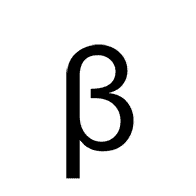
Has the symbol
a)
Alpha
b)
Beta
c)
Gamma
22.
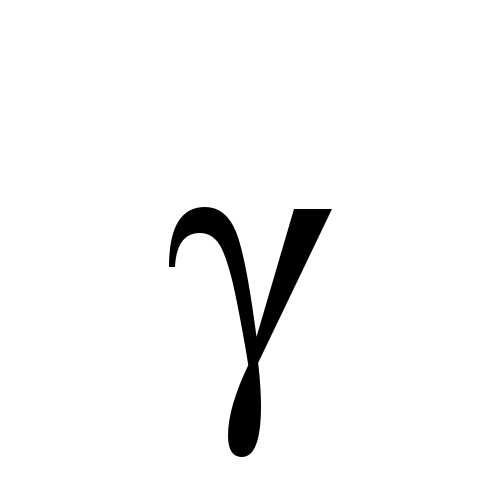
Has the symbol
a)
Alpha
b)
Beta
c)
Gamma
23.
Which type of radioactive decay gives off energy only (no particles)?
a)
alpha
b)
beta
c)
gamma
24.
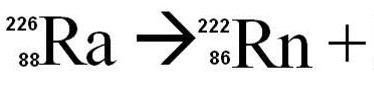
Complete the nuclear equation and determine the type of decay that is occurring in this reaction.
a)
alpha, 42He
b)
beta, 0-1e
c)
gamma
d)
none
25.
The time taken for half of an amount of radioactive atoms to decay.
a)
Nuclear fusion
b)
Full-life
c)
Dead time
d)
Half-life
26.
Gamma rays have a _____ charge
a)
0
b)
+1
c)
-1
d)
+2
27.
Alpha particles have a _____ charge.
a)
+2
b)
0
c)
+1
d)
-1
28.
What type of decay is this?
7534Se + 0-1e --> 7533As
7534Se + 0-1e --> 7533As
a)
Electron Capture
b)
Positron Emission
c)
Alpha Decay
d)
Beta Decay
29.
The technetium-99 isotope has a half-life of 6.0 hours. If 100.0 mg were injected into a patient how much remains after 18 hours?
a)
33.0 mg
b)
12.5 mg
c)
.33 mg
d)
15.8 mg
30.
Beta particles have a _____ charge.
a)
+2
b)
0
c)
+1
d)
-1
31.
An isotope has a different number of
a)
electrons
b)
neutrons
c)
protons
d)
positrons
32.
Which is not a part of an atom's nucleus?
a)
Neutron
b)
Proton
c)
Electron
d)
All are part of the nucleus
33.
The average atomic mass for silicon will be closest to...
a)
Si-28 (92% abundance)
b)
Si-29 (5% abundance)
c)
Si-30 (3% abundance)
34.
What caused the nuclear meltdown in Fukushima?
a)
Earthquake destroyed the reactor
b)
Tsunami flooded the reactor
c)
Power outage shut down the cooling system
d)
None of the above
35.
Why does an atom undergo beta decay?
a)
It has too many electrons.
b)
It has an atomic number greater than 83
c)
It has more neutrons than protons
d)
It has more protons than neutrons
36.
What happens to the atomic number during alpha decay?
a)
The atomic number decreases by 4
b)
The atomic number increases by 1
c)
The atomic number decreases by 2.
d)
The atomic number stays the same.
37.
Balance the following equation:
146C --> 0-1e + ________
146C --> 0-1e + ________
a)
145B
b)
146C
c)
147N
d)
42He
38.
In the symbol 167N what the 7 stand for?
a)
Mass number
b)
Atomic number
c)
Atomic mass
d)
Number of neutrons
100 %

