wayground logo

Free Printable Worksheets

Font size

S
M
L
XL
Worksheets

Exam 2- (1st) Organelles/Prokaryotic/Eukaryotic Cells - Cavazos

Total questions: 21

Worksheet time: 14mins
Name
Class
Date
1.
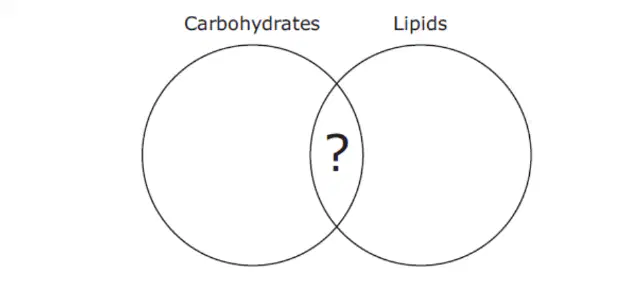
A student makes a Venn diagram to compare the functions of carbohydrates and lipids. Which cellular function of carbohydrates and lipids should be placed in the the shared section of the Venn diagram?
a)
Hormone production
b)
Structural support of cell walls
c)
Energy storage
d)
catalyst for chemical reactions
2.

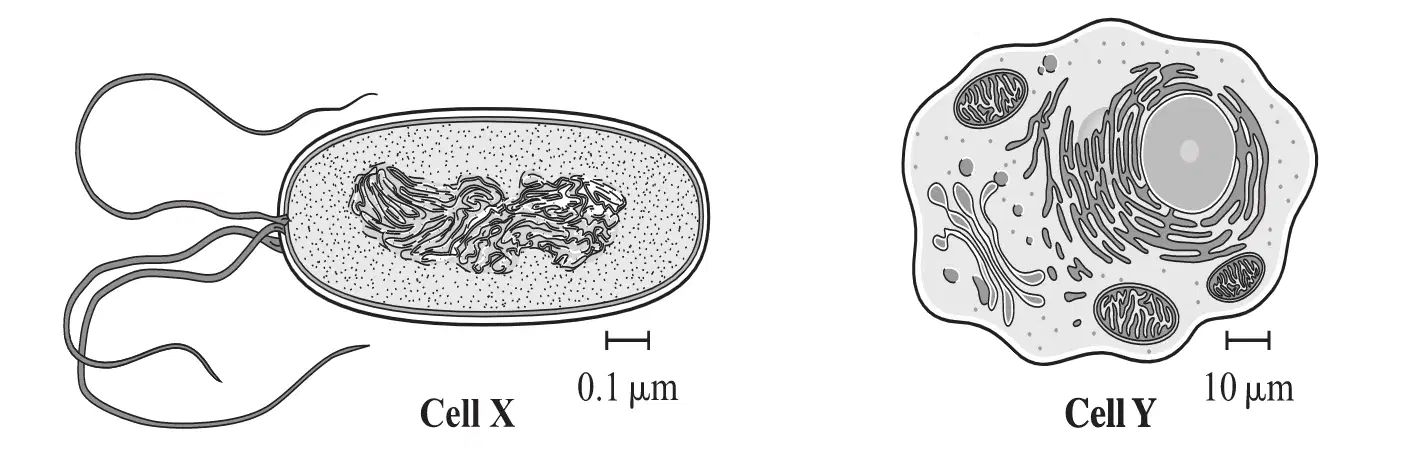
Use the figure below to explain the difference between prokaryotic cells and eukaryotic cells.

(a)  

3.
Which statement describes ALL prokaryotic and eukaryotic cells?
a)
Ribosomes are present in the cytoplasm.
b)
Materials are stored in vacuoles.
c)
Chloroplasts are used for photosynthesis.
d)
Cell walls provide shape and support.
4.
Human heart cells require a constant release of energy to function continuously. Which structure would be numerous in such cells to meet this demand?
a)
Golgi bodies
b)
nuclei
c)
mitochondria
d)
smooth endoplasmic reticulum
5.
Which of these is the best model of a prokaryotic cell?
a)
A
b)
B
c)
C
d)
D
6.
When the process of mitosis is correctly completed, the daughter cells should contain exact copies of all of an organism's genes. Which biomolecule contains ALL of an organism's genes?
a)
Nucleic Acid
b)
Proteins
c)
Carbohydrates
d)
Lipids
7.
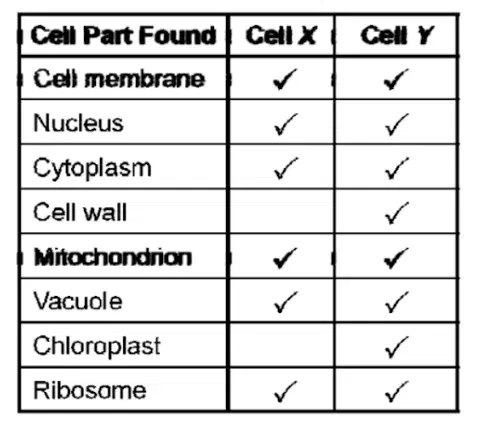
Melinda had two slides of unknown cells. She recorded her observations of each one on the chart below. According to the information in the given chart, what type of cell is cell X?
a)
Bacteria Cell
b)
Prokaryotic Cell
c)
Plant Cell
d)
Animal Cell
8.
The simplicity of prokaryotic cells prevents them from
a)
growing and reproducing
b)
responding to their environment
c)
forming specialized tissues and organs
d)
moving through their environment
9.
Which of these is a function of the cell membrane in all cells?
a)
Producing cellular nutrients
b)
Maintaining homeostasis
c)
Neutralizing chemicals
d)
Preserving cellular wastes
10.
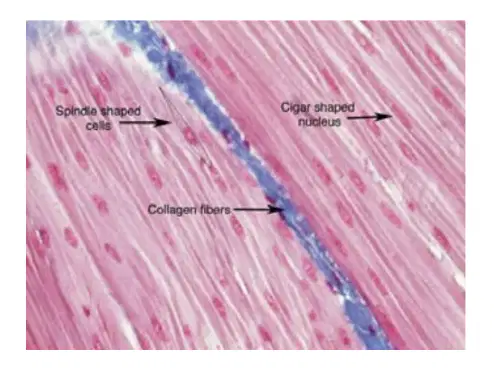
Examine the following specialized muscle cells found in animals. Why would it be necessary for a muscle cell to have a higher percentage of mitochondria than other cells in the body?
a)
To make proteins
b)
To provide energy for movement
c)
To store water and nutrients
d)
To convert light energy into carbohydrates
11.

What is the name and function of the structure represented by 2?

(a)  
12.
An advertisement for a health supplement for dogs claims to build lean muscle and strengthen tendons and ligaments, as well as provide energy. Which two biomolecules must the supplement contain to provide these benefits?
a)
Carbohydrates and lipids
b)
Proteins and carbohydrates
c)
Nucleic acids and carbohydrates
d)
Lipids and nucleic acids
13.
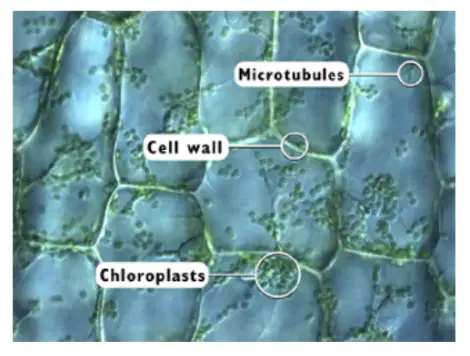
Examine the following specialized cells found in leaves of pants. Why would it be necessary for a leaf cell to have lots of chloroplasts?
a)
To convert light energy into carbohydrates
b)
To provide energy for movement
c)
To store water and nutrients
d)
To make proteins
14.
Which molecule synthesized by plants is a major source of energy for cellular processes in both plants and animals?
a)
Wax
b)
Nucleic Acid
c)
Glucose
d)
Chlorophyll
15.
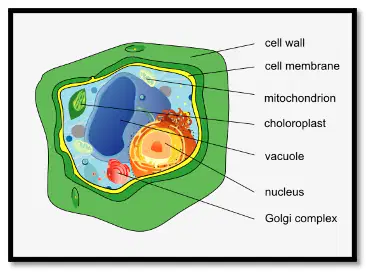
Which of the following statements identifies the cell below?
a)
This is a plant cell because it contains mitochondria.
b)
This is an animal cell because it contains mitochondria.
c)
This is a plant cell because it contains a cell wall.
d)
This is an animal cell because it contains a cell wall.
16.
Which of these is a component of Cell Theory?
a)
The cell is eternal through the transfer of DNA
b)
The cell is a living component that is able to spontaneously form
c)
The cell is the basic unit of structure and organization in organisms
d)
The cell is a tiny house for organelles
17.
Many plants that grow on land store energy in the form of starch. When the plants need energy, the molecules of starch can be broken down into monosaccharides. What type of biomolecule is starch?
a)
Carbohydrates
b)
Lipid
c)
Enzyme
d)
Protein
18.

Check all that apply (3)

Prokaryotic cells:

a)

are small, simple

b)

have free-floating DNA

c)

have a nucleus

d)

have a cell membrane

19.

Descriptions are shown below. Which describes a

eukaryotic cell?

a)

no ribosomes

b)

free-floating DNA

c)

DNA contained in nucleus

d)

simple with no membrane-bound organelles

20.

Mitochondria produce an energetic molecule called (a)  

21.

Lexandro is examining a cell under a microscope. He notices a ribosome inside. Which of the following is a conclusion he might draw?

a)

He is examining a eukaryotic cell.

b)

He is examining a prokaryotic cell.

c)

This cell could be either eukaryotic or prokaryotic.