
 Worksheets
Origins in Government
Total questions: 79
Worksheet time: 41mins
The process through which one group aggressively takes control of an area and establishes a new government is known as what?
Theory of mind
Social contract theory
None of these are correct.
Force theory
Which of the following is a well-known example of using force theory to establish a new country?
None of these are correct.
The United States
Brazil
Norway
Which of the following is an alternative to using force theory?
Medical theory
Evolution theory
Social contract theory
None of these are correct.
Which common element of force theory involves a foreign military taking control of a territory or government?
None of these are correct.
Occupation
Negotiation
Annexation
__________ is the process in which people from another country or territory establish a new society in a foreign area.
Expansion
Colonization
None of these are correct.
Occupation
Which of the following is an alternative to using force theory?
None of these are correct.
Divine right theory
Medical theory
Evolution theory
What is the common element of Divine Right theory?
Annexation
Negotiation
Taken by force
Right to rule was given by God
The _____ theory states that the first governments were created from the family, and over time, as the family grew into a clan and then a tribe, a government was born with an elder from the family chosen as leader.
Evolutionary Theory
Social Contract Theory
Divine Right of Kings Theory
Force Theory
According to John Locke and Jean Jacques Rousseau, the first governments were formed from a society of people who all agreed to give up their freedoms to do as they pleased to have laws that protected them from each other.
Force Theory
Evolutionary Theory
Divine Right of Kings Theory
Social Contract Theory
What are the four theories of Government?
evolutionary, force, divine left, social media, job contract
Never back down never give up
evolutionary, force, divine right, and social contract
Social contract theory. Democracy, American Government,
Which Enlightenment thinker argued that all people were born equal and had natural rights to life, liberty, and property?
Jen-Jacques Rousseau
Baron de Montesquieu
Thomas Hobbes
John Locke

The image concerns government.
Which Enlightenment idea is represented by the image?
separation of powers
checks and balances
social contract
natural laws
Use the quotation to answer the question:
"to secure these rights, Governments are instituted among Men, deriving their just powers from the consent of the governed." - from DIO
Which Enlightenment idea is expressed in this statement?
Baran de Montesquieu's theory of separation of powers
John Locke's idea of the social contract
Jen-Jacques Rousseau's theory of divine right
James Madison's view of individual liberty
Why did the Founding Fathers separate power to make, enforce, and interpret laws between different branches of government?
to prevent on branch of government from becoming too powerful
to make the national government more efficient
to increase the power of the presidency
to ensure that Congress would act according to the will of the people
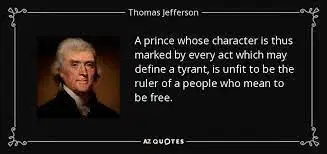
How does this quote reflect the influence of Enlightment ideas on the Founding Fathers?
They had reservation about self-government
They were concerned with property rights
They supported individual liberties
They created a limited monarchy

Use the newspaper headline to answer the question.
What Enlightenment idea is represented by the Headline?
separation of powers
checks and balances
social contract
natural law
How are the Enlightenment ideas that influenced the Founding Fathers reflected in modern institutions?
Colonies have been re-established to preserve popular sovereignty.
Oligarchies have increased to safeguard natural rights.
The United Nations promotes universal human rights.
The European Union encourages economic stability.
Which right is an example of an Enlightenment idea?
Fifth Amendment self-incrimination protection
First Amendment freedom of speech guarantees
First Amendment freedom of religion guarantees
Fourth Amendment search and seizure protection
What pamphlet denounced British rule and fanned the flames of revolution?
Magna Carta
Two treatises of Government
Mayflower Compact
Common Sense
Using your notes, define government
Which of the following is NOT a characteristic of a state (country)?
population
territory
sovereignty
government
citizenship
What is the purpose of government? (select ALL)
Make laws
Provide for the well being of citizens
Protect citizens
Limit freedom
What are the four characteristics of a state? (select ALL)
Population
Territory
Sovereignty
Government
Laws
Which of the following are the functions of government?
To protect the boundaries.
To provide health facilities.
To solve problems like poverty, unemployment etc.
All of these.

Europeans colonized most of Africa during the 19th and 20th centuries against the will (wishes) of the tribes. Which theory would this be an example of?
Force Theory
Evolutionary Theory
Divine Right of Kings Theory
Social Contract Theory

After World War II, part of the US peace terms with Japan was that the Japanese emperor had to announce that he was not selected by God. Which theory would this be an example of?
Force Theory
Evolutionary Theory
Divine Right of Kings Theory
Social Contract Theory
People agree to give up rights in exchange for protection from the government.
Social contract
Constitutional republic
Representative democracy
General agreement

Early civilizations selected leaders from their community elders who which formed earliest governments. Which theory would this be an example of?
Force Theory
Evolutionary Theory
Divine Right of Kings Theory
Social Contract Theory

During the French Revolution the common people were angry with their absolute monarchy. They began a revolution, overthrew the king and wrote a constitution that was for the people and the government. Which theory would this be an example of?
Force Theory
Evolutionary Theory
Divine Right of Kings Theory
Social Contract Theory

Which principle of U.S. government does the political cartoonist imply the President is destroying?
Federalism
Individual rights
Checks and balances
Consent of the governed
Which specific action is protected by the U.S. Bill of Rights?
A journalist publishing an article that exposes government corruption
A female citizen registering to vote in a local election
A local business owner refusing to pay quarterly taxes
A high school student signing up for a foreign exchange program
An individual accused of stealing identities on the Internet was held without formal charges.
Which excerpt (quote) from the U.S. Constitution best applies to this situation?
“The right of the people to be secure…against unreasonable searches and seizures, shall not be violated…”
“In all criminal prosecutions, the accused shall enjoy the right to a speedy and public trial, by an impartial jury…”
“All persons born or naturalized in the United States… are citizens of the United States and of the state wherein they reside.”
“No person shall be… deprived of life, liberty, or property, without due process of law…”
Which situation is a violation of the due process clause of the Fifth Amendment to the U.S. Constitution?
Denying a bank loan to a couple on the basis of race
Blocking publication of a student-run newspaper
Holding a suspect in jail without charges
Issuing a subpoena for records in a criminal case
Which statement describes a characteristic of federalism?
It gives states the authority to regulate trade with their neighbors.
It puts limits on the power of the national government.
It allows states to print and coin their own currency.
It eliminates conflicts between the national and state governments.
Which amendment to the U.S. Constitution best reflects the principle of representative democracy?
“Congress shall make no law respecting an establishment of religion…” —Amendment 1
“The right of the people to be secure…against unreasonable searches and seizures, shall not be violated…” —Amendment 4
“In all criminal prosecutions, the accused shall enjoy the right to a speedy and public trial…” —Amendment 6
“The Senate of the United States shall be composed of two senators from each state, elected by the people thereof, for six years…” —Amendment 17
Which headline best illustrates an example of representative democracy?
New Poll Shows Most Florida Citizens Favor Ending Cuban Trade Embargo
Maryland College Students Sign Petition to Support Lowering Voting Age
West Virginia Holds Special Election to Choose New U.S. Senator
Local Activists Protest Recent Cuts in Kentucky’s Transportation Spending
Read the excerpt (quote):
"The Senate of the United States shall be . . . elected by the people. . . . "
—Amendment 17, U.S. Constitution
Which of these excerpts from the Declaration of Independence is most reflected in the Seventeenth Amendment?
“Deriving their just powers from the consent of the governed…”
“We hold these truths to be self-evident, that all men are created equal…”
“That they are endowed by their Creator with certain unalienable Rights…”
“Governments long established should not be changed for light and transient causes…”
Which of these is an example of checks and balances?
The Supreme Court upholds the conviction of a federal prisoner.
Voters elect a President from the minority party in Congress
The Senate rejects a presidential nominee to the Supreme Court.
Congress passes legislation to reduce industrial pollution.
Read the excerpt (quote) below.
"For over 150 years, the state of Virginia operated an all-male college called the Virginia Military Institute (VMI). In 1990, the United States government sued the state of Virginia at the request of a female high school student seeking admission to VMI. The Supreme Court ruled that VMI had to admit women who could meet the physical and other requirements."
Which of these principles of law most likely influenced the Supreme Court's decision?
Common law
Equal protection
Implied contract
Presumption of innocence
Read the quotation below.
"The Government of [the United States], then, is . . . truly a government of the people. . . . Its powers are granted by them, and are to be exercised directly on them for their benefit."
—John Marshall, 1810
Which of these constitutional principles best applies to Marshall’s quotation?
Judicial review
Checks and balances
Separation of powers
Representative democracy
Which of these is an example of following the rule of law?
Citizens vote for a new amendment
The General Assembly approves the governor’s budget
Political parties hold a convention to nominate candidates.
The governor is impeached for wrongdoing.
Which two types of government are generally considered to be most efficient in their decision-making processes?
Representative democracy
Dictatorship
Direct democracy
Oligarchy
Which type of government provides the best protection of individual rights
Absolute monarchy
Parliamentary democracy
Dictatorship
Oligarchy

Which type of government is most likely the focus of this political cartoon?
Dictatorship
Parliamentary democracy
Constitutional monarchy
Presidential democracy
Which of these could be a disadvantage of living under an authoritarian government?
A slow legislative process
A weak executive branch
A lack of national laws
A lack of individual freedoms
Which of these is a characteristic of a dictatorship?
A system of checks and balances distributes government power
Individual freedoms and rights are protected by the constitution.
Courts may override decisions made by government leaders.
Government leaders rule with absolute authority.
Read the quotation below.
“ . . . government of the people, by the people, for the people . . . ”
—Abraham Lincoln, Gettysburg Address, 1863
Which type of government does Abraham Lincoln describe?
Democracy
Dictatorship
Monarchy
Oligarchy
In which of these government systems are government leaders most accountable to citizens?
Oligarchy
Dictatorship
Absolute monarchy
Representative democracy

Which statement best sums up the main idea of this cartoon?
A bill of rights is unnecessary as long as there are free elections.
Authoritarian governments are better than democracies at protecting minority rights.
Individual rights and freedoms are always protected in democracies.
Majority rule can lead to decisions that endanger the rights and freedoms of minorities.
When a government is forced to share power with an elected legislature, this is known as
absolute government
limited government
The Mayflower Compact inspired what ideas?
natural rights and social contract
self-government and social contract
trial by jury and rule of law
The Magna Carta inspired what ideas?
trial by jury (peers) and rule of law
natural rights and self-government
bill of rights and social contract
What inspired independence from England?
John Locke's natural rights
Baron de Montesquieu's separation of powers
Thomas Paine's pamphlet Common Sense
Pilgrims' Mayflower Compact
Justice, no cruel and unusual punishment..this document inspired our rights...
Mayflower Compact
English Bill of Rights
Magna Carta
Common Sense
King John was forced to sign the Magna Carta because he thought he was above the law. What is the principle behind this?
natural rights
English Bill of Rights
liberty
rule of law
Thomas Paine's Common Sense believed our representatives should be...
elected
appointed
The right of a government to exercise its power free of outside control
Sovereignty
Laws
Policy Making
Political Authority
A system of rules that are made and enforced by a legal government; keep order & protect citizens
Sovereignty
Laws
Policy Making
Political Authority
A blueprint for action that the government follows in dealing w/ issues or problems; based on law but set by groups other than legislatures
Sovereignty
Laws
Policy Making
Political Authority
The right to pass & carry out laws
Sovereignty
Laws
Policy Making
Political Authority
Central government combined w/ regional governments in single political system
Federalism
Tribal Government
Unitary States
Confederations
Central government holds complete & absolute authority over its local units; local units don't act independently
Federalism
Tribal Government
Unitary State
Confederation
Group of independent political entities that come together for a common purpose
Federalism
Tribal Government
Unitary State
Confederation
Citizens elect other citizens to represent them in government
Republic
Monarchy
A single person holds supreme authority & inherits their power
Republic
Monarchy
Absolute monarchy
Monarch wields unlimited power
Monarch is largely a ceremonial leader
Constitutional monarchy
Monarch wields unlimited power
Monarch is largely ceremonial leader
Citizens vote to elect leader
Presidential system
Parliamentary
Elected group of legislatures choose leader
Presidential
Parliamentary
People = source of government's power
Democracy
Oligarchy
Autocracy
Authoritarianism
Totalitarianism
Privileged people = government's power
Democracy
Oligarchy
Autocracy
Authoritarianism
Totalitarianism
Government power = single individual, or political body made up of members of 1 political party
Democracy
Oligarchy
Autocracy
Authoritarianism
Totalitarianism
Ruler uses power to stifle political dissent, suppress individual freedom & flout the law
Democracy
Oligarchy
Autocracy
Authoritarianism
Totalitarianism
Extreme; unelected leader controls every aspect of society; citizens may be jailed or killed for speaking out against government
Democracy
Oligarchy
Autocracy
Authoritarianism
Totalitarianism
Corporations & individuals can own & operate their own businesses that compete to sell goods & services to consumers to make a profit; right to own property
Capitalism
Socialism
Communism
Fascism
Feudalism
Government owns & operates most property & decides what goods & services are produced & their costs; want to make fairer society
Capitalism
Socialism
Communism
Fascism
Feudalism
Government owns & controls all property & business; fairer society
Capitalism
Socialism
Communism
Fascism
Feudalism
Extreme, totalitarian system in which every aspect of society is organized in service to the nation rather than the people; encourages some capitalist activity but only those that serve to strengthen the nation
Capitalism
Socialism
Communism
Fascism
Feudalism
Hierarchical system of land ownership
Capitalism
Socialism
Communism
Fascism
Feudalism

