
 Worksheets
1st 9 Weeks Benchmark AT-1 2023/24
Total questions: 116
Worksheet time: 39mins
Name
Class
Date
1.
Technician A says when you buy a car your car starts to depreciate as soon as you drive off the lot. Technician B says the cost to lease a vehicle is cheaper than buying a vehicle. Who is correct?
a)
Technician A
b)
Technician B
c)
Both Technician A and Technician B
d)
Neither Technician A nor Technician B
2.
Technician A says when buying an automobile you should put down at least 20% of the total cost. Technician B says you should figure out all of the expenses of owning an automobile before purchasing one. Who is correct?
a)
Technician A
b)
Technician B
c)
Both Technician A and Technician B
d)
Neither Technician A nor Technician B
3.
Technician A says it will save you money if you get a high interest rate from a bank on the loan. Technician B says it is always better to lease a car than to own one. Who is correct?
a)
Technician A
b)
Technician B
c)
Both Technician A and Technician B
d)
Neither Technician A nor Technician B
4.
Technician A says add-ons such as extended warranties and fabric protection are free when buying a used car. Technician B says that it is always better to have a dealership install accessories (e.g., bug deflectors, mud flaps). Who is correct?
a)
Technician A
b)
Technician B
c)
Both Technician A and Technician B
d)
Neither Technician A nor Technician B
5.
Technician A says all cars have the same safety features and should not be a concern for a new car buyer. Technician B says you should take your time to complete research on the safety features on the vehicle before purchasing one. Who is correct?
a)
Technician A
b)
Technician B
c)
Both Technician A and Technician B
d)
Neither Technician A nor Technician B
6.
A excellent credit score should be __________?
a)
300
b)
500
c)
700
d)
850
7.

What is the name of this image?
a)
Dealer Sticker
b)
Monroney Label
c)
Dealer Invoice
d)
Manufacture Label
8.
What is a good safety rating from NHSTA?
a)
1 Star
b)
3 Star
c)
5 Star
d)
10 Star
9.
A realistic interest rate on a new automobile loan is _____%.
a)
2
b)
10
c)
15
d)
20
10.
Which of the following is not a common place to purchase an automobile?
a)
car dealerships
b)
world wide web
c)
farmer’s market
d)
private parties
11.
A realistic interest rate on a used automobile loan is _____%.
a)
8
b)
24
c)
48
d)
64
12.
The MSRP is commonly called the _________.
a)
Manufacturer Suggested Retail Price
b)
Dealership Cost
c)
Sticker Price
d)
Factory Holdback
13.
If you do not have any credit or are under 18, you may need to have someone ________ the loan with you.
a)
pay on
b)
co-sign
c)
read
d)
negotiate
14.
If you earn $10 an hour and work 40 hours, what would be your gross income in one week?
a)
$230
b)
$270
c)
$300
d)
$400
15.
The first thing you should do is develop a (a) to determine what vehicle you can afford.
16.
One of the newer safety features on cars is autonomous braking.
a)
True
b)
False
17.
If you donate your old car to a qualified charity, then you can get an income tax deduction.
a)
True
b)
False
18.
NHSTA is an organization that works with NASA to develop new technology for vehicles.
a)
True
b)
False
19.
Test driving a vehicle is not important when buying a new car.
a)
True
b)
False
20.
The ________________ is an independent non-profit organization (funded by auto insurance companies) that conducts tests to reduce injuries, deaths, and property damage from crashes.
a)
National Motor Vehicle Title Information System
b)
Insurance Institute for Highway Safety
c)
National Highway Traffic Safety Administration
d)
U.S. Department of Energy
21.
If you do not know about a particular business you can check with the _________________.
a)
mayor
b)
Insurance Institute for Highway Safety
c)
Better Business Bureau
d)
consumer reporting companies for credit
22.
Which of the following is NOT one of the consumer reporting companies?
a)
TransUnion
b)
Equifax
c)
Experian
d)
MyCredit
23.
What type of label includes greenhouse gas and smog ratings?
a)
dealer addendum label
b)
Monroney label
c)
fuel economy and environment label
d)
pollution label
24.
If you buy a new car and don't like it you can exchange it withing 3 business days for a different vehicle.
a)
True
b)
False
25.
If you buy a used car you can exchange it within 3 business days for a different car.
a)
True
b)
False
26.
The ______________ was one of the earliest self-powered vehicles.
a)
Hummer
b)
Cugnot steam traction engine
c)
Tucker
d)
Taurus
27.
Most 4-cylinder engines are configured in this way.
a)
V
b)
Slant
c)
X
d)
Inline
28.
Automobiles became popular in the _____ century.
a)
14th
b)
16th
c)
18th
d)
20th
29.
The VIN is commonly located on the __________.
a)
right side dashboard
b)
taillight
c)
trunk
d)
left side dashboard
30.
The Ford Model T became famous for being ___________.
a)
mass-produced on a moving assembly line
b)
the first car
c)
hand built
d)
blue in color
31.
Who patented the world’s first practical motorcar?
a)
Carl Benz
b)
Henry Ford
c)
Nicholas Cugnot
d)
Ferdinand Porsche
32.
What is a push or pull interaction between objects?
a)
force
b)
work
c)
power
d)
energy
33.
Objects have the ability to do work when they have _____________.
a)
force
b)
work
c)
power
d)
energy
34.
__________ is the rate at which work is done.
a)
force
b)
distance
c)
power
d)
energy
35.
What is the transfer of energy from one object to another?
a)
force
b)
work
c)
power
d)
energy
36.
What is the term used to describe a twisting force?
a)
torque
b)
work
c)
horsepower
d)
energy
37.
_____________ is the work needed to lift 550 pounds a distance of 1 foot in 1 second.
a)
torque
b)
rpm
c)
horsepower
d)
energy
38.
Gasoline engines use _______________ to ignite the air-fuel mixture in the engine.
a)
torque
b)
compression
c)
a catalyst
d)
spark plugs
39.
How much work has been done if a force of 20 pounds was used to move an object 50 feet?
a)
20lb
b)
50ft
c)
70ft/lb
d)
1000ft/lb
40.
What is stored energy or energy of position?
a)
potential
b)
kinetic
c)
movement
d)
force
41.
Technician A says that gasoline engines have spark plugs to ignite the air-fuel mixture. Technician B says that diesel engines use compression to ignite the air-fuel mixture. Who is correct?
a)
Technician A
b)
Technician B
c)
Both Technician A and Technician B
d)
Neither Technician A nor Technician B
42.
Technician A says that the day the vehicle comes off the assembly line is the model year. Technician B says that the model year can be located on the vehicle emission control information (VECI) sticker. Who is correct?
a)
Technician A
b)
Technician B
c)
Both Technician A and Technician B
d)
Neither Technician A nor Technician B
43.
Technician A says that the number of cylinders within the engine block is used to identify the engine design. Technician B says that the engine configuration is used to identify the engine design. Who is correct?
a)
Technician A
b)
Technician B
c)
Both Technician A and Technician B
d)
Neither Technician A nor Technician B
44.
Technician A says that engine size can be listed in liters. Technician B says that engine size can only be listed in cubic inches. Who is correct?
a)
Technician A
b)
Technician B
c)
Both Technician A and Technician B
d)
Neither Technician A nor Technician B
45.
Technician A says that rotary motion of the pistons is converted to reciprocating motion of the crankshaft. Technician B says that rotary motion is up and down or back and forth. Who is correct?
a)
Technician A
b)
Technician B
c)
Both Technician A and Technician B
d)
Neither Technician A nor Technician B
46.
Common car loan duration is _____ years.
a)
4
b)
8
c)
12
d)
16
47.
In the United States, __________ insurance is usually required.
a)
collision
b)
comprehensive
c)
liability
d)
towing
48.
Routine maintenance expenses include all of the following except:
a)
oil changes
b)
tires
c)
brake pads
d)
car payments
49.
A 100/300/50 insurance policy indicates that the property damage limit is __________.
a)
$100,000
b)
$300,000
c)
$50,000
d)
$450,000
50.
This type of insurance is an additional form of liability protection. It goes above and beyond other insurance coverage levels if you are at fault.
a)
collision
b)
comprehensive
c)
towing
d)
umbrella
51.
In the United States fuel economy is commonly calculated in miles per gallon (mpg). What measurement do other countries commonly use?
a)
L/100 km
b)
L/1 km
c)
L/1 mile
d)
L/100 miles
52.
Which of the following would be considered routine maintenance?
a)
starter replacement
b)
oil changes
c)
alternator replacement
d)
replacing a broken tie rod
53.
A 20/40/10 insurance policy indicates that the bodily injury per person limit is __________.
a)
$20,000
b)
$40,000
c)
$10,000
d)
$70,000
54.
A/an _____________ service schedule includes carrying passengers and cargo within the recommended limits and having a balance between city and highway driving.
a)
normal
b)
severe
c)
extreme
d)
supreme
55.
A/an _____________ service schedule includes driving mostly in city traffic and frequently used for towing.
a)
normal
b)
severe
c)
extreme
d)
supreme
56.
A/an _____________ service schedule includes operating the vehicle continuously in hot/cold/humid climates or under maximum load and towing.
a)
normal
b)
severe
c)
extreme
d)
supreme
57.
What is the term used to describe how an asset, like a vehicle, has its value reduced over time?
a)
undervalued
b)
overvalued
c)
depreciation
d)
appreciation
58.
A new car can easily lose ________ of is value as you drive off the lot.
a)
10-20%
b)
50-60%
c)
70-80%
d)
80-90%
59.
The average vehicle on the road is about ________ years old.
a)
2
b)
6
c)
11
d)
20
60.
Which of the following is NOT a factor that contributes to the annual cost to own an automobile?
a)
repairs
b)
fuel
c)
maintenance
d)
vehicle color
61.
ASE technicians are certified by __________.
a)
OSHA (Occupational Safety and Health Administration)
b)
Insurance Institute for Highway Safety
c)
National Institute for Automotive Service Excellence
d)
NEA (National Education Association)
62.
This type of repair facility is commonly started by a technician that wants to run his or her own business.
a)
independent repair facility
b)
dealership repair facility
c)
Better Business Bureau approved facility
d)
chain service center
63.
AAA Approved Auto Repair facilities provide additional warranties to repairs. How long does the warranty last on the repair?
a)
10 years/100,000 miles
b)
7 years/70,000 miles
c)
3 years/36,000 miles
d)
1 year/12,000 miles
64.
It is critical to find a service facility that is honest and reliable. This is referred to as ______________.
a)
business ethics
b)
business support
c)
business profits
d)
business relationships
65.
Technicians that become certified in several areas can become a/an ___________ Technician.
a)
Apprentice
b)
Certified
c)
Highly Qualified
d)
Master
66.
What summarizes the work that was completed on a vehicle?
a)
estimate
b)
repair order
c)
Visa receipt
d)
towing receipt
67.
This type of repair facility can sometimes save you money due to the volume of business that they complete in one specific area.
a)
independent repair facility
b)
AAA approved auto repair facility
c)
Better Business Bureau approved facility
d)
specialized repair facility
68.
New car warranties are handled through _________________.
a)
independent repair facilities
b)
dealerships
c)
Better Business Bureau approved facilities
d)
specialized repair facilities
69.
When first writing up a repair order, the service writer should clearly write down your ____________.
a)
concerns
b)
cause
c)
correction
d)
repairs
70.
What is something that is NOT commonly found on a repair order?
a)
labor rate
b)
tools used
c)
VIN
d)
odometer reading
71.
Which of the following is NOT commonly considered a customer right on a repair order?
a)
Do you want your parts returned?
b)
If the job exceeds the estimate by 10% or more, do you authorize us in proceeding?
c)
If additional repairs are found necessary, do you authorize us in proceeding?
d)
What is the part number of the replacement part?
72.
What is the benefit of a chain warranty?
a)
It is guaranteed by any repair facility within the chain.
b)
It is backed by the dealership.
c)
It is always less expensive than an independent repair facility.
d)
It is guaranteed for the life of the vehicle.
73.
What are you required to do to have a tire warranty honored?
a)
Prove that you didn’t go in the ditch.
b)
Wash the tires once a month to keep them clean from road debris.
c)
Kick the tires once a week to make sure the sidewalls are firm.
d)
Maintain proper tire pressure and perform rotations as recommended.
74.
You can search for safety recalls at the _____________________ website.
a)
Environmental Protection Agency’s
b)
National Highway Traffic Safety Administration’s
c)
Occupational Safety and Health Administration’s
d)
Better Business Bureau’s
75.
Technician A says some repair facilities charge a flat rate when completing repairs. Technician B says some repair facilities charge the actual time it takes to complete the repair. Who is correct?
a)
Technician A
b)
Technician B
c)
Both Technicians
d)
Neither Technician
76.
Technician A says technicians only need work related experience to become ASE certified. Technician B says technicians need to take a test and need to have related work experience. Who is correct?
a)
Technician A
b)
Technician B
c)
Both Technicians
d)
Neither Technician
77.
Technician A says that one part of the ASE Code of Ethics states that technicians will only use materials that are proven to be safe and recommended by the manufacturer. Technician B says that one part of the ASE Code of Ethics states that technicians will recommend to owners only that work on the vehicle which is necessary. Who is correct?
a)
Technician A
b)
Technician B
c)
Both Technicians
d)
Neither Technician
78.
Technician A says that certified used car warranties are different than used cars sold with just extended warranties. Technician B says that certified used cars have met strict inspections by the dealership and are backed by extended warranties by the manufacturer. Who is correct?
a)
Technician A
b)
Technician B
c)
Both Technicians
d)
Neither Technician
79.
Technician A says battery and tire warranties are covered by any service center that sells that brand of battery or tire. Technician B says battery and tire warranties are often prorated. Who is correct?
a)
Technician A
b)
Technician B
c)
Both Technicians
d)
Neither Technician
80.
Technician A says if routine maintenance is not performed, it usually costs more money to fix as an unexpected repair and possible tow. Technician B says if your car is new, check to see if the repair is covered under the warranty. Who is correct?
a)
Technician A
b)
Technician B
c)
Both Technicians
d)
Neither Technician
81.
Technician A says gasoline prices are set by crude oil prices, supply and demand, refinery production, octane rating, and specific regional formulation. Technician B says that the American Petroleum Institute sets crude oil prices. Who is correct?
a)
Technician A
b)
Technician B
c)
Both Technicians
d)
Neither Technician
82.
Technician A says loan payments are dependent on the amount financed, the duration of the loan, and interest rate. Technician B says changing the interest rate does not impact the overall cost of the vehicle. Who is correct?
a)
Technician A
b)
Technician B
c)
Both Technicians
d)
Neither Technician
83.
Technician A says the amount of deductible on the insurance does not impact the cost of the insurance. Technician B says if you have a claim of $2,000 and your deductible is $500, your insurance company will only pay $500 towards the claim. Who is correct?
a)
Technician A
b)
Technician B
c)
Both Technicians
d)
Neither Technician
84.
Technician A says a good way to keep your insurance costs low is to keep your driving record free of tickets and accidents. Technician B says sometimes students with good grades can get discounts. Who is correct?
a)
Technician A
b)
Technician B
c)
Both Technicians
d)
Neither Technician
85.
This federal agency was created to prevent work-related deaths, illnesses, and injuries.
a)
OSHA (Occupational Safety and Health Administration)
b)
Insurance Institute for Highway Safety
c)
National Institute for Automotive Service Excellence
d)
Department of Homeland Security
86.
Most accidents in the shop occur because of ___________.
a)
Properly working equipment
b)
Unsafe conditions in the shop
c)
Unsafe students in the shop
d)
Not recognizing the hazards that are in the shop
87.
Before working in the shop, you must:
a)
Take a safety course
b)
Pass the safety test with a 100
c)
Be trained on shop equipment and how to operate them
d)
All the above
88.
When there is an accident in the shop no matter how big or small you should__________
a)
Notify the instructor
b)
Administer 1st Aid
c)
Run to the nurse
d)
Call 811
89.
The required safety rating for eye protection is ________
a)
Z-87
b)
Z-71
c)
Raybans
d)
Sunglasses
90.
Automotive shops/labs should have a/an ______________ to flush eyes if necessary.
a)
safety glass cabinet
b)
eyewash station
c)
materials safety cabinet
d)
sink
91.
If noise levels exceed ______ decibels (dB), you should wear ear protection.
a)
5
b)
20
c)
35
d)
85
92.
A/an _____________ provides detailed information on the possible hazards of working with a chemical product.
a)
first aid kit
b)
materials safety cabinet
c)
Safety Data Sheet
d)
OSHA wallet card
93.
What should you do if a vehicle is falling off an automotive lift?
a)
clear the area immediately
b)
try to lower the vehicle
c)
try to get others to help you hold it up
d)
position yourself between a wall and the lift
94.
What can be used in conjunction with safety goggles to provide maximum protection when working with chemicals or grinding?
a)
sunglasses
b)
prescription glasses
c)
safety glasses
d)
face shield
95.
For a fire to exist, it needs __________, heat, and fuel.
a)
carbon dioxide
b)
carbon monoxide
c)
oxygen
d)
nitrogen
96.
Which of the following is NOT a hazardous waste characteristic identified by the EPA?
a)
ignitability
b)
reactivity
c)
recyclability
d)
toxicity
97.
Which of the following is the most preferred method for a product’s end-of-life management?
a)
landfill
b)
energy recovery
c)
recycle and compost
d)
reuse
98.
Noise induced hearing loss is ___________________.
a)
permanent and preventable
b)
inevitable and unavoidable
c)
not permanent
d)
not preventable
99.
Which of the following is NOT a factor that affects hearing loss?
a)
sound level
b)
distance to the sound
c)
exposure time
d)
type of music
100.
Employers are required to have _____________ for each hazardous product in a shop readily accessible to employees.
a)
safety data sheets (SDSs)
b)
information data sheets (IDSs)
c)
handling data sheets (HDSs)
d)
disposal data sheets (DDSs)
101.
Under OSHA, employers must provide a safe work environment free of _______________.
a)
lifting over 50 pounds
b)
overtime
c)
known dangers
d)
chemical use
102.
If you feel your workplace is unsafe or unhealthy, you can file a complaint with the _______.
a)
Occupational Safety and Health Administration
b)
Environmental Protection Agency
c)
Better Business Bureau
d)
Insurance Institute for Highway Safety
103.
What s the purpose of PPE (Personal protective equipment)?
a)
To reduce employee exposure to hazards in the workplace
b)
To protect a vehicle being serviced
c)
To eliminate shop hazards
104.
Which of the following are irresponsible behaviors when working in the shop? Choose all that apply.
a)
Fighting
b)
Horseplay
c)
Eating
d)
Using cell phone
105.
In general, how should you dispose of automotive waste?
a)
Collect them by the same category and have a local recycle service pick them up
b)
Collect them together and bury them in the soil
c)
Collect the liquids and burn them and the solids and throw them away in the dumpster
106.
If you notice a tool is broken you should_________.
a)
Put it back in the drawer
b)
Remove the broken tool from use and report it to the instructor
c)
Hide the broken tool
d)
Throw the broken tool in the trash
107.
If you are unfamiliar with a tool or piece of equipment in the shop it is okay to use that tool as long as no one gets hurt?
a)
True
b)
False
108.
What are some benefits of "good housekeeping" practices in the shop? Choose all that apply.
a)
Lower exposure to hazards in the shop
b)
Higher productivity
c)
There are no benefits, shops are meant to be kept dirty
d)
Less accidents
109.
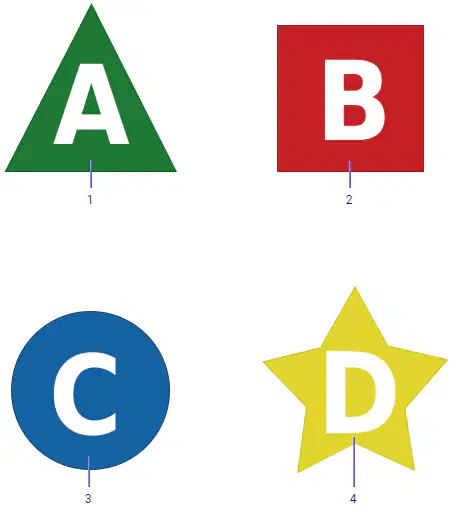
Which type of fire would a liquid fire be classified as?
a)
A1
b)
B2
c)
C3
d)
D4
110.
What should you do during a fire? Choose all that apply.
a)
Go to the assembly point
b)
Follow the fire exit routes
c)
Run and scream there is a fire
d)
You are almost done with your job so continue working quickly to finish
e)
Collect all your belongings and then exit the building
111.
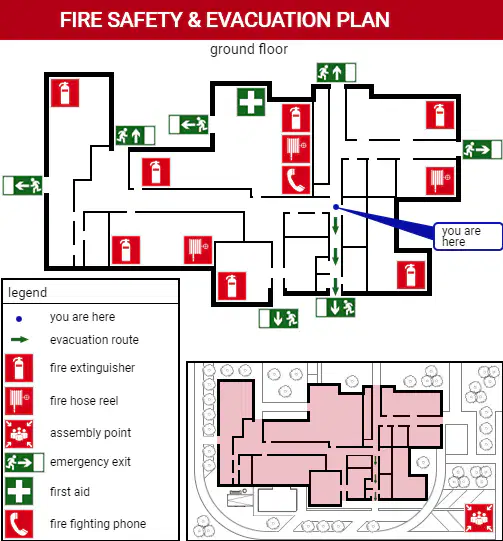
What does a fire evacuation plan communicate?
a)
How to best start a fire
b)
What to do in the event of a fire
c)
Description of how equipment is to be used
d)
Where all the exits are located
112.
Technician A says that safety glasses are not optional when working in an automotive shop, they must be worn. Technician B says that ordinary prescription glasses are not safety glasses. Who is correct?
a)
Technician A
b)
Technician B
c)
Both Technician A and Technician B
d)
Neither Technician A nor Technician B
113.
Technician A says carbon monoxide is a colorless, odorless, and poisonous gas. Technician B says proper ventilation is required when running a vehicle in a garage. Who is correct?
a)
Technician A
b)
Technician B
c)
Both Technician A and Technician B
d)
Neither Technician A nor Technician B
114.
Technician A says technicians can protect their hands from cuts, scratches, burns, bruises, and chemicals if they wear gloves. Technician B says that technicians should not wear gloves around moving machinery or parts. Who is correct?
a)
Technician A
b)
Technician B
c)
Both Technician A and Technician B
d)
Neither Technician A nor Technician B
115.
Technician A says jack stands are not necessary when going under a vehicle that is supported by a floor jack. Technician B says that concrete blocks can substitute for jack stands. Who is correct?
a)
Technician A
b)
Technician B
c)
Both Technician A and Technician B
d)
Neither Technician A nor Technician B
116.
Technician A says that when riding in a vehicle with airbags, children 12 and under should sit in the back seat. Technician B says seat belts are not required when riding in a vehicle with airbags. Who is correct?
a)
Technician A
b)
Technician B
c)
Both Technician A and Technician B
d)
Neither Technician A nor Technician B
100 %

