
 Worksheets
Exam na tayo sa lit
Total questions: 82
Worksheet time: 21hrs 30mins
What figure of speech is evident in the text below? She slipped out of herself with the sensation of being shed -- like a bird's molted feather, or a plum dropped from a tree. ~Excerpt from Strange the Dreamer by Laini Taylor
Metaphor
Simile
Personification
Hyperbole
What sound device is evident in the statement below? “He saw nothing and heard nothing but he could feel his heart pounding and then he heard the clack on stone and the leaping, dropping clicks of a small rock falling.”
Onomatopoeia
Anaphora
Assonance
Alliteration
What literary device is evident in the statement? "Pen is mightier than the sword."
Synecdoche
Metonymy
Oxymoron
Antithesis
What figure of speech is evident in the lyric below? I wanna die alive, never by the hands of a broken heart. ~Break Free by Ariana Grande
Metaphor
Simile
Irony
Oxymoron
What figure of speech is evident in the text below?
"Death just seems to follow some of us, don't it? Death's been following me for years. It's easy to spot your own kind. That kind of sorrow you can't just wash away; it sticks to you. And people, they can tell. They can feel it. And ain't nobody likes the feel of death -- especially in a place where he eats. What you need is a cleansing ritual."
~Excerpt from The Strange and Beautiful Sorrows of Ava Lavender by Leslye Walton
Personification
Metaphor
Simile
Hyperbole
What sound device is evident in the statement below?
“Peter Piper picked a peck of pickled peppers.”
Onomatopoeia
Anaphora
Alliteration
Assonance
What figure of speech is evident in the lyric below?
“…That you were Romeo, you were throwing pebbles and my daddy said ‘Stay away from Juliet‘…”
-Love Story by Taylor Swift
Apostrophe
Oxymoron
Allusion
Antithesis
“All hands on deck.” is an example of what literary device?
Synecdoche
Metonymy
Antithesis
Oxymoron
What figure of speech is evident in the lyric below?
I have died everyday waiting for you. ~A Thousand Years by Christina Perri
Antithesis
Hyperbole
Metaphor
Personification
What sound device is evident in the statement below?
"The rain in Spain stays mainly on the plain." - My Fair Lady by Alan Jay Lerner
Anaphora
Onomatopoeia
Alliteration
Assonance
Read the text and identify the point of view evident:
Mesarthim had come from than the humans did. She, of course, was unconscious that this was a dream. She was too accustomed to dream logic to be surprised by any of the trappings, but not too jaded to find them beautiful. After the initial flurry, snow continued to fall in the alcove. It shone on the floor, like spilled sugar, and when she slid from her gryphon's back, it was cold under her bare feet. The thing that did surprise her, that she couldn't get her mind around, even now, that she was having conversation with a stranger. However, many dreams she had navigated, whatever chimerical fantasies she had witnessed, she had never interacted. But here she was, talking -- chatting, even. Almost like a real person.
~Excerpt from "Strange the Dreamer" by Laini Taylor
Second Person
First Person
Third Person Omniscient
Third Person Limited
In "Howl's Moving Castle," the movie revolved around Sophie Hatter and how her mundane life turned into something more exciting than she could ever imagine. She is the __ of the movie.
Stock
Protagonist
Foil
Antagonist
Which among the choices DOES NOT belong to the group?
Theme
Flashback
Foreshadowing
In media res
What point of view is evident in the text below?
But the looming threat of Legacy Day was becoming real as fairies in the Enchanted Forest. Raven didn't feel evil. She imagined her mother standing in that same spot many years before. Had her mother always been evil? Or had signing the book turned her into the evil person Raven knew? When Raven signed, would she suddenly lose herself and transform into that vain, angry, power-mad sorceress who had raised her? Or worse, would she stay the same Raven as always, but the binding magic of the Storybook of Legends would force her to do and say hateful things?
~Excerpt from “The Storybook of Legends” by Shannon Hale
First Person
Second Person
Third Person Omniscient
Third Person Limited
A narrative technique where either the protagonist or antagonist is given a resolution to an insoluble difficulty by the entrance of a new character or acts of nature.
Deus ex Machina
Foreshadowing
Flashback
In media res
In the movie “Avengers: Infinity War”, Thanos wiped out half of the life in the universe in a snap of his fingers. Thanos is an example of what type of character?
Protagonist
Antagonist
Foil
Confidant
Hanbada Law Firm is the workplace of Attorney Woo in the Korean drama entitled Extraordinary Attorney Woo. What story element is Hanbada Law Firm?
Setting
Plot
Conflict
Character
This character accentuates or draws attention to the qualities of another character, most often the protagonist.
Literary Foil
Stock
Antagonist
Protagonist
What narrative technique is evident in the text below?
A woman is about to get married. As she puts on her veil, she remembers her fiancé three years before, swearing he would make her his wife someday. It was a sad memory for her, nevertheless, she continued walking to the aisle and right in front where his soon-to-be-husband stood.
Flashback
Deus ex Machina
In media res
Foreshadowing
What point of view is evident in the text below?
It was more than that, of course. I hated it when I was upset and people tried to reassure me, like they were stuffing my pain into a little box and handing it back to me like, See? It's actually not that a big deal. I hadn't wanted to do that to Matt.
~Excerpt from "Inertia by Veronica Roth
Second Person
First Person
Third Person Omniscient
Third Person Limited
True literacy simply means the ability to read and write.
True
False
Literature has its own structures and devices.
True
False
Which of the following describes literature as a structure?
I. Literature has laws.
II. Literature has devices.
III. Literature has an organization.
IV. Literature has a framework.
I and II only
I, II, III, IV
III and IV only
I only
Not all literature is fictional.
True
False
The following statements are true EXCEPT
To know that something already deviates from the ordinary language means to be able to identify what really is ordinary.
Ordinary language to some can be an extraordinary language to others and vice versa.
Writing in a peculiar way means to use the language in an unusual way.
A line can be considered literature only if it is poetic.
Which of the following is/are involved in the methods of scrutinizing whether a text is considered literature?
I. We observe the language.
II. We imagine what is being said.
III. We make sense of it.
IV. We examine if it is creative.
IV only
I only
I, II, and III only
I, II, III, IV
The following statements are true about having an open mind in studying literature EXCEPT
Having an open mind means having critical thinking.
Having an open mind lets you consider that point of view of others.
Having an open mind proves that you are always right.
Having an open mind is to be willing to welcome new experiences.
It is said that through literature we can rediscover our humanity. It can be best reflected in which of the following statements?
Through literature, we gain knowledge about the definition of humanity.
Through literature, we become informed about laws.
Through literature, we assess our ability to read and write.
Through literature, we heighten our sense of empathy and understanding towards other people.
Humanities are here to humanize us.
True
False
All literature is creative.
True
False
Which of the following DOES NOT belong to the group?
Non-fiction
Digi-fiction
Fiction
Poetry
All are notable works during the Nationalistic Period EXCEPT
Florante at Laura
La Solidaridad
Noli Me Tangere
Diariong Tagalog
Statement A: The Road Not Taken by Robert Frost which contains lines and stanzas, is an example of fiction.
Statement B: Cinderella, a fairy tale written by the Grimm Brothers, is an example of fiction.
Statement A is false, and Statement B is true.
Both statements are false.
Statement A is true, and Statement B is false.
Both statements are true
What is TRUE about the Japanese Period?
Japanese Language was required.
Filipinos were required to continue writing literary pieces in the Japanese language.
English Language was stopped.
Filipinos were not allowed to continue writing literary pieces in the English language.
Vernacular Language was stopped.
Filipinos were not allowed to continue writing literary pieces in the Filipino language.
English Language was required.
Filipinos were required to continue writing literary pieces in the English language.
The following are TRUE about Pre-Colonial Period EXCEPT
The primary means of preserving the Philippine Literature is through word of mouth because of unavailability of printing materials.
Our ancestor’s favorite past time is bugtungan.
Most literature focused on religion.
Some folk songs were intended for the activities shared by the community such as songs for rowing, for pounding rice, etc.
Statement A: Graphic Novels and Illustrated Novels are the same.
Statement B: Graphic Novels involve less complicated plots and are shorter compared to Comics.
Statement A is true, and Statement B is false.
Statement A is false, and Statement B is true.
Both statements are true.
Both statements are false.
Which of the following reflect/s the Philippine Literature during the Contemporary Period?
I. Repression including freedom of the press
II. Symbolisms and Allegories due to censorship
III. Theater as a vehicle for protest.
IV. Dynamism and Innovation
III and IV only
I only
I and II only
I, II, III, and IV
Which of the following reflect/s the Philippine Literature during the Spanish Period?
I. Spanish Language
II. Religious and Secular
III. Christian Doctrine and The Passion
IV. Awit, Corrido, Prose Narratives
I, II, III, and IV
III and IV only
I only
I and II only
Statement A: The main difference between a Mobile Textula and Text-Talk Novel is the way it is presented to readers.
Statement B: Mobile Textula is short poetry while Text-Talk Novel is storytelling in a dialogue format.
Both statements are true.
Both statements are false.
Statement A is true, and Statement B is false.
Statement A is false, and Statement B is true.
The only colonizers who did not force their own language to Filipinos.
Japanese
Americans
Spaniards
British
The main character
Protagonist
Confidant
Antagonist
Literary Foil
is the character to whom the main character reveals his/her sentiments, hopes, and aspirations.
Protagonist
Confidant
Antagonist
Literary Foil
Significantly opposes the protagonist
can become the source of the story’s main conflict.
Protagonist
Antagonist
Stock Type
Literary Foil
Accentuates or draws attention to the qualities of another character
Most often the protagonist
Literary Foil
Stock Type
Confidant
Antagonist
Portrays national or social identity
Stock Type
Literary Foil
Antagonist
Confidant
Complex and undergo development
Round Character/Dynamic
Flat Character/Static
Stock Type
Literary Foil
Uncomplicated and do not change
Literary Foil
Flat Character/Static
Round Character/Dynamic
Confidant
Story beginning with characters and conflict.
I - - - O - - -T - - -
(a)
Events building tension
R - - - - - A - - - - N
(a)
Peak conflict moment
The main character faces a critical decision or obstacle.
C - - - - X
(a)
Events after climax
Where the story begins to wind down and the loose ends are tied up.
F - - - - - G A - T - - -
(a)
The final outcome or conclusion of the story
R E - - L - T - - -
(a)
the narrator can only describe the external factors of the story.
3rd Person Objective
3rd Person Limited
3rd Person Omniscient
the narrator describes a character’s thoughts, usually the main one.
3rd Person Limited
3rd Person Objective
3rd Person Omniscient
the narrator is aware of all details in the story, including a portion of each character’s thoughts.
3rd Person Objective
3rd Person Omniscient
3rd Person Limited
Time and place in which and where the story occurs.
(a)
Refers to the underlying insight, the moral or idea that the writer is expressing through the story.
(a)

is the repetition of vowel sounds in the same line.
(a)
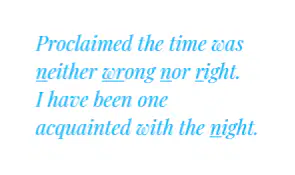
is the repetition of consonant sounds in the same line.
(a)

is the repetition of consonant sounds at the beginning of words.
(a)
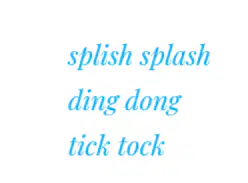
are words which imitate the natural sounds of the things
(a)
ANDAMING LITERARY DEVICES
SHET
SHET
SHET
REVIEW NALANG KATAMAD ILAGAY
Gives clues and hints
Foreshadowing
Flashbacks
Deus ex machina
Recall the events in the past.
Flashbacks
Deus ex machina
In media res
Introduced into a situation suddenly and unexpectedly
Often appearing artificial or unsatisfying to the audience.
Deus ex machina
Foreshadowing
Flashbacks
Plot twist
is the practice of beginning an epic or other narrative by plunging into a crucial situation that is part of a related chain of events
In media res
Plot twist
Cliffhanger
Deus ex machina
a sudden turn of events would alter the initial direction of the story.
Cliffhanger
Plot twist
In media res
Flashbacks
features a plot that is unresolved or without a proper ending to cause suspense or to leave the readers with unanswered questions.
Cliffhanger
Deus ex machina
Plot twist
In media res
One of the earliest genres of literature
Either recited or sang back to prehistoric times
Lyric Poetry
Narrative Poetry
Descriptive and Didactive Poetry
(a)
Created from imagination
It is not presented as fact, though it may be based on a true story or situation
(a)
Tells about stories that actually happen in real life
Based on facts and the author’s opinion about a subject
Biography and Autobiography
Journal and Diary
Memoir
Essay
(a)
Composition in prose or verse presenting in dialogue or pantomime a story
Intended to be acted on a stage
Comedy
Teddy
Farce
Melodrama
Opera
Musical
(a)
Story through text and illustrated images.
50% of the narrative is presented without words.
The reader must interpret the images to comprehend the story completely.
Textual portions are presented in traditional form.
Some illustrated novels may contain no text at all.
Illustrated Novel
Digi-Fiction
Graphic Novel
Manga
Triple Media Literature
Combines three media:
-Book
-Movie
-Video and Internet website
To get the full story, students must engage in navigation, reading, and viewing in all three forms.
Graphic Novel
Manga
Illustrated Novel
Digi-Fiction
Narrative in comic book formats
Narrative work in which the story is conveyed to the reader using a comic form
The term is employed in broadly manner, encompassing non-fiction works and thematically linked short stories as well as fictional stories across a number of genres.
Graphic Novel
Manga
Doodle Fiction
Digi-Fiction
Japanese word for comic
English-speaking world as a generic term for all comic
Originally published in Japan
Artistic and storytelling style
(a)
incorporate doodle writing, drawings and handwritten graphics in place of the traditional font.
Often adding humorous elements
“Diary of a Wimpy Kid”
Doodle Fiction
Graphic Novel
Digi-Fiction
Blogs, email and IM (Instant Message) format narratives
Almost entirely in dialogue simulation social network exchanges
Text-Talk Novels
Mobile Textula
Chick Literature or Chick Lit
A short poetry in a form of tanaga
Sent through SMS on mobile phone
4 lines with 7 syllables using (/) to end a line and (//) to end the stanza.
Mobile Textula
Chick Literature or Chick Lit
Text-Talk Novels
Fiction which addresses issues of modern womanhood, often humorously and lightheartedly
Features a female protagonist whose femininity is heavily thermalizing in the plot
Chick Literature or Chick Lit
Blog
Hyper poetry
A weblog
Containing short articles called posts that are changed regularly
Some blogs are written by one person containing his or her own opinions, interests, and experiences, while others are written by different people.
Blog
Chick Literature or Chick Lit
Hyper poetry
It can either involve a set of words, phrases, lines, etc. that are presented in variable order but sit on the page much as traditional poetry does, or it can contain parts of the poem that move and transform.
Hyper poetry
Poetry
Blog

