
 Worksheets
CUK UGC-NET (Communication)
Total questions: 20
Worksheet time: 10mins

According to the stimulus-response model, all communication is a/an ________ process.
Collective
Individual
Massive
Interpersonal

In a classroom, transforming verbal and non-verbal signs back into messages is known as
Encoding
Decoding
Reverse Communication
Feedback

Imagine you are working in an educational institution where people are of equal status. Which method of communication is best suited and normally employed in such a context?
Horizontal communication
Vertical communication
Corporate communication
Cross communication
The term ‘grapevine’ is also known as :
Horizontal communication
Upward communication
Informal communication
Downward communication
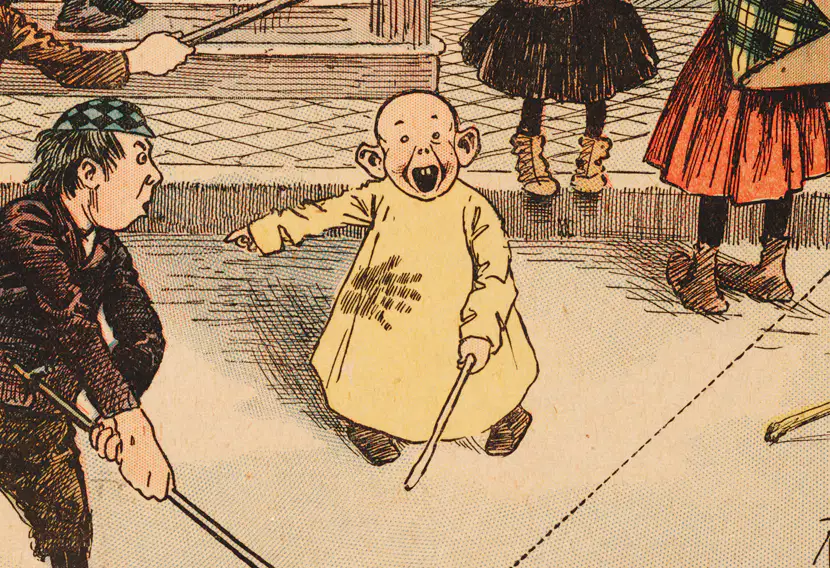
The term ‘Yellow Journalism’ refers to
sensational news about terrorism and violence
sensationalism and exaggeration to attract readers / viewers.
sensational news about arts and culture
sensational news prints in yellow paper.

In circular communication, the encoder becomes a decoder when there is
noise
feedback
criticality
audience

In the process of Communication, which one Of the following is in chronological order?
Communication, Medium, Receiver, Effect, Message
Medium, Communicator, Message, Receiver, Effect
Communicator, Message, Medium, Receiver, Effect
Message, Communicator, Medium, Receiver, Effect

Communication with oneself is known as
Grapevine Communication
Intrapersonal Communication
Interpersonal Communication
Organizational Communication

Didactic communication is
Inter-personal
Organisational
Relational
Intra-personal

The communicated knowledge in a classroom is considered as
non-pervasive treasure
limited judgement
autonomous virtue
cultural capital

Differentiation between acceptance and non-acceptance of certain stimuli in classroom communication is the basis of :
selective affiliation to peer groups
selective attention
selective morality
selective expectation of performance

Effective communication pre-supposes
Passivity
Understanding
Domination
Non-alignment

What are the barriers to effective communication?
Personal statements, eye contact and simple narration.
Use of simple words, cool reaction and defensive attitude.
Dialogue, summary and self-review.
Moralizing, being judgmental and comments of consolation.

The choice of communication partners is influenced by factors of
Secrecy, dissonance, deception
Dissimilarity, dissonance, deviance
Utility, secrecy, dissonance
Proximity, utility, loneliness

Aspects of the voice, other than the speech are known as :
Para language
Delivery language
Personal language
Physical language
Photo bleeding means
Photo cropping
Photo placement
Photo cutting
Photo colour adjustment

Break-down in verbal communication is described as
Unevenness
Entropy
Contradiction
Short circuit

Conversing with the spirits and ancestors is termed as
Intrapersonal communication
Interpersonal communication
Face-to-face communication
Transpersonal communication

The term ‘SITE’ stands for
Satellite Indian Television Experiment
Satellite International Television Experiment
Satellite Instructional Television Experiment
Satellite Instructional Teachers Education

The first multi-lingual news agency in India was
API
Samachar Bharati
Hindustan Samachar
Samachar

