
 Worksheets
Chapter 14 Review
Total questions: 49
Worksheet time: 50mins

What are the products of the chemical reaction pictured?
CH4 and CO2
CH4 and O2
CO2 and 2H2O
O2 and H2O
If reactants' mass is 18g , what is the mass of the Products?
15
36
81
18
Consider the chemical equation CH4 + 2 O2 → CO2 + 2 H2O. In this equation, CH4 is a
product
reactant
displacement
Is the following equation balanced?...
Al + O2 --> 2Al2O3
Yes!
No!
Which of the following reactions is balanced?
2CH4 + O2 -> CO2 + H2O
CH4 + 2O2 -> CO2 + H2O
CH4 + 2O2 -> CO2 + 2H2O
None of the chemical equations are balanced.
Balance this equation...
HgO --> Hg + O2
It is balanced
2HgO --> Hg + O2
2HgO --> 2Hg + O2
I don't know...Oh well!
Si + S8 →Si2S4
Synthesis (combination)
Decomposition
Single replacement
Double replacement
Ca + AlCl3→ CaCl2 + Al
Synthesis (combination)
Decomposition
Single replacement
Double replacement
KOH + H3PO4 → K3PO4 + H2O
Synthesis (combination)
Decomposition
Single replacement
Double replacement
Pb(NO3)2 →PbO + NO2 + O2
Synthesis (combination)
Decomposition
Single replacement
Combustion
Mg + N2 →Mg3N2
Synthesis (combination)
Decomposition
Single replacement
Combustion
NO2 →N2 + O2
Synthesis (combination)
Decomposition
Single replacement
Combustion
AB + CD →AD + CB
Double Replacement
Single Replacement
Synthesis
Decomposition
A + BC →B + AC
Single Replacement
Decomposition
Double Replacement
Synthesis
AB →A + B
Decomposition
Single Replacement
Double Replacement
Synthesis
Cu + 2Ag(NO3) → 2Ag + Cu(NO3)
Synthesis Reaction
Decomposition Reaction
Single Displacement Reaction
Double Displacement Reaction
2NaCl →2Na +Cl2
Synthesis Reaction
Decomposition Reaction
Single Displacement Reaction
Double Displacement Reaction
C + O2 → CO2
Synthesis Reaction
Decomposition Reaction
Single Displacement Reaction
Double Displacement Reaction
Ca3(PO4)2 + 3 H2SO4 + 3 CaSO4 + 2 H3(PO4)
Synthesis Reaction
Decomposition Reaction
Single Displacement Reaction
Double Displacement Reaction
The Law of Conservation of Mass States
Energy cannot be created nor destroyed, it can only change form.
Mass cannot be created nor destroyed, it can only change form.
Mass can be created or destroyed, it cannot change form.
To successfully prove the law of conservation of mass, which of the following conditions may be ignored?
The mass of the reactants before the reaction must be determined.
The mass of the products after the reaction must be determined.
The chemical reaction must be exothermic.
The reaction must be preformed in a closed system.
In an endothermic reaction, energy is _________.
absorbed
released
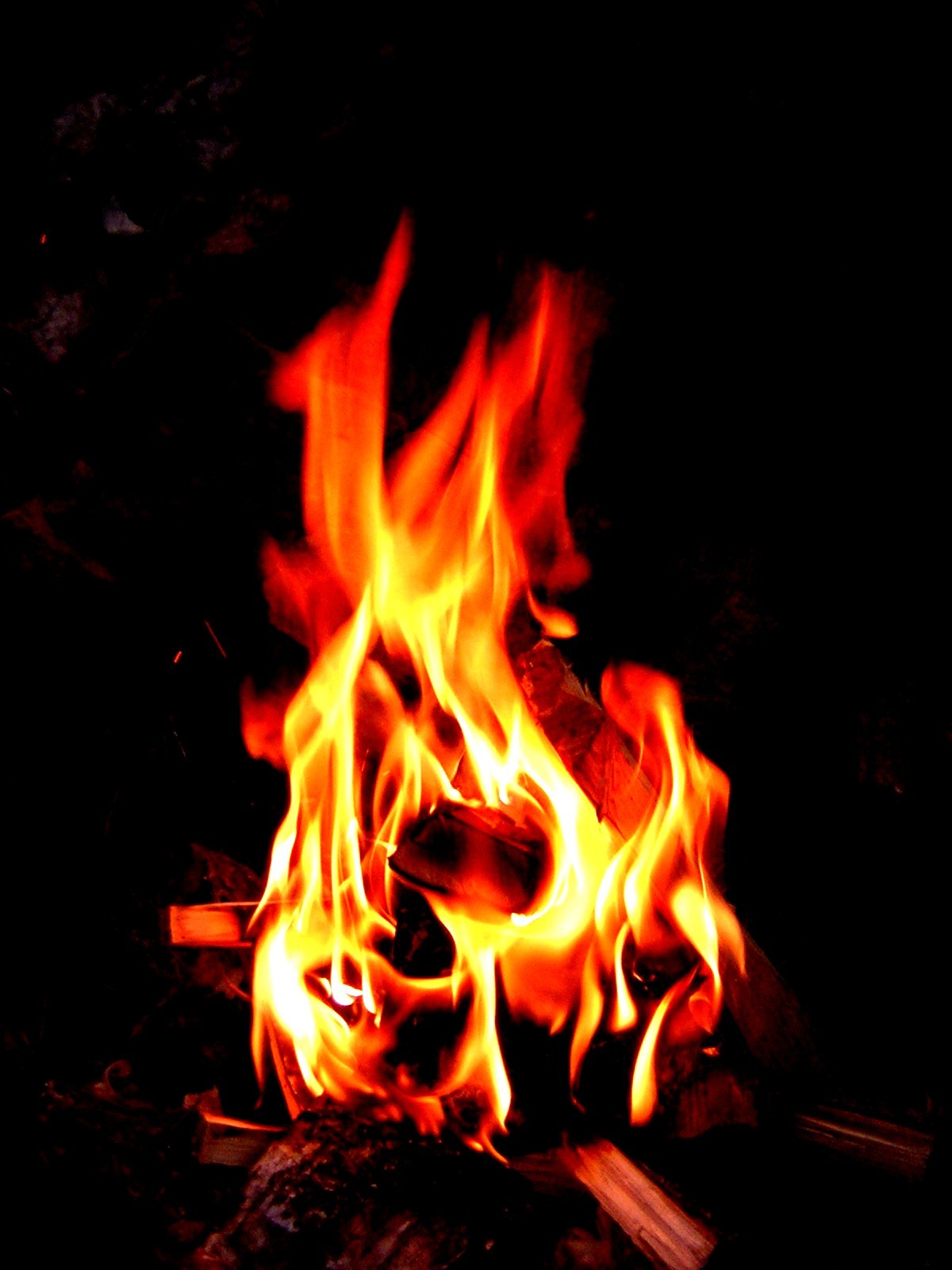
_____ reactions usually feel hot!
endothermic
exothermic
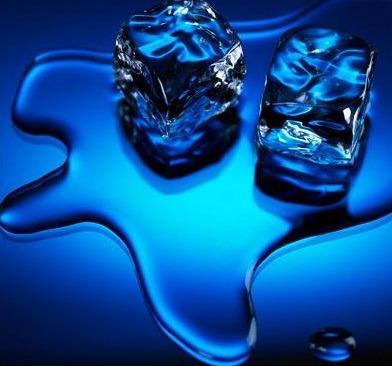
____ reactions usually feel cold.
endothermic
exothermic
Endo means in or _______.
absorbed
released
Exo means out or ________.
absorbed
released
What instrument would you use to detect an endothermic or exothermic reaction?
triple beam balance
ruler
thermometer
When a candle is lit hydrocarbons are combusting. An exothermic reaction is occuring. Energy is being _________________ .
absorbed
frozen
destroyed
released
Which of the following is a sign that a chemical reaction has occurred?
change in shape
melting
bubbles of gas appear
dissolving
The initial temperature was measured to be 20oC and the final temperature was 45oC. The reaction was
exothermic
endothermic
Which of the following is a sign that a chemical reaction has occurred?
change in shape
melting
there was colour change
dissolving
The initial temperature was measured to be 20oC and the final temperature was 10oC. The reaction was
exothermic
endothermic
Atoms of a particular element that have different numbers of neutrons are called:
Isotopes
Ions
Isometrics
Isomers
The process of combining the nuclei of atoms to make different atoms is called _________?
Fission
Nuclear Reaction
Fusion
Particle Accelerator
What nuclear process occurs in the sun?
fission
fusion
endothermic
atomic bomb
The splitting of a nucleus into smaller, lighter nuclei is called
fusion
fission
How do nuclear power plants work?
Chemical Reactions
Fusion Reactions
Fission Reactions
Hydro-powered reactions
What force holds neutrons and protons together in the nucleus?
Electronegative force
Strong nuclear forces
Weak nuclear forces
Hydrogen bonding
An isotope is a version of an element with the same number of protons but different number of __________.
neutron
electron
An alpha particle can be stopped by _________________.
a sheet of paper
the air
only gold
In alpha decay, the mass number...
increases by 2
decreases by 2
increases by 4
decreases by 4
In alpha decay, the atomic number...
increases by 2
decreases by 2
increases by 4
decreases by 4
Which type of reaction is the atomic number increased but atomic mass unchanged?
Beta decay
Fusion
Alpha decay
Gamma decay
When you go to the dentist and get Xrays of your teeth, the dentist will typically have you put on a heavy vest. Inside this vest is lead which is a really dense metal capable of stopping MOST radiation. What radiation can penetrate lead?
Alpha radiation
Beta radiation
Thermal radiation
Gamma radiation

The arrows in the diagram below represent radiation passing between electrically charged plates.
The arrow marked “2” could represent:
Gamma radiation
An alpha particle
A beta particle
A proton

