
 Worksheets
Cosmetology II EXAM part 2
Total questions: 68
Worksheet time: 36mins

Which is located at #3
Tang
Thumb
Pivot & adj
Cutting edge

Which is located at #6
Bumper
Ring hole finger
Cutting edge
Tang

Which is located at #2
Bumper
Gauge
cutting
Thumb hole
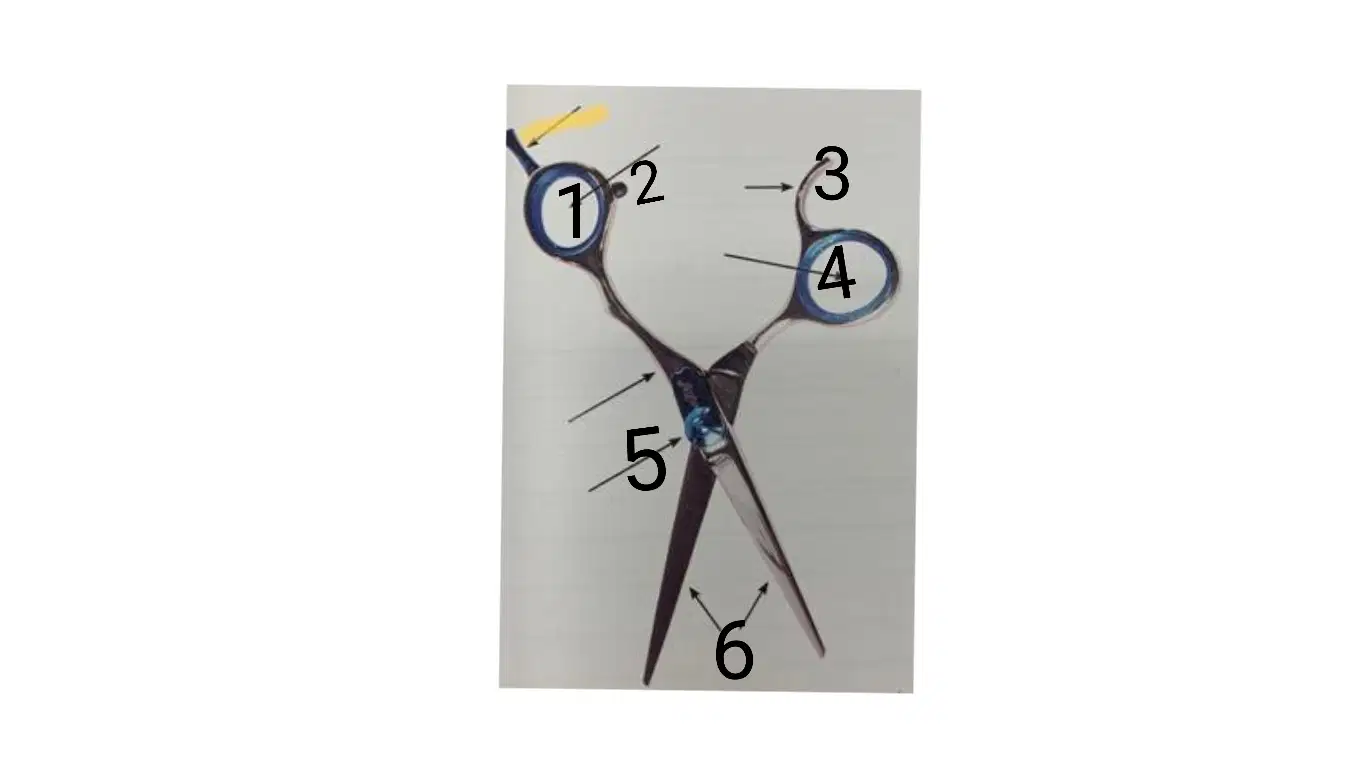
Which is located at #4
Pivot & adj
Cutting edge
Bumper
Thumb hole
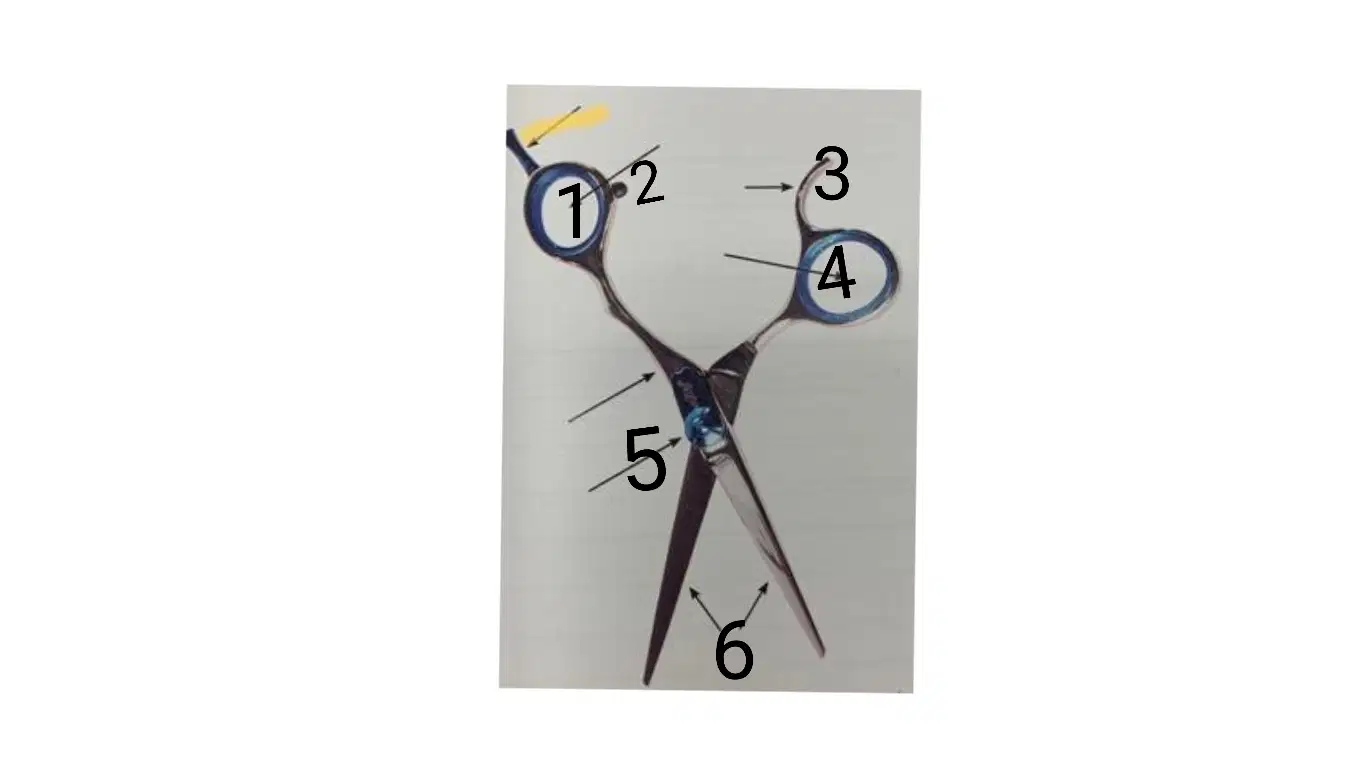
Which is located at #5
Pivot & adj
Ring finger hole
Cutting edge
Bumper
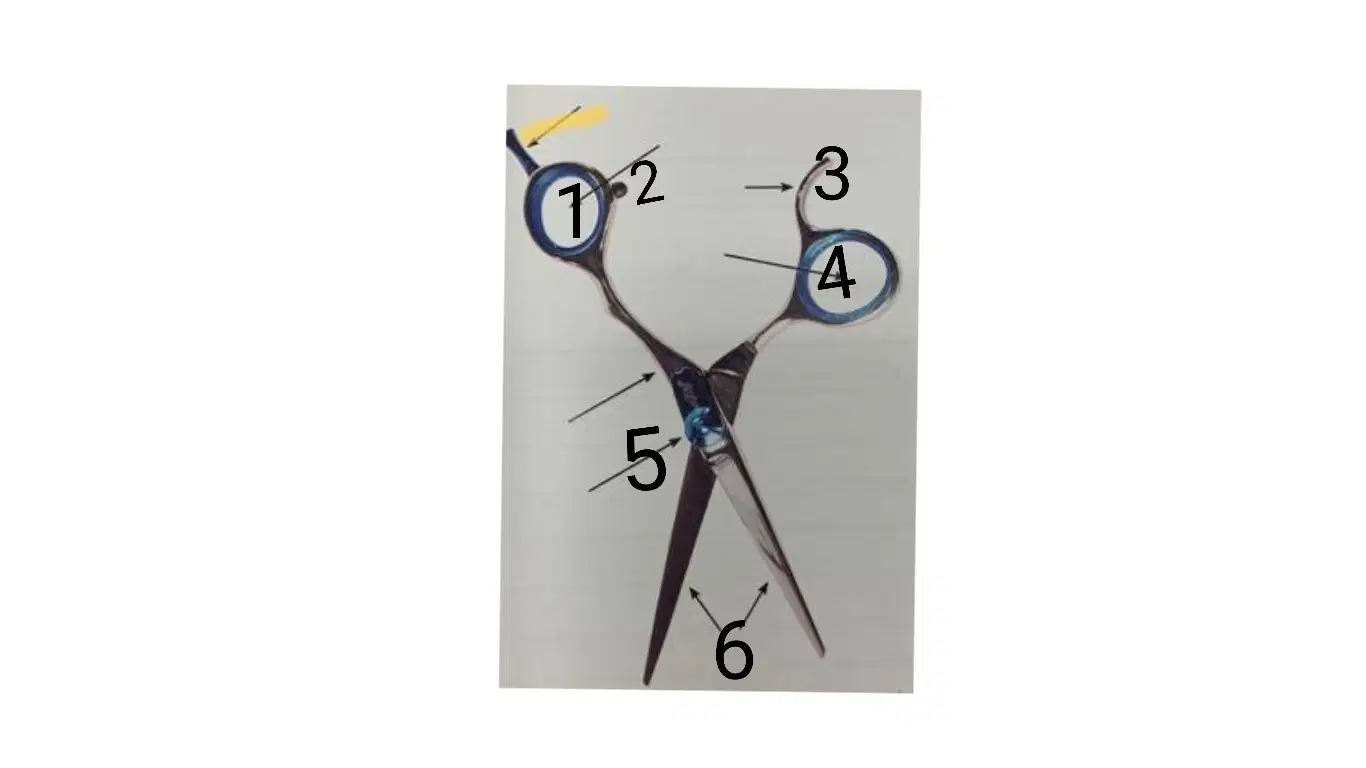
Which is located at #1
Tang
Cutting edge
Gauge
Ring finger hole
The ___ is a visual line in the haircut where the ends of the hair hang together.
Distribution
Weight line
Bang
Tension
A haircut where the stylist cuts off all heat damage, relaxed, or chemical treated hair
Distribution
point cutting
Notching
Big chop
When you part the haircut in the opposite way that you cut it, at the same elevation, to check for line
and shape precision, this is called ___.
Texturizing
Cross-checking
Tension
point cutting
A ___ is a tapered haircut where the hair transitions
from one length to the next.
Fade
Hair color
Texturizing
Notching
__ is the process of removing excess bulk without shortening
the length of the hair.
Distribution
Point cutting
Cross-checking
Notching
A technique performed on hair ends using the tips, or points, of the shears to create a broken
edge is __.
Bang
Big chop
Point cutting
notching
__ impacts hair cutting by giving the illusion of length, density, or brightness.
hair color
bang
fade
layers
An aggressive version of point cutting that can be done with straight or
notching shears, used to create a chunkier effect.
distribution
tension
notching
texturizing
__ create movement and volume in the hair by releasing/removing weight.
layers
point cutting
distribution
tension
The area where the hair lies between the two front corners or between the
outer corners of the eyes is the __ area
big chop
layers
weight line
bang
The pressure applied when combing and holding a subsection of hair, created by
stretching or pulling the subsection
Tension
distribution
cross-checking
layers
Where and how the hair moves over the head, especially in the fringe area is referred to as__.
point cutting
texturizing
tension
distribution
Rockwell hardness higher than __ can make the shears too hard.
86
63
43
12
Type of shear made by pouring molten steel into a mold; after it cools, it takes
the shape of the mold.
double shear
hard shear
cutting shear
cast shear
__ shears are mainly used to remove bulk from the hair and are not recommended
to use on curly hair unless the client has low density.
cast
texturizing
sharpening
razor
Hair cutting shears are mainly used to cut blunt or __ lines in hair.
elevated
diagonal
straight
curved
according to your milady textbook, haircutting shears are also know as...
clippers
texturizers
cutting razors
scissors
All professional shears are made of __
steel
carbon
titanium
iron
The term "gauge" refers to the __.
Hardness level
Hardrock steel
Rockwell hardness
Rockwell steel
Shears made by hammering or pressing metal into a finished shape, where the
metal is heated between 2,100 and 2,300 degrees Fahrenheit are __.
plastic
forged
tin
aluminum
__ shears are less expensive to produce.
cast
forge
professional
pressed
The part of the blade that cuts the hair is the __.
cutting knob
shear edge
slicing edge
Cutting edge
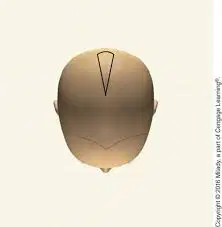
label it
horse shoe
pivoting
radial
profile
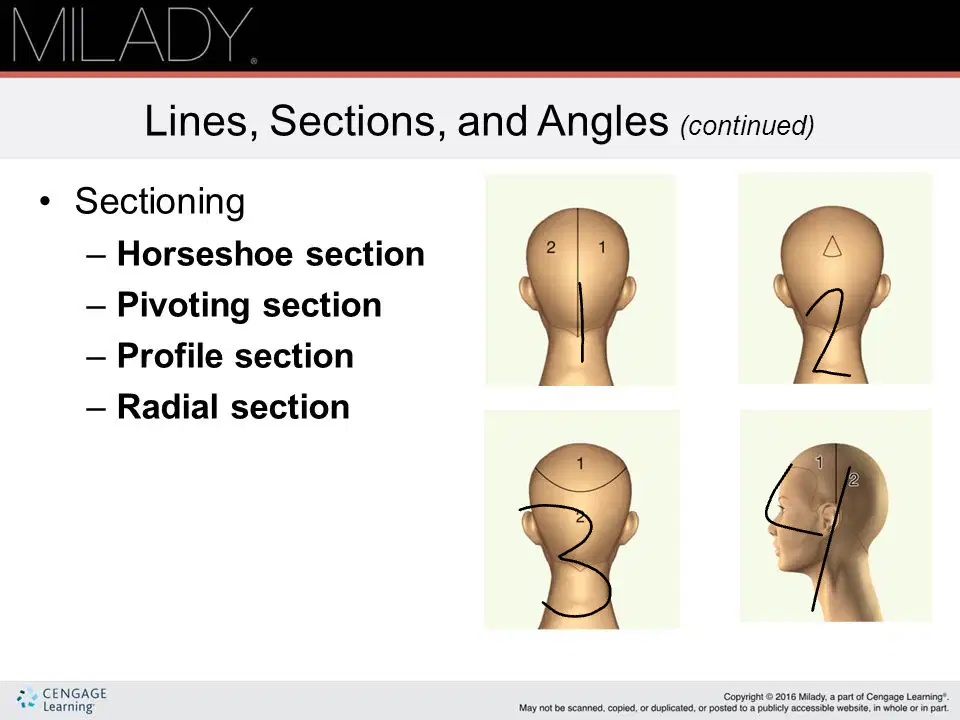
label #1
pivoting
profile
horse shoe
radial
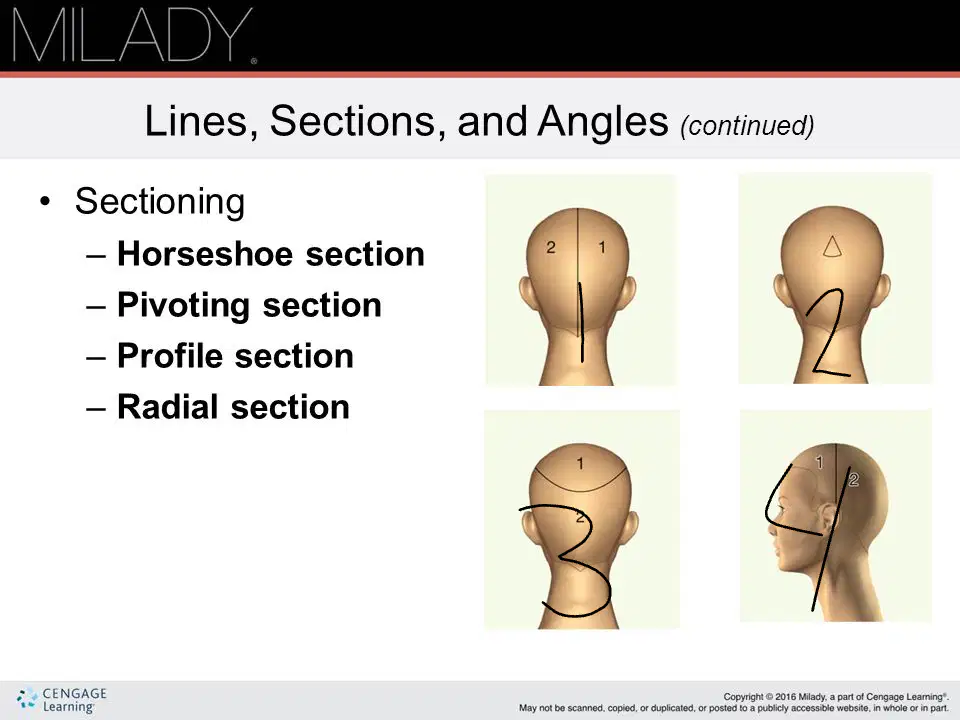
label #4
profile
pivoting
radial
horse shoe
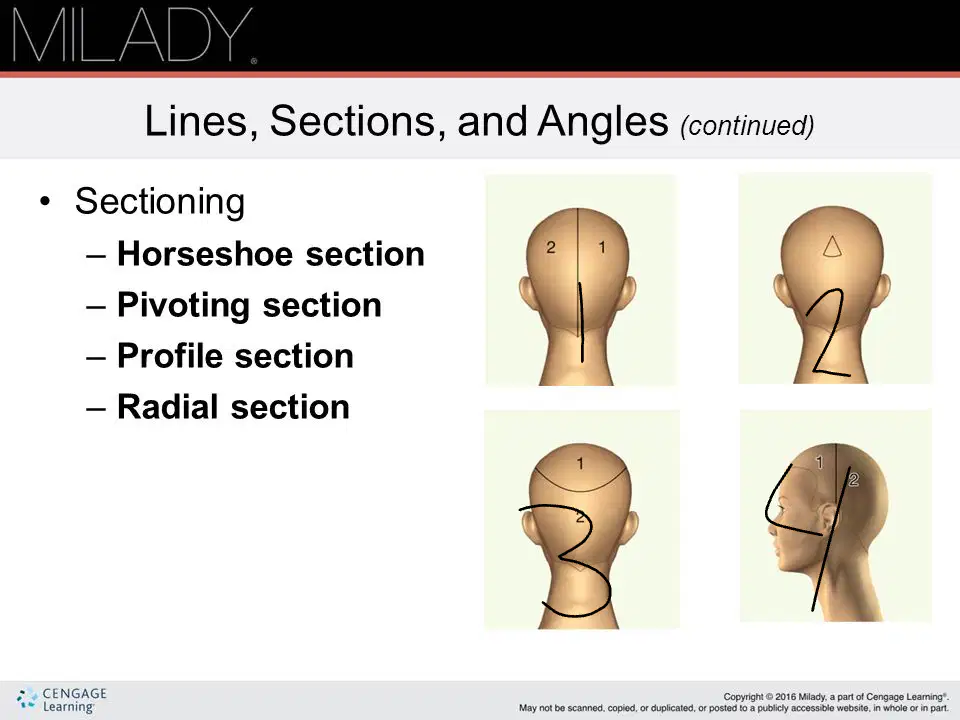
label #3
profile
pivoting
radial
horse shoe
A haircut with a visual buildup of weight in which the hair ends appear to be stacked is an example of which of the
four basic haircuts??
layered haircut
graduated haircut
blunt haircut
long-layered haircut
When a cosmetologist combs hair away from its natural falling position before cutting
in order to increase a hair design's length, the cosmetologist is using __
elevation
over direction
haircut sections
finger angles
The __ is the direction in which hair grows from the scalp and is also
called the natural falling position
growth pattern
hairline
texture
nape
Precision haircutting involves being precise in your haircut
and ___.
establishing a cutting line
connecting haircut lines
applying a systematic plan
frequently sharpening hair-
cutting shears
Coarse hair sticking out when cut too short is an example of the role
____ plays in the behavior of hair.
density
texture
wave pattern
growth pattern
what is the most appropriate procedure for a stylist performing a blunt haircut??
Hold the sections between the fingers with moderate tension to ensure the guideline is maintained.
Begin the cut with the crown area to establish a guideline, then move around the head to the back.
Establish a guideline on a back section, and cut from the back center to the ears before cutting the sides.
Tilt the client's head forward when cutting the back, and assume the natural falling position as the sides are incorporated.
An important element in creating a strong foundation and consistency in haircutting
and creating shapes is the use of ___.
corners
angles
long layers
graduation
the most common used elevations are___ and ____.
90 and 45
35 and 80
45 and 0
95 and 45
A stylist is discussing a new hairstyle with a client, who describes a style that must use layers. In order to
create the layered style, what type of guideline should the stylist use?
interior
traveling
starionary
perimeter
Which type of haircut section separates the head at the parietal ridge to below the crown.
profile section
horse shoe section
radial section
pivoting section
which scenario best describes a situation in which a cosmetologist must consider wave and curl patterns
when making cutting decisions?
They decide to cut the hair longer to prevent the scalp showing through.
They decide to cut the hair dry in order to see the true shape of the hair.
They decide to use smaller subsections to complete the haircut.
They decide to cut the hair longer to avoid the hair sticking out.
best definition for finger angle is..
The angle stylists hold their
fingers when cutting the line that creates the end shape of the hair.
The line at which stylists hold the hair that divides the hair at the scalp into small working areas
The line a hair subsection forms that determines the length the hair will be cut.
The degree at which a subsection of hair is held from the head when cutting
Each of the following is a reason cosmetologists should study and have a thorough understanding
of haircutting EXCEPT:
Knowing the fundamentals of haircutting allows a cosmetologist to understand advanced haircutting techniques.
proving clients with an easy-to-style and maintain haircut will make them happy and have them return for future services.
Hair cutting is the basic fundamental skill upon which all cosmetology services are built.
Understanding haircutting helps a cosmetologist create or duplicate a haircut from a photo.
___, Also known as projection or lifting, is the degree at which a subsection of hair is held from the head when cutting.
graduation
elevation
beveling
sectioning
Which type of comb is mainly used to detangle the hair??
barber comb
tail comb
wide-tooth comb
all-purpose comb
(a) is when the hair contracts or lifts through the process of drying.
Good haircuts begin with an understanding of the shape of the head,
also referred to as head shape or head (a)
___is based on the thickness or diameter of each hair strand, usually classified as coarse, medium,
and fine.
angle
wave pattern
hair texture
hair porosity
The direction in which the hair grows from the scalp, also known as the natural
fall position is the ___.
growth pattern
wave pattern
growth measurement
cowlick growth
Two basic lines used in haircutting are straight and ____.
horizontal
curved
zig-zag
circular
What determines the length the hair will be cut? They can be located at the perimeter
or interior of the cut.
(a)
Occurs when you comb the hair away from it's natural falling
position.
(a)
The area at the back part of the neck where hair is located
below the occipital bone
Crown
Nape
Apex
Parietal ridge
A triangular section that begins at the apex and ends at the four
corners; also known as "fringe"
bang
crown
parietal ridge
line
A thin, continuous mark used as a guide
line
angle
part/parting
section
Created when space between two lines or surfaces
intersects as a given point.
section
part/parting
Angle
line
The line dividing the hair at the scalp, separating one section of hair
from another.
line
part/parting
section
angle
The working area that the hair is separated into
prior to cutting.
Section
angle
part/parting
line
The bone that protrudes at the base of the skull.
Occipital bone
parietal ridge
crown
apex
The area between the apex and the back of the parietal ridge
apex
The crown
occipital bone
nape
Area known as the widest area of the head; also called the "crest area"
Apex
occipital bone
Parietal ridge
crown
The area known as the highest point on the top of the head.
Apex
crown
nape
bang
Why do we use sections during haircutting??
To maintain control during haircut
So we don't mix up the hair
Both A and B
Neither A and B
Shapes are created by____.
Precision cut
Angles
Part
Lines
____are workable areas that the hair is separated into before cutting.
Sections
parting
Lines
haircuts
_____is a systematic plan that when combined with haircutting principles helps you better understand
how to approach any haircut, apply basic haircutting techniques, and be familiar with haircutting tools
beveling
techniques
Precision cut
Angles

