
 Worksheets
Piaget's Stages of Cognitive Development
Total questions: 45
Worksheet time: 31mins
Who is the creator of "Stages of Cognitive Development"?
Jean Patry
Jean Piaget
Jean Bilog
Jean Grey
Cognition is mental action or process of acquiring knowledge and understanding through thought, experience, and the senses. What do you think is the profession of Sir Jean Piaget?
Psychic
Psychopath
Psychologist
Sweet but Psycho
It is the stage in cognitive development that corresponds in birth to infancy?
Pre-Operational Stage
Sensorimotor Stage
Concrete-Operational Stage
Formal Operational Stage
What do you think are the ages that covers Concrete-operational Stage?
7-9 years old
8-11 years old
6-10 years old
age doesn't matter
It is the final stage of cognitive development of Piaget
Sensorimotor Stage
Pre-operational Stage
Concrete-operational Stage
Formal-operational Stage
The stage in Piaget's Theory where a child have the ability to systematically solve a problem in a logical and methodological way.
Sensorimotor Stage
Preoperational Stage
Concrete Operational Stage
Formal Operational Stage
It is a stage in Piaget's Theory where a child understand the world by coordinating sensory experiences.
Sensorimotor Stage
Preoperational Stage
Concrete Operational Stage
Formal Operational Stage
Piaget argued that children develop through adaption - they adjust to the world as they experience new things. True or False?
True
False
Problem solving and ______ are developed during the fourth stage, formal operational.
questioning
thinking
listening
reasoning
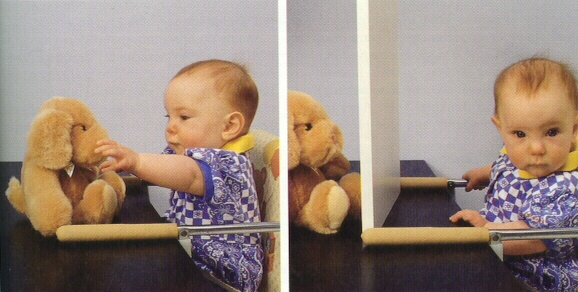
It is the mental action or process of acquiring knowledge and understanding through thought, experience, and the senses.
Cognition
Schema
Assimilation
Accommodation
Piaget's cognitive development has been instrumental in determining the structure of educational curricula.
True
False
All of the following are stages in Piaget's Cognitive Development Theory EXCEPT:
Sensorimotor Stage
Preoperational Stage
Concrete Operational Stage
Formal Operational Stage
Sensory Operational Stage

Which stage of cognitive development describes children who are beginning to think symbolically and incorporate pretend play?
Sensorimotor Stage
Preoperational Stage
Concrete Operational Stage
Formal Operational Stage
Although both glasses contain the same amount of soda, 5-year-old Tammy mistakenly believes that her short, wide glass contains less soda than her brother’s tall, narrow glass. Which stage does Tammy belong to?
Sensorimotor
Preoperational
Concrete Operational
Formal Operational
After Liz's father hides her bottle under a blanket, she does not attempt to retrieve it, believing it is gone. Which stage does Liz belong to?
Sensorimotor
Preoperational
Concrete Operational
Formal Operational
Betsy believes grass grows out of the ground to protect her if she falls when she is playing outside. Which concept is best illustrated in Betsy's case?
Object permanence
Conservation
Egocentrism
Mathematical transformations
Bryant is planning to ask his mom if he can borrow her car tonight. He is thinking about all of the possible reasons she might state for not letting him use the car, and planning a logical reply to each of these possible objections. Which stage does Bryant belong to?
Sensorimotor
Preoperational
Concrete Operational
Formal Operational
Beatriz and Elise’s teacher ask if they know who is running for president and they each respond correctly. However, when the teacher asks about possible outcomes if a particular candidate were to be elected, the girls cannot think of an answer. Which stage do Beatriz and Elise likely belong to?
Concrete Operational
Formal Operational
Jorge's dad cut his hot dog into four pieces and his brother's into six pieces. Jorge does not get upset because he knows that even though it might look like his brother has more, they are both eating the same amount of food. Which concept does Jorge's case best illustrate?
Object permanence
Conservation
Egocentrism
Pretend play
What is the second stage of Jean Piaget's stages of cognitive development?
Concrete Operational
Sensorimotor
Formal Operational
Preoperational
According to Piaget around what age are children in the preoperational stage, in which they engage in pretend and dramatic play?
Birth - 2 Years
2 - 7 Years
7 - 11 Years
12+ Years
In which stage do children develop the ability to think abstractly and morally?
Sensorimotor Stage
Preoperational Stage
Concrete Operational Stage
Formal Operational Stage
What term is used to describe a child's ability to know that objects continue to exist even though they can no longer be seen or heard?
Conservation
Metacognition
Object Permanence
Morality
What is the idea that amounts stay the same even if they are presented with different shapes or sizes?
Conservation
Metacognition
Object Permanence
Morality
How can Piaget's theory of Cognitive Development be applied in a classroom setting?
Setting appropriate expectations for students at different cognitive stages.
Creating adequate lesson plans that allow students to learn and get engaged at their cognitive stage.
Remedying student conflicts that may arise between students at different cognitive stages.
All of the above
In which stage do children most engage in egocentric thinking?
sensorimotor
preoperational
concrete
formal
Bryant is planning to ask his mom if he can borrow her car tonight. He is thinking about all of the possible reasons she might state for not letting him use the car, and planning a logical reply to each of these possible objections. Which stage does Bryant belong to?
Sensorimotor
Preoperational
Concrete Operational
Formal Operational
Jorge's dad cut his hot dog into four pieces and his brother's into six pieces. Jorge does not get upset because he knows that even though it might look like his brother has more, they are both eating the same amount of food. Which concept does Jorge's case best illustrate?
Object permanence
Conservation
Egocentrism
Pretend play
A child knows that 3 + 2 = 5; however they do not understand that 5 - 2 = 3. They have NOT yet mastered which concept?
Schemas
Object Permanence
Conservation
Reversibility
Pick 2: Children in the sensorimotor stage ...
are 0 to 2 years old
use their senses and movements to learn
can sort things according to size
I don't know!
Which two are sub-stages of the Pre-operational Stage?
Formal concrete stage
Symbolic function stage
Intuitive thought stage
Animism stage

What cognitive operation is the child NOT able to do in the picture?
Symbolic play
Decentre
Animism
Conservation
Children develop object permanence in which stage?
Sensorimotor (0-2)
Pre-operational (2-7)
Concrete operational (7-12)
Formal Operational (12+)
In which stage are children able to do many skills but still need to see physical objects to apply them?
Sensorimotor (0-2)
Pre-operational (2-7)
Concrete operational (7-12)
Formal Operational (12+)
Pretending that one object represents another (like using a banana as a phone) is an example of...
Symbolic play
Decentre
Animism
Conservation
In which stage do children show animism and symbolic play?
Sensorimotor (0-2)
Pre-operational (2-7)
Concrete operational (7-12)
Formal Operational (12+)
In which stage do children start to understand abstract ideas (things we cannot touch or see)?
Sensorimotor (0-2)
Pre-operational (2-7)
Concrete operational (7-12)
Formal Operational (12+)
Which is an example of an understanding abstract thought?
morality (knowing right and wrong)
seriation (putting objects in order)
conservation (knowing appearance does not equal amount)
object permanence (knowing things exist even when out of sight)

