Wayground logo

Free Printable Worksheets

Font size

S
M
L
XL
Worksheets

Biodiversity

Total questions: 50

Worksheet time: 50mins
Name
Class
Date
1.

What does a food web represent?

a)

All connections of energy flow throughout all organisms in a habitat.

b)

The specific ways that mutualism is carried out.

c)

A single pathway or energy flow between organisms.

d)

How carnivores get their food.

2.
The arrows in a food chain or web represents what?
a)
They point to the organism that is being eaten.
b)
It shows how sunlight flows within an ecosystem.
c)
They show what direction the energy is flowing between organisms. 
d)
They represent how water is transferred within a habitat.
3.
An energy pyramid represents what?
a)
How much sunlight is available for the ecosystem to use. 
b)
How much energy a particular organism needs. 
c)
How much energy is needed to build a pyramid. 
d)
The amount of energy available to the next 'feeder' in a food web.
4.
How much energy is available to be passed on to the next trophic level in an ecosystem?
a)
100%
b)
10%
c)
50%
d)
75%
5.
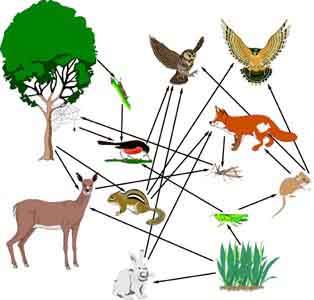
The rabbit in this food web would be considered a:
a)
Decomposer
b)
Producer
c)
Secondary Consumer
d)
Primary Consumer
6.
The fox in this food web would be considered a:
a)
Tertiary Consumer
b)
Producer
c)
Secondary Consumer
d)
Primary Consumer
7.
The mouse in this food web would be considered a:
a)
Primary Consumer
b)
Producer
c)
Tertiary Consumer
d)
Secondary Consumer
8.
symbiotic relationship in which both organisms benefit
a)
competition
b)
Mutualism
c)
nitrogen fixation
d)
energy pyramid
9.
A living relationship between two species in which one organism is harmed is called...
a)
mutualism
b)
commensalism
c)
parasitism
d)
niche
10.
A group of organisms of the same species living in the same area are called a/an ________.
a)
community
b)
habitat
c)
population
d)
ecosystem
11.
All of the living and nonliving things in an area that interact with each other are called a/an ______.
a)
community
b)
habitat
c)
population
d)
ecosystem
12.
What are the nonliving parts of the ecosystem? This includes temperature, water, sunlight, air, and soil.
a)
biotic factors
b)
communities
c)
abiotic factors
d)
microorganisms 
13.

What is the branch of science that deals with the study of living things and their relationship with the environment?

a)

Anthropology

b)

Ecology

c)

Ecosystems

14.

All living things or organisms in an ecosystem are

a)

None

b)

biotic factors

c)

abiotic factors

15.

What type of organism makes its own food?

a)

Autotroph

b)

Heterotroph

16.

What is asparagus?

a)

autotroph

b)

heterotroph

17.

What is a lion?

a)

autotroph

b)

heterotroph

18.

Physical characteristics that help an organism survive are called:

a)

Habitats

b)

  Extinction.

c)

Adaptations.

d)

  Learned behaviors.

19.
When a baby kitten becomes an adult cat, this is an example of...
a)
energy metabolism
b)
growth and development
c)
response to stimuli
d)
having cells
20.

Living things are based on a universal genetic

code. What molecule is responsible for that code?

a)

RNA

b)

Lipid

c)

Protein

d)

DNA

21.

Maintaining a stable internal

environment is called

a)

homeostasis

b)

equilibrium

c)

balance

d)

evenness

22.
A reaction to a stimulus is a ______________.
a)
hiccup
b)
response
c)
metabolism
d)
homeostasis
23.

Identify the characteristic: green plants produce their own food through the process of photosynthesis.

a)

All living things use energy

b)

All living things contain cells

c)

All living things maintain homeostasis

d)

All living things grow and develop

24.

Identify the characteristic: A camel has eyelashes that work to keep the dust and sand out of its eyes.

a)

All living things adapt/respond to their environment

b)

All living things grow

c)

All living things have cells

d)

All living things use energy

25.
__________ is an organism that only eats plants for energy.
a)
Carnivore
b)
Herbivore
c)
Omnivore
d)
Terivore
26.
__________ is an organism that only eats meat for energy.
a)
Omnivore
b)
Borivore
c)
Herbivore
d)
Carnivore
27.
__________ is an organism that eats BOTH plants and animals for energy.
a)
Omnivore
b)
Darnivore
c)
Carnivore
d)
Herbiovre
28.

Organisms, like bacteria, insects and worms, that break down waste are called ___

a)

carnivore

b)

herbivores

c)

decomposers

29.
A mushroom is a 
a)
producer
b)
consumer
c)
decomposer
30.

Primary succession occurs in an area that has:

a)

Has Soil

b)

Has No Soil

c)

Has Some Soil

d)

none of these

31.

___ are the first organisms to colonize an area and begin the process of ecological succession.

a)

foundational organisms

b)

introductory organisms

c)

primary organisms

d)

pioneer species

32.

Which of the following is the correct order of ecological succession?

a)

grass - shrubs - lichens - trees

b)

lichens - shrubs - grasses - trees

c)

lichens - grasses - shrubs - trees

d)

grasses - lichens - shrubs - trees

33.

What is an increase of biodiversity over time, after a natural or man made disturbance?

a)

ecological recession

b)

climax recession

c)

ecological succession

d)

climax succession

34.

What is the term that describes a steady and stable community?

a)

peak community

b)

turf community

c)

climax community

d)

disturbed community

35.

Which is faster: Primary or Secondary Succession?

a)

Primary Succession

b)

Secondary Succession

c)

Both Take The Same Amount of Time

36.
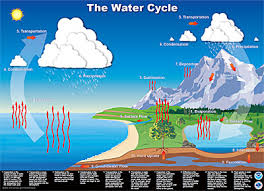
Which of these is an example of precipitation?
a)
snow
b)
air
c)
clouds
d)
vapor
37.
Which stages does liquid water from the ocean turn into water vapor?
a)
condesantion
b)
evaporation
c)
precipitation
d)
run off
38.
The hydrologic cycle continuously recycles _______ through Earth's systems.
a)
rocks
b)
water
c)
oxygen
d)
carbon dioxide 
39.
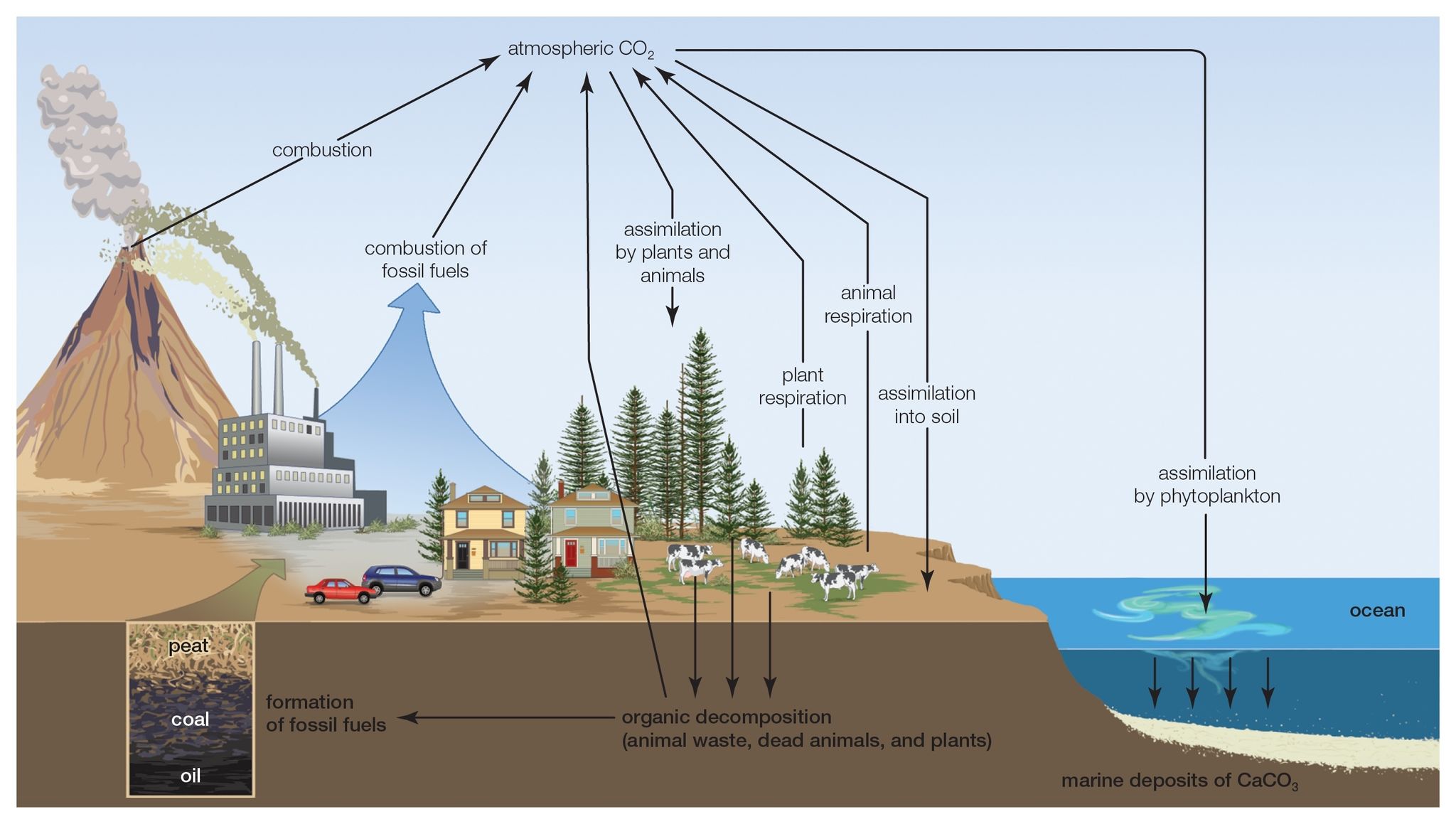
Which of the following removes carbon from the atmosphere?
a)
Combustion
b)
Respiration
c)
Photosynthesis
d)
Death
40.
Organisms that do not decompose can be buried and become what?
a)
water
b)
nutrients
c)
air
d)
fossil fuels
41.
Which process converts carbon in the form of sugar into carbon dioxide gas?
a)
Bioremediation
b)
Photosynthesis
c)
Respiration
d)
Transpiration
42.
Which of the following add carbon dioxide to the atmosphere?
a)
volcanoes
b)
combustion of fossil fuels
c)
animal and plant respiration
d)
all of these
43.

Nitrogen fixation...

a)

animals eat the plants and other animals that contain nitrogen and release it through their waste

b)

Bacteria in the soil and lightning in the atmosphere “fix” the nitrogen

c)

Once in the ground, bacteria in the soil also nitrify the nitrogen

d)

plants absorb nitrogen through their roots and return it back to the atmosphere

44.
What is the difference between biotic and abiotic?
a)
Biotic are non-living things
b)
Abiotic are living organisms
c)
Biotic is life,
Abiotic is non-living
d)
Biotic is non-living, Abiotic is living
45.
 Which biome is more likely to survive a change in the environment?
a)
High (rich) biodiversity
b)
Low (poor) biodiversity
46.
What does biodiversity mean?
a)
Only one species in an area.
b)
The different amount of species in an area
c)
All abiotic life
d)
Nitrogen fixation
47.
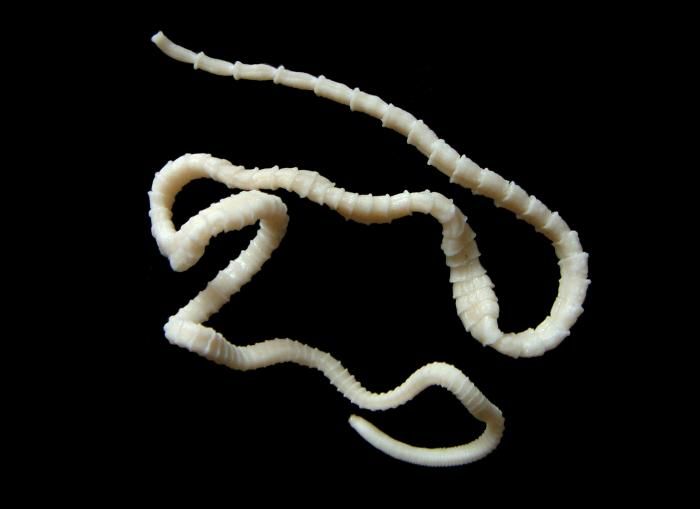
A tapeworm and a cat have this type of relationship.
a)
mutualism
b)
parasitism
c)
commensalism
d)
competition
48.

What is an invasive species?

a)

an organism that IS native to an area and causes harm to the environment/humans

b)

an organism that is NOT native to an area and causes harm to the environment/humans

c)

an organism that is NOT native to an area and helps the environment/humans

d)

an organism that IS native to an area and helps the environment/humans

49.

The primary cause of invasive species introduction is

a)

too much food

b)

human actions

c)

weather events

d)

asteroids

50.

What is a keystone species?

a)

A species that helps to hold an ecosystem together

b)

A species that lives in or around rocks

c)

Keys and stones have nothing to do with ecology

d)

A keystone isn't a living thing, it's just a stone