
Font size
 Worksheets
Regents Chemistry- Unit 2 REVIEW
Total questions: 53
Worksheet time: 1hrs 8mins
Dry ice is solid carbon dioxide, or CO2. Dry ice may be used as a cooling agent and contains two oxygen atoms bonded to a carbon atom. Dry ice is a ___________________ .
pure substance
mixture
Instant coffee is made by dissolving a powder in hot water. Instant coffee is a ___________________ .
pure substance
mixture
The substances in this mixture DO NOT blend smoothly throughout, and the individual substances that compose the mixture can be detected or seen.
Homogeneous mixture
Heterogeneous mixture
Pure substance
Suspension
The substances in this mixture have been mixed together so well that the different parts will not separate on their own.
Homogeneous mixture
Heterogeneous mixture
Pure substance
Suspension
Solution
Given the balanced equation representing a reaction:
C7H6O2 + O2 → CO2 + H2O.
If 45 grams of C7H6O2 and 8 grams of O2 react completely, forming 42 g of CO2, what is the total mass of H2O produced?
11 g
45 g
53 g
42 g
An element and a compound are
homogeneous mixtures
heterogeneous mixture
substances
solutions
Kool aid, a liquid containing water mixed evenly with kool aid powder is a
element
compound
heterogeneous mixture
solution
not able to be broken down into parts
[check all that apply] Pure substances include:
Elements
Homogeneous Mixtures
Compounds
Heterogeneous Mixtures
An element is?
Chemically combined
Pure substances that can be broken down
Pure substances that cannot be broken down into simpler substances
One or more elements chemically combined.


This diagram represents...
An element
A molecule
A compound
A mixture of elements and compounds

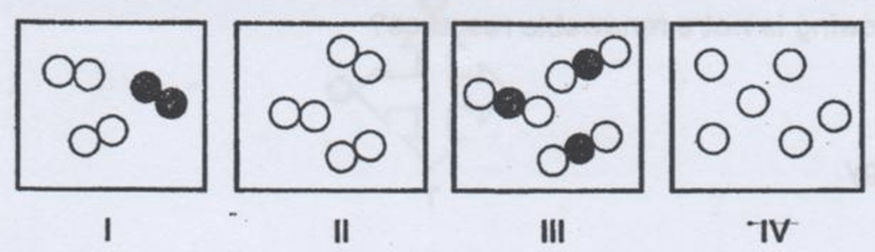
In the diagrams provided, the circles of different colors represent the atoms of different elements. Which diagram represents a mixture?
I
II
III
IV
One pure substance boils, escapes, condenses, and gets collected as a liquid.
Distillation
Filtration
Decantation
Recrystallization
Smaller particles pass through a filter paper, larger particles get trapped.
Distillation
Filtration
Decantation
Recrystallization

Distillation
Centrifugation
Filtration
Chromatography

Which will heat up faster?
copper
granite
iron
basalt
Which of the following best explains why the sand at the beach is hotter than the water?
Sand has a higher specific heat than water.
Sand has a lower specific heat than water.
There is more water than sand at the beach.
There is more sand than water at the beach.
The amount of energy required to raise the temperature 1ºC for every gram is called____?
Thermal Energy
Specific Heat
Temperature
Kinetic Energy
A 15.75-g piece of iron absorbs 1086.75 joules of heat energy, and its temperature changes from 25°C to 175°C. Calculate the specific heat capacity of iron.
0.46 J/goC
1.654 J/goC
2,567,446.875 J/goC
How many joules of heat are needed to raise the temperature of 10.0 g of aluminum from 22.0°C to 55.0°C, if the specific heat of aluminum is 0.903 J/g°C?
298 Joules
0.003 Joules
297 J/g°C
0.003 J/g°C
The specific heat(c) of copper is 0.38 J/g °C. What is the temperature change(∆t) when 100.0 Joules of heat(Q) is added to 20.0 grams?
13 °C
13.2°C
13.16 °C
Convert
450 K to Celsius723oC
277oC
177 oC
623oC
Which of the following substances is made up of particles with the highest average kinetic energy?
Fe(s) at 35ºC
Br2(l) at 20ºC
H2O() at 30ºC
CO2(g) at 25ºC
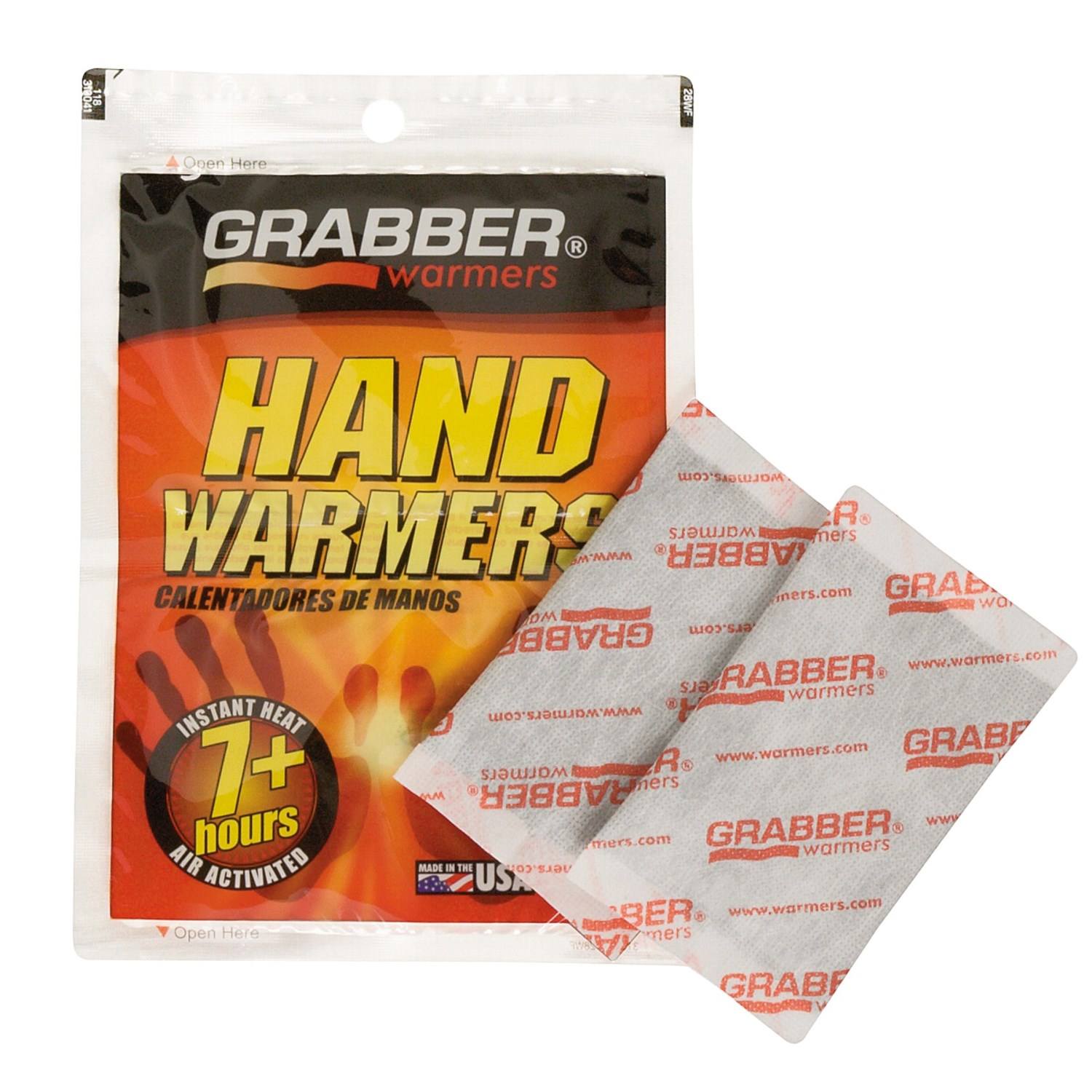
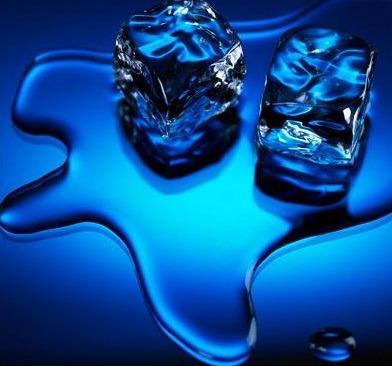
____ reactions usually feel cold.
endothermic
exothermic
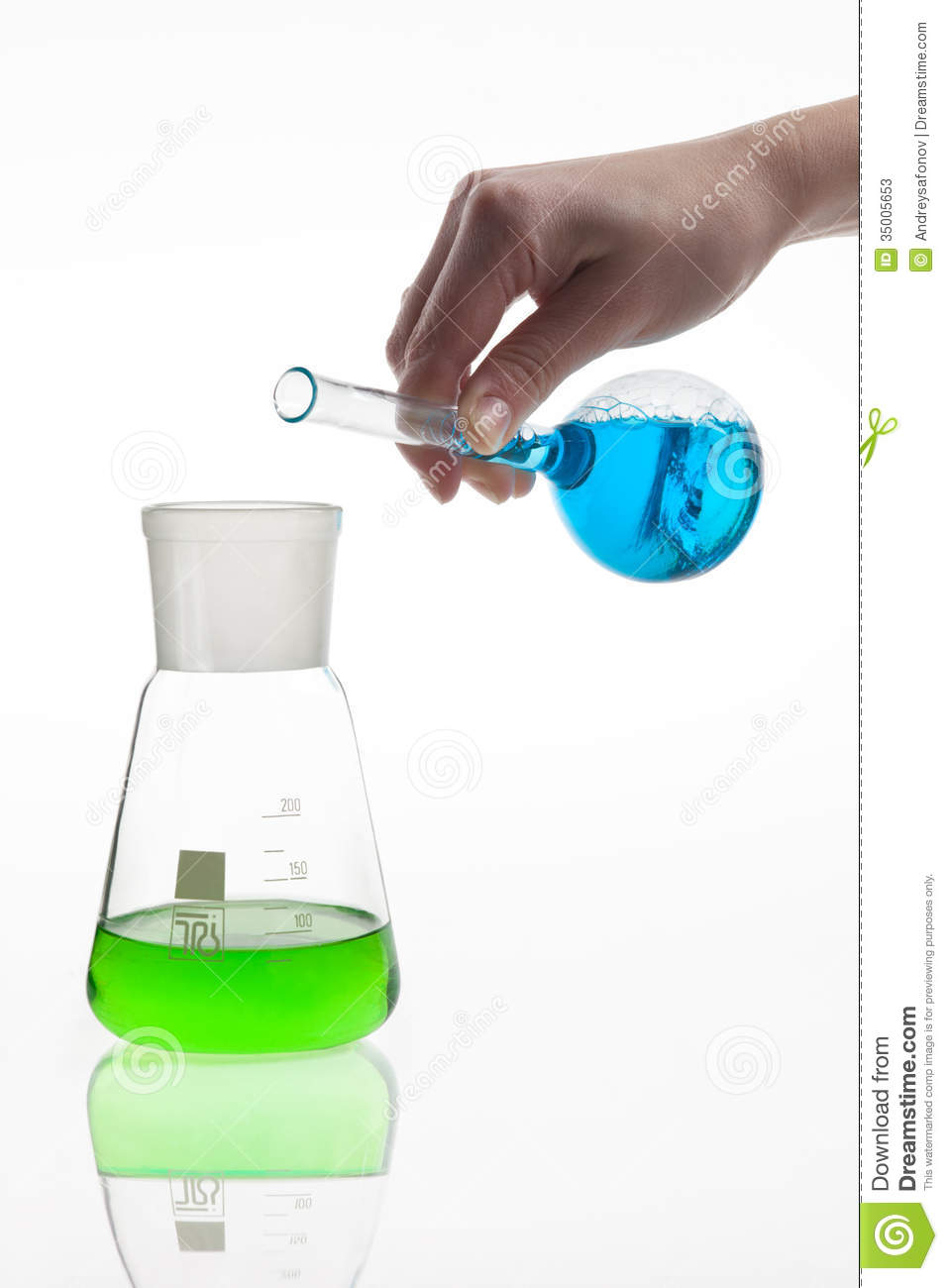
A student mixed two chemicals to allow them to react. The temperature before the reaction was 25 ° C. The temperature after the reaction was 18° C. Which of the following is true?
It is an exothermic reaction
It is an endothermic reaction
Temperature is...
A measure of average kinetic energy in a substance
The same as heat
A measure of the movement of the atoms in a substance
A measure of the average potential energy in a substance

In an isolated system, the amount of heat gained by one substance is exactly equal to the amount of heat lost by the second substance.
work equals change in kinetic energy
The law of conservation of energy
internal energy
Hubble's Law

