
 Worksheets
SKELETAL SYSTEM
Total questions: 20
Worksheet time: 10mins

Which of the following is not a bone that makes up the axial skeleton?
Sternum
Skull
Ribs
Clavicula
Based on the material from which it is made, cartilage can be divided into three, namely...
Cartilage, elastic, and osteons
Cartilage, hyaline and elastic
Hyaline, elastic, chondrin
Fibrous, hyaline, and elastic
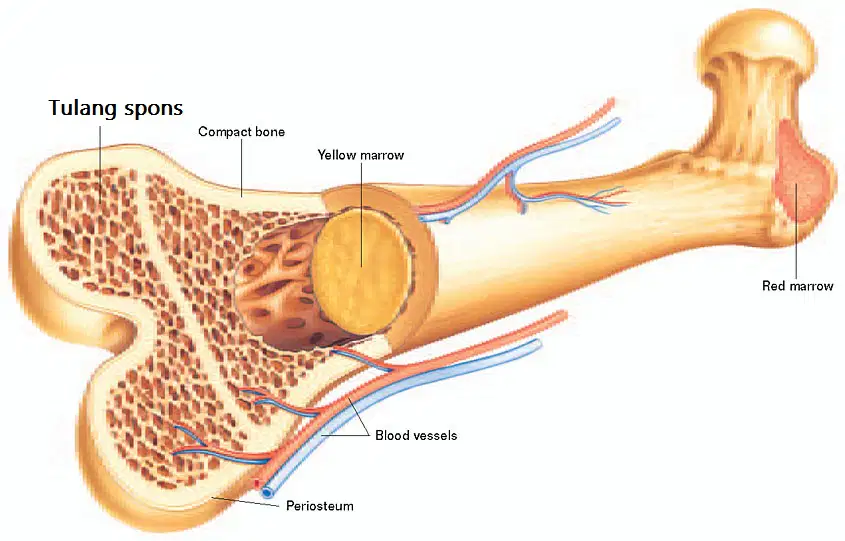
Bones are composed of two plates of spongy bone and compact bone which contains bone marrow, namely...
Cartilage
Flat bones
Short bones
Pipe bones
Based on its structure, bone tissue can be divided into 2 types, namely...
Flat bones and pipe bones
Cartilage and compact bones
Spongy bone and compact bone
Cartilage and hard bones

The human rib cage consists of...
7 pairs of true ribs, 3 pairs of false ribs and 2 floating ribs
7 pairs of true ribs, 7 pairs of false ribs and 2 floating ribs
2 pairs of true ribs, 7 pairs of false ribs and 2 floating ribs
3 pairs of true ribs, 7 pairs of false ribs and 2 floating ribs
The following are included in the functions of the body's skeleton, except...
Place of muscle attachment
As active movement
Passive movement tool
protect internal organs
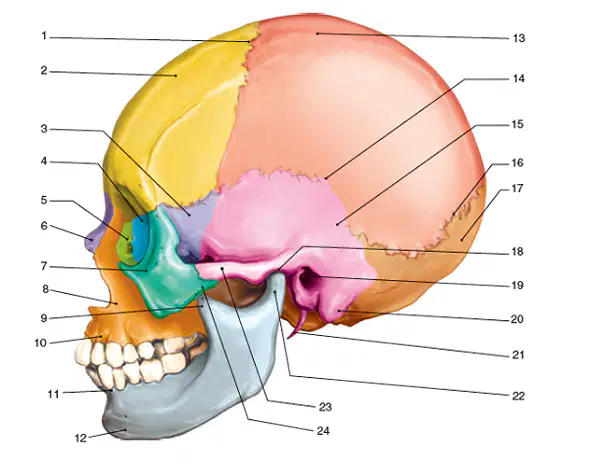
The picture beside is the anatomy of a human skull, numbers 12 and 15 are parts........
Frontal and Occipital
Parietal and Temporal
Temporal and Mandible
Temporal and Maxilla
The picture beside is the anatomy of a human skull, numbers 2 and 17 are .... and .....
Frontal and Occipital
Parietal and Occipital
Parietal and Mandible
Frontal and Maxilla
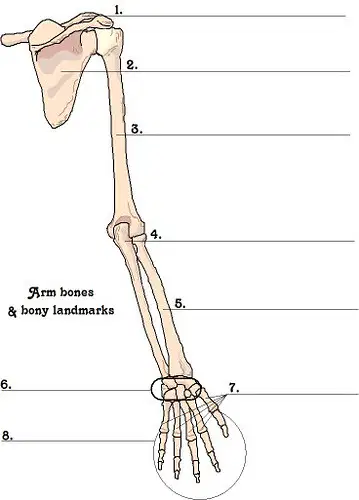
The picture to the side is a human arm skeleton, numbers 4 and 5 are .... and ....
Radius and Ulna
Ulna and Radius
Ulna and Humerus
Humerus and Ulna
The picture to the side is a human arm skeleton, numbers 1 and 2 are .... and ....
Clavicle and Scapula
Scapula and Clavicle
Clavicle and Humerus
Scapula and Ulna
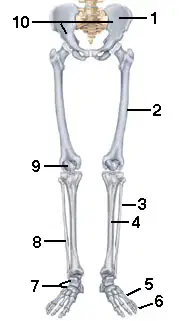
The picture beside is the skeleton of the human lower limbs, numbers 3 and 5 are .... and ....
Fibula and Meta tarsals
Fibula and Meta carpals
Fibula and Tibia
Fibula and Patella
The picture beside is the skeleton of the human lower limbs, numbers 1 and 7 are .... and ....
Fibula and Tarsals
Ilium and Tarsals
Fibula and Phalanges
Ilium and Tibia
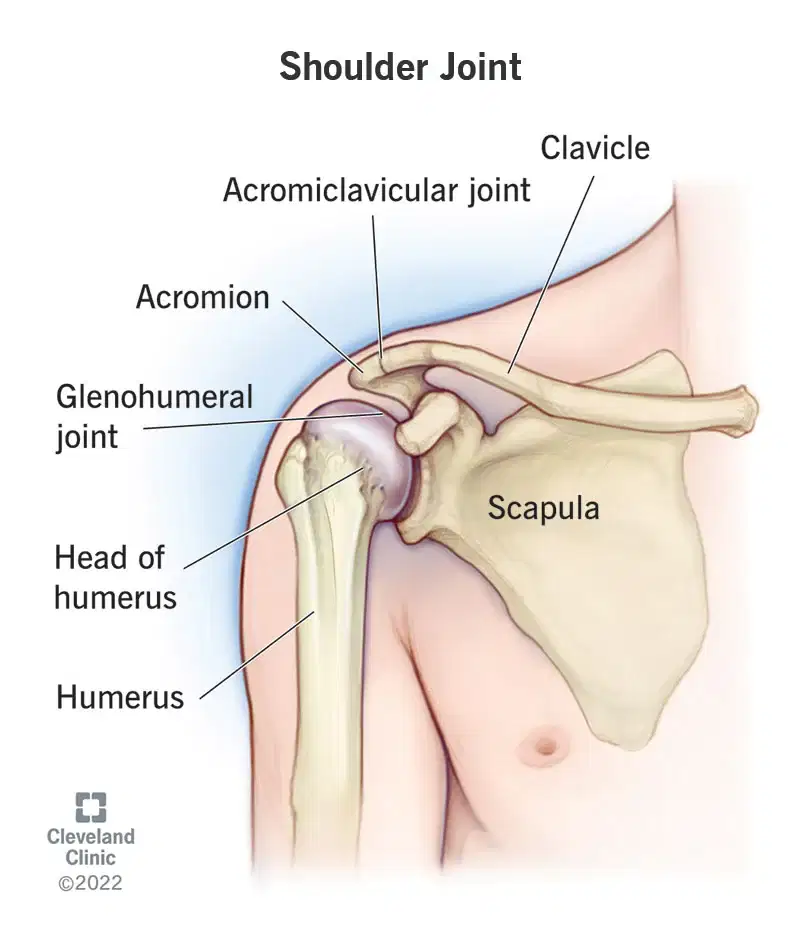
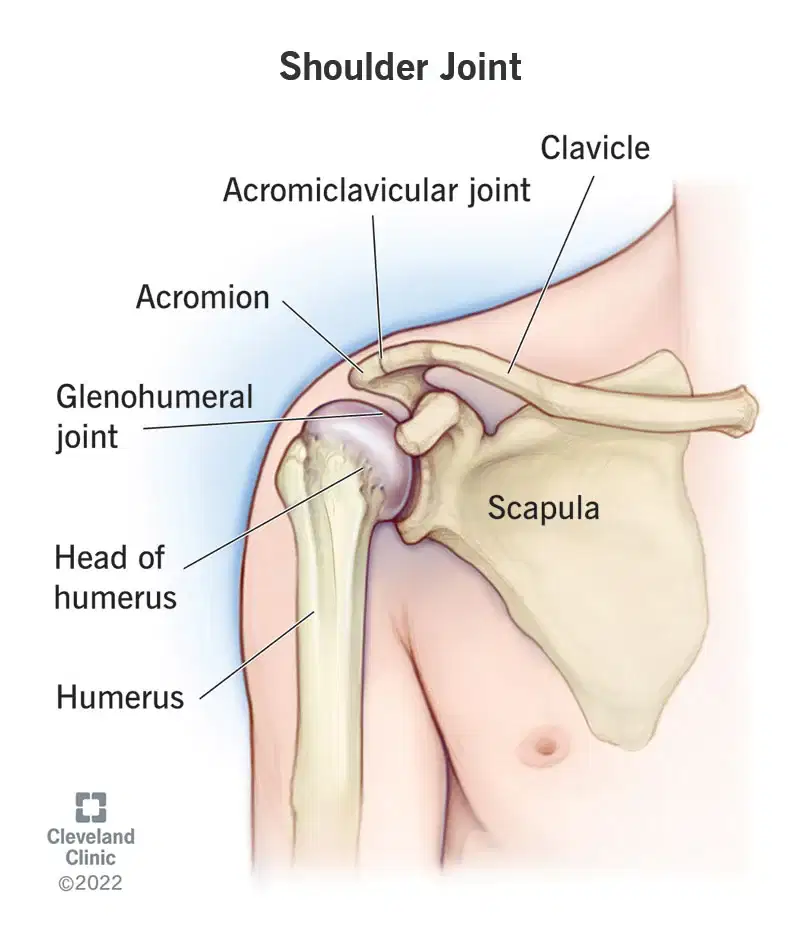
The connection between the bones at the base of the arm is...
Ball and socket joint
Saddle joint
Pivot joint
Ellipsoidal joint
The following answer that show an example of the hinge joint in our frame is....

The curvature of the spine towards the front due to incorrect posture is called...
Fracture
Kyphosis
Lordosis
Scoliosis
The joints that allow the most movement are called
Synovial
Fixed
Fibrous
Cartilaginous
A hinge joints allow....
A wide range of movements
Movement in only one direction
Rotation
Circumduction
What joints are characterized by a fluid filled cartilage disc that helps with their limited movement
Diarthrotic
Snyarthrotic
All joints
Amphiarthrotic
Fibrous joints are ....
Freely moveable
Immovable
Partially moveable
No movement
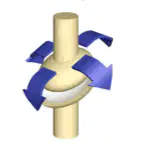
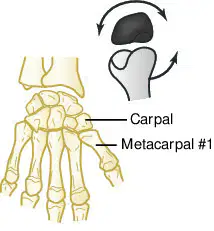
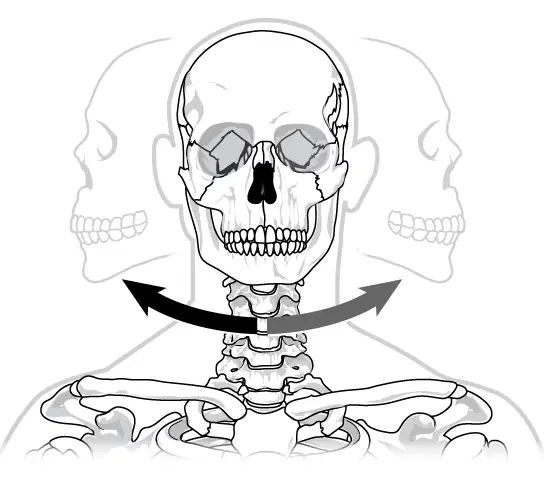
What joint is displayed in picture?
Pivot joint
Condyloid joint
Hinge joint
Plane joint

