
 Worksheets
GCSE U1 T3 Structure and Properties of Non-Metallic Substances
Total questions: 27
Worksheet time: 30mins
Name and describe the structure of most non-metallic substances.
Are covalent bonds strong or weak?
Strong
Weak
Property of molecular covalent substances resulting in alot of them being gases and liquids
(a)
Label the diagram
Strong covalent bonds
within molecules
Weak Van der Waals
between molecules
Label the diagram
Strong covalent bonds
within molecules
Weak
Van der Waals between molecules
What are the weak forces of attraction called that exist between molecules in molecular covalent substances
(a)
Why do molecular covalent substances have low melting and boiling points.
weak
Van der Vaal's forces
between molecules
do not require a lot
of energy to break
Explain why molecular covalent substances do not conduct electricity
because they solid
because they are not charged
because they are mainly gases
because there are no particles free to move and carry an electric current
What is an allotrope
different
forms
of the same element
in the same
physical state
What are the 3 allotropes of carbon in alphabetical order
(a)
Describe the structure of diamond
giant covalent structure
with each carbon
covalently bonded
to 4 others in a
tetrahedral arrangement
2 properties of diamond
Very high melting and boiling point
Low melting and boiling point
Does not conduct electricity
Conducts electricity
Which of the following properties are correct for Diamond
Soft
Rough
Hard
Very Hard
Use of Diamond
(a)
2 giant covalent substances that conducts electricity as it has delocalised electrons that are free to move and carry charge. Hint: 2nd word is 'and', substances are in alphabetical order.
(a)
Label the diagram of graphite
Covalent bond
carbon atom
Van der Waals
2 properties of graphite
High melting point
Slippery solid
Describe the structure of Graphene
Giant covalent structure with
each carbon covalently bonded to
3 others creating layers and
weak Van der Waal forces of
attraction exist between the layer
Graphite is giant covalent structure made of carbon with (a) covalent bonds to 3 others within the (b) and (c) Van der Waal forces of attraction (d)
A use of graphite is (a) (b) (c) (d) (e)
A use of graphite is
pe
nc
il
le
ad
Properties of graphene
Graphene has high electrical conductivity, excellent thermal conductivity, exceptional mechanical strength and high surface area.
Describe the structure of Graphene
A single-atom thick layer
of graphite
with strong covalent bonds between each carbon atom. The
atoms are arranged in
hexagons / two dimensional.
Substance that is 100 times stronger than steel but is very thin, light and inexpensive.
(a)
Uses of graphene
solar cells
touch panels
drill bits
in pencils
Match the following
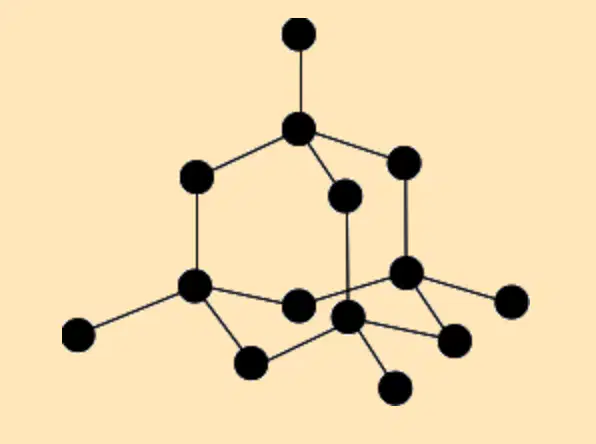
Diamond
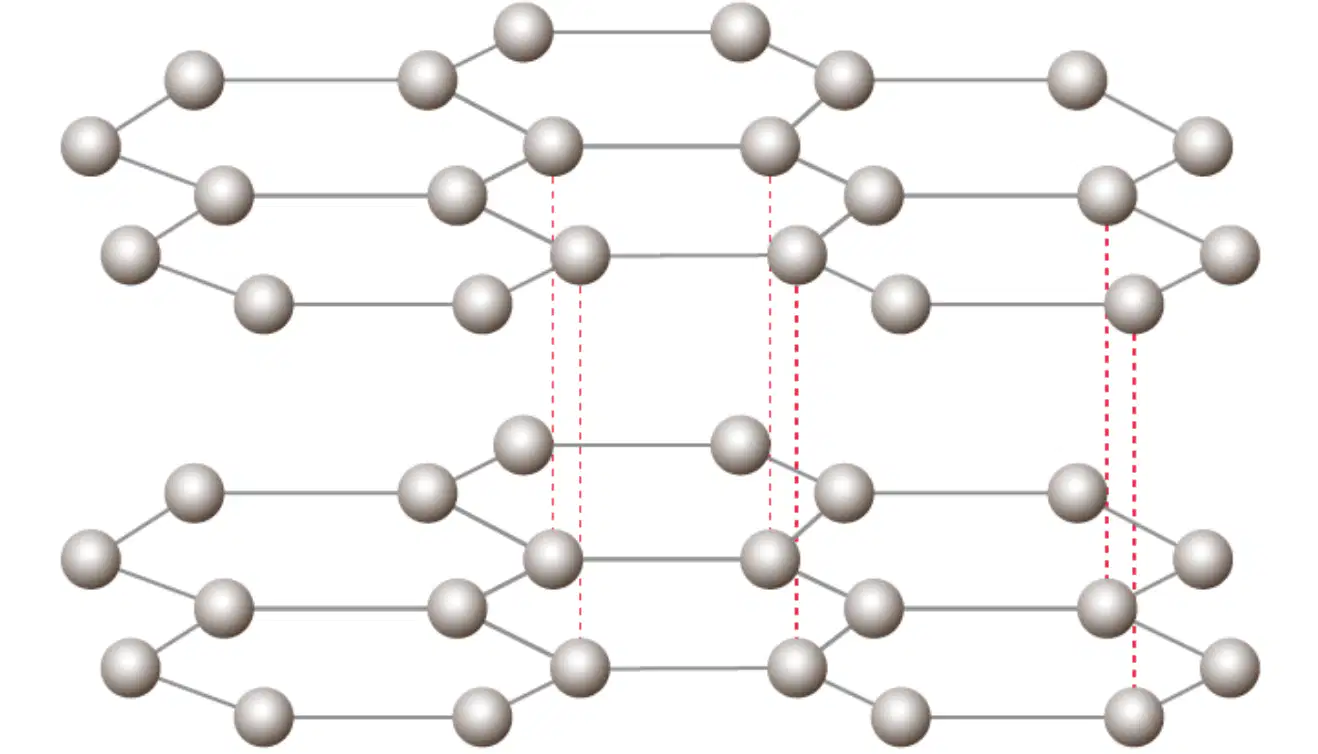
Graphite

Graphene

Methane
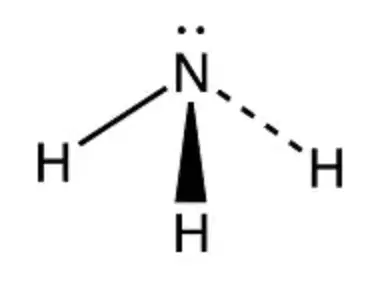
Ammonia
Graphite and graphene conduct electricity due to ___________ _________ that are free to move and carry charge.
(a)

