Wayground logo

Free Printable Worksheets

Font size

S
M
L
XL
Worksheets

The Earth

Total questions: 40

Worksheet time: 37mins
Name
Class
Date
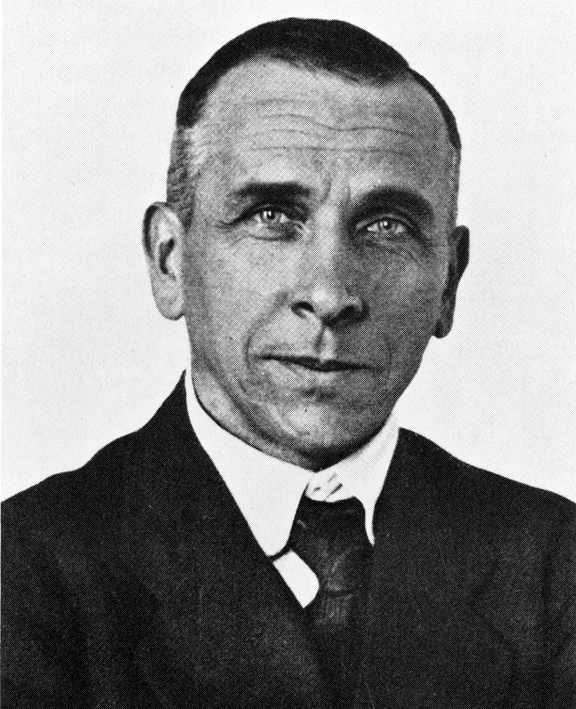
1.
Who is the person credited with developing the theory of continental drift?
a)
Harry Hess
b)
Galileo
c)
Alfred Wegener
d)
Newton
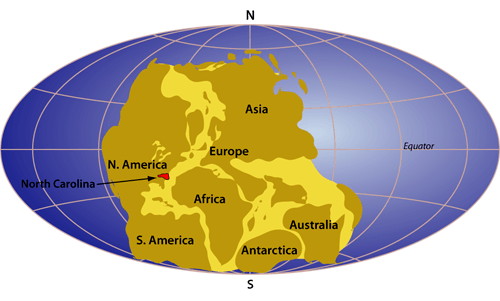
2.

What is this a picture of?

a)

plate tectonics

b)

continental drift

c)

Pangaea

d)

glacier scaring

3.
What does the theory of continental drift state?
a)
The continents were once joined in a super-continent and have moved over time
b)
Continents are stationary and do not move
c)
The Earth is broken into lithospheric plates that move due to convection currents
d)
none of the above
4.
According to Wegener's hypothesis of continental drift, 
a)
Earth's surface is made up of seven major landmasses
b)
the continents DO NOT move
c)
Earth is slowly cooling and shrinking
d)
the continents were once joined together in a single landmass
5.

Tectonic plates:

a)

can move towards each other

b)

can move away from each other

c)

can slide past each other

d)

All of the above

6.

What are Tectonic plates?

a)

Large moving pieces on Earth's surface that are made of rock.

b)

where two plates divide

c)

The inner core of the earth

d)

where magma rises up and solidifies

7.

What is subduction?

a)

where one tectonic plate sinks below another

b)

Where two plates slide

c)

Where two plates divide

d)

Where two plates collide

8.
Flood waters moving soil from one location to another
a)
Weathering
b)
Erosion
9.
What is weathering?
a)
The process by which
water, ice, wind or gravity
moves fragments of rock
and soil.
b)
The process by which
water, ice, wind or gravity
deposit rock sediments
and soil in a new place.
c)
The breaking down of
Earth’s crust into smaller
and smaller pieces.
10.
What is erosion?
a)
The process by which
water, ice, wind or gravity
moves fragments of rock
and soil.
b)
The process by which
water, ice, wind or gravity
deposit rock sediments
and soil in a new place.
c)
The breaking down of
Earth’s crust into smaller
and smaller pieces.
11.
Wind blasting sand at rock and carving out caves
a)
Weathering
b)
Erosion
c)
Deposition
12.
This layer is directly below the mantle.
a)
Crust
b)
Mantle
c)
Outer Core
d)
Inner Core
13.
This layer is the innermost layer of the Earth.
a)
Crust
b)
Mantle
c)
Outer Core
d)
Inner Core
14.
This layer is directly below the crust.
a)
Crust
b)
Mantle
c)
Outer Core
d)
Inner Core
15.
This layer is the thinnest layer and is made of solid rock.
a)
Crust
b)
Mantle
c)
Outer Core
d)
Inner Core
16.
This layer is completely made up of liquid metal.
a)
Crust
b)
Mantle
c)
Outer Core
d)
Inner Core
17.
This layer is a solid ball of metal.
a)
Crust
b)
Mantle
c)
Outer Core
d)
Inner Core
18.
Which layer of the Earth is shown in BROWN?
a)
Crust
b)
Mantle
c)
Inner Core
d)
Outer Core
19.
Which layer of the Earth is shown in YELLOW?
a)
Crust
b)
Mantle
c)
Inner Core
d)
Outer Core
20.
Which layer of the Earth is shown in ORANGE?
a)
Crust
b)
Mantle
c)
Inner Core
d)
Outer Core
21.
Which layer of the Earth is shown in RED?
a)
Crust
b)
Mantle
c)
Inner Core
d)
Outer Core
22.
A rock formed from fragments of other rocks is a(n)
a)
Metamorphic Rock
b)
Sedimentary Rock
c)
Extrusive Rock
d)
Igneous Rock
23.
What are the 3 major types of rocks?
a)
Igneous, Metamorphic, Sedimentary
b)
Metamorphic, Igneous, Cementation
c)
Brown, Red, Gray
d)
Streak, Hardness, Breakage
24.
The process by which igneous rocks are formed...
a)
heat and pressure
b)
melting and cooling
c)
weathering and erosion
25.

How are metamorphic rocks created?

a)

Cooling and crystallizing as it moves away from the core

b)

Formed from pieces of other rock

c)

None of these options are correct.

d)

Heat and pressure as they move toward the core

26.
Rock that forms when sediment from older rocks get pressed and cemented together.
a)
Sedimentary Rock
b)
Metamorphic Rock
c)
Igneous Rock
27.
_______ rock forms from magma/lava
a)
Metamorphic
b)
Sedimentary
c)
Igneous
28.

Molten rock that erupts on Earth's surface

a)

deposit

b)

lava

c)

magma

d)

mineral

29.

Series of processes that change one type of rock into another type of rock

a)

extrusive rock

b)

rock

c)

rock cycle

d)

sediment

30.

One of the major rock types that is created from previously existing rock by the action of intense heat and pressure

a)

igneous rock

b)

metamorphic rock

c)

plastic deformation

d)

sedimentary rock

31.
Once magma reaches the earth's surface it is called.....
a)
Silica
b)
Rock
c)
lava
32.
Volcanoes can be found...
a)
on land
b)
under water
c)
on islands
d)
all of the above
33.
Approximately 70% of the world's composite volcanoes are located around the Pacific Ocean in a region called the ____________. 
a)
Ring of Fire
b)
Volcano Ring
c)
Nucleus of Volcanoes
d)
Center of Fire
34.

Definition of a volcano

a)

an opening in the Earth's crust

b)

crater

c)

vent

d)

mantle

35.

The liquid rock is called ______

a)

crust

b)

ash

c)

magma

36.

When rocks along the edge of a plate shift and cause shaking it's called....

a)

a new Taylor Swift song

b)

an earthquake

c)

a tsunami

d)

a fault

37.

Earthquakes occur along cracks in the earth called...

a)

ravines

b)

wrinkles

c)

valleys

d)

faults

38.

Which of the following faults is in California?

a)

Your Fault

b)

The Fault in our Stars

c)

The San Andreas Fault

d)

The Ring of Fire Fault

39.
What are the puzzle pieces of the Earth's surface called?
a)
Tectonic plates
b)
Puzzles
c)
Earthquakes
40.

This famous fault in California has a lot of earthquakes!

a)

New Madrid

b)

Denali Fault

c)

Ramapo Seismic Zone

d)

San Andreas Fault